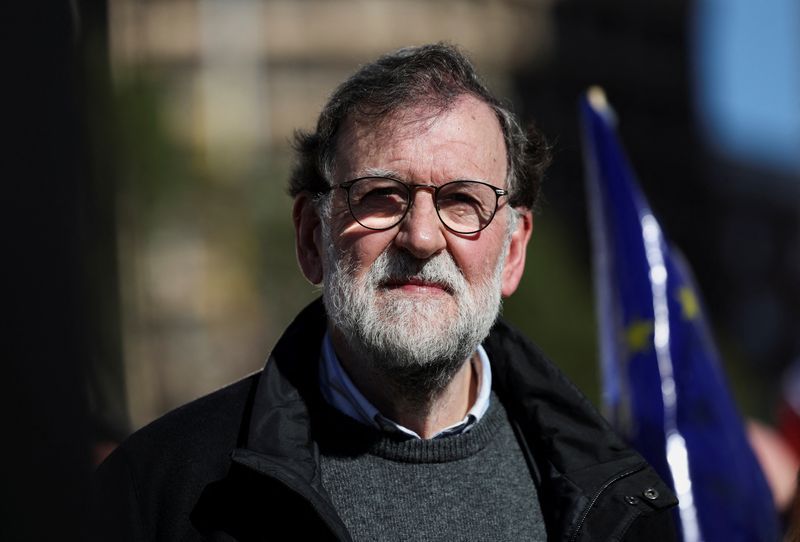
Spain's government has formally distanced itself from remarks made by former Prime Minister Mariano Rajoy questioning the national identity of France's men's soccer team, with Foreign Minister Jose Manuel Albares delivering an official apology to his French counterpart on Tuesday. The controversy erupted around a column published by Rajoy in the online publication El Debate on Friday, where the ex-leader—who served as premier from 2011 to 2018—challenged the authenticity of France's World Cup squad through a pointed jab at the team's composition. Albares characterised Rajoy's commentary as "intolerable" and laden with "the poison of racism and xenophobia," emphasising that such sentiments bore no resemblance to the views held by the vast majority of Spanish citizens.
Rajoy's original statement, made in the context of previewing an upcoming World Cup semi-final clash between Spain and France, contained a seemingly backhanded compliment that swiftly became the focal point of international criticism. After acknowledging France's exceptional squad quality, Rajoy wrote: "France has a squad of the very highest calibre. Mind you, there are no French players in it." The remark appeared designed as a subtle attack on the ethnic composition of the team, implicitly referencing the African and Afro-Caribbean heritage of several prominent squad members. The timing proved particularly sensitive, occurring just days after another high-profile incident involving discriminatory comments directed at French captain Kylian Mbappe.
Albares articulated the broader concern underlying such commentary during his radio appearance on Cadena SER, framing the issue as a fundamental question about citizenship and human dignity. He stated plainly that "it's a very serious matter to go around using skin colour to determine who can be a citizen and who cannot," positioning Rajoy's remarks within a larger discourse about exclusionary nationalism and implicit discrimination. This framing transformed what might have seemed like a casual sports commentary into a statement about core democratic principles and the definition of national belonging. The foreign minister's intervention signalled that Spanish officials recognised the international ramifications of allowing such rhetoric to pass without explicit condemnation.
Spanish Prime Minister Pedro Sanchez, who was present in Paris for France's National Day celebrations on Tuesday, delivered his own sharp critique of Rajoy's position through a post on the social media platform X. Sanchez targeted "those who measure nationality by a person's surname, birthplace or skin colour," directly condemning what he described as shamefully xenophobic language. His statement carried particular weight given his official capacity and his geographical proximity to the French capital, effectively embedding Spain's official position within the Franco-Spanish bilateral relationship at a moment of sporting rivalry. The timing of this intervention—mere hours before the two nations would compete in the World Cup semi-finals—underscored how seriously Spanish leadership took the need to prevent sports competition from becoming entangled with discriminatory messaging.
Rajoy's People's Party (PP) attempted damage control through a spokesperson, Borja Semper, who characterised the column as intended sarcasm rather than a serious statement of belief. According to this interpretation, Rajoy had written without malicious intent, simply employing irony as a rhetorical device. This defence strategy, however, gained limited traction given the straightforward nature of the original statement and its alignment with well-established xenophobic tropes about ethnic identity and national belonging. The effort to reframe the remarks as merely comedic underscored the political sensitivity surrounding identity-based commentary in contemporary European discourse.
The response from French authorities reflected broader institutional concern about normalising such rhetoric in the sporting arena. Foreign Minister Jean-Noël Barrot dismissed the remarks as fundamentally absurd, telling BFM TV that "France has no skin colour," and characterising any suggestion otherwise as indicative of "idiocy, racism, or both combined." His sharp language conveyed official exasperation with what French officials viewed as tired and baseless attacks on the legitimacy of the national team. Notably, this stance received unusual cross-partisan support when even the far-right National Rally opposition party joined in condemning Rajoy's comments. National Rally spokesman Julien Odoul described the remarks as "scandalous, shameful, deplorable," while going further than Barrot by directly labelling Rajoy "a racist."
The broader context for these tensions extended beyond Rajoy's specific commentary. Only days earlier, Paraguayan Senator Celeste Amarilla had published a racist tirade on social media targeting Mbappe specifically, describing him as a "colonised Cameroonian, desperately trying to pass himself off as French" following Paraguay's World Cup elimination. Amarilla's attack combined dehumanising language with explicit challenges to Mbappe's national legitimacy, drawing on colonialist rhetoric to delegitimise his identity. The French Football Federation responded formally by filing a criminal complaint, while Paraguay's government issued a statement distancing itself from Amarilla's views and emphasising that such commentary contradicted the country's stated values.
Mbappe himself addressed both incidents by defending not only his own standing but also extending solidarity to Paraguayan players, characterising Amarilla's outburst as beneath the dignity of her position. His measured response transformed what could have been a personal grievance into a statement about professional standards and mutual respect within international sport. The accumulation of these identity-based attacks within a compressed timeframe appeared to have crystallised concerns among European and international sports authorities about normalising ethnic and nationalist exclusivity in discourse surrounding major sporting events.
The incident carries particular significance for Southeast Asian observers given the region's own navigating of multiculturalism and national identity questions. The debate about who legitimately represents a nation reflects tensions that resonate across diverse Asian societies grappling with questions about immigrant integration, ethnic belonging, and the boundaries of citizenship. Spain's formal apology and the breadth of condemnation from otherwise ideologically disparate French political actors suggests that contemporary European discourse maintains formal commitments to inclusive nationalism, even as such controversies periodically breach those commitments. Whether these institutional responses constitute meaningful deterrents against future such incidents, or represent merely performative gestures, remains an open question for observers assessing the resilience of anti-discriminatory norms in sports and political discourse more broadly.

