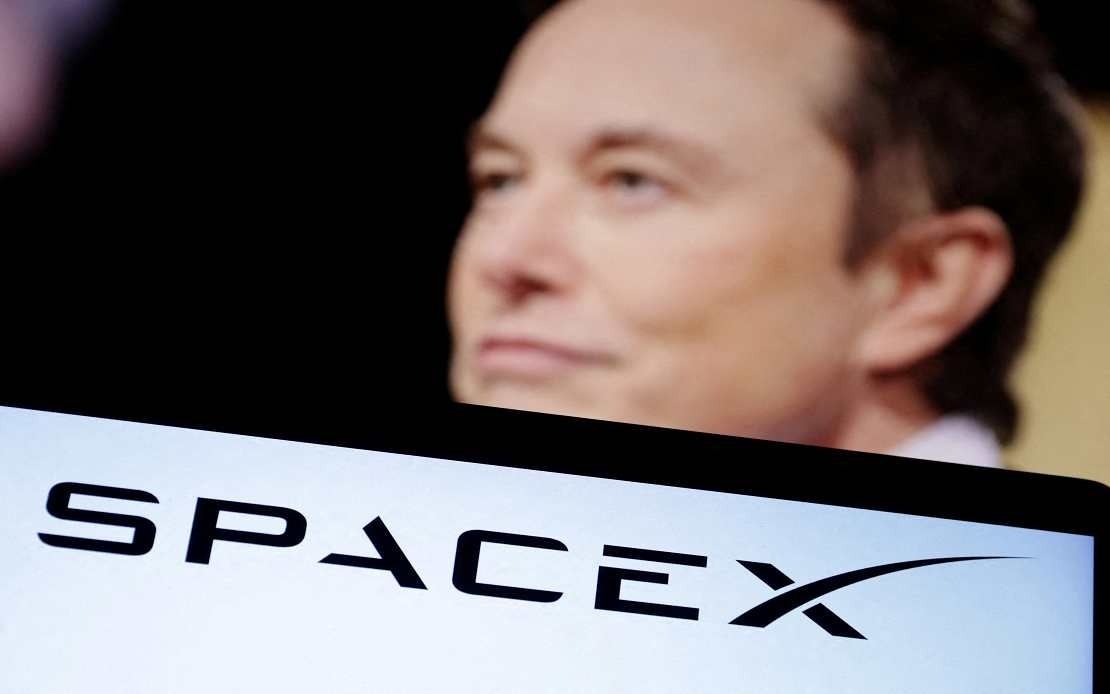
Elon Musk's SpaceX has demonstrated substantial improvement in its financial position, narrowing its quarterly net loss to US$541 million despite the enormous valuation attached to its historic initial public offering in June. The latest results mark a dramatic turnaround from the company's performance a year earlier, when it posted losses exceeding US$1 billion for the same period. The improvement comes as SpaceX navigates the complex dynamics of operating a company valued at nearly US$1.8 trillion at its IPO pricing while still burning significant capital in pursuit of transformative space technologies.
Revenue expansion has been the dominant narrative driving investor interest and company performance. The company achieved a 92 per cent year-on-year increase in total revenue, reaching US$7.8 billion and substantially exceeding the average analyst expectation of approximately US$6.9 billion. This outperformance underscores the momentum building within SpaceX's commercial operations, particularly in areas that have achieved meaningful scale and market adoption. Operating profit likewise grew robustly, climbing 80 per cent to roughly US$1.66 billion, suggesting that the company is not merely expanding its top line but also improving operational efficiency as it scales.
Starlink, the satellite internet service that has become SpaceX's primary engine of growth, continues its remarkable expansion trajectory. During the most recent quarter, Starlink generated approximately US$4.3 billion in revenue, representing nearly two-thirds growth compared with the same period last year. This segment now accounts for more than half of SpaceX's total revenue, a structural shift that has transformed the company from a purely rocket-focused contractor into a diversified space and telecommunications business. The service has demonstrated surprising resilience and appeal across multiple customer segments, with commercial adoption accelerating notably among airlines seeking to provide connectivity to passengers during flight.
Customer acquisition velocity provides further evidence of Starlink's market penetration and product-market fit. The service grew its active subscriber base from 10.3 million to 12 million customers within a single three-month period, adding approximately 1.7 million users and continuing the aggressive expansion trajectory that has characterised Starlink's deployment since its emergence as a commercial offering. This pace of subscriber growth outstrips many traditional telecommunications companies and suggests that Starlink has successfully positioned itself as a viable alternative to conventional broadband infrastructure, particularly in regions underserved by terrestrial networks.
SpaceX's ambitious expansion into direct smartphone connectivity represents a strategic inflection point with potentially significant competitive implications. The company plans to deploy new satellites capable of connecting mobile handsets directly to the Starlink network without requiring dedicated ground terminals. This initiative has the potential to establish SpaceX as a direct competitor to traditional telecommunications operators rather than merely a complementary service provider. For Malaysian and Southeast Asian stakeholders, this development carries particular significance given the region's reliance on conventional telecommunications infrastructure and the potential for satellite-based alternatives to reshape competitive dynamics in the coming decade.
The company's June IPO achieved record-breaking proportions and reflected extraordinary investor appetite for space-technology exposure. SpaceX raised US$75 billion through the offering, capitalising the company at an initial valuation approaching US$1.8 trillion when priced at US$135 per share. This valuation placed SpaceX among the most valuable companies globally, a remarkable achievement given that the firm continues to operate at a net loss and derives meaningful earnings only from a single commercial service line that remains less than five years old at scale. The valuation implied investors' conviction that SpaceX would eventually capture enormous value from space-based infrastructure, AI integration, and next-generation launch capabilities.
Market performance since the IPO has proven volatile and ultimately disappointing for investors who purchased shares at or near the offering price. In the immediate aftermath of the public offering, retail investor enthusiasm and short-supply dynamics drove the share price to just over US$225, representing appreciation of approximately 67 per cent in the weeks following the IPO launch. However, the market has subsequently reassessed its valuation, with shares declining substantially and closing Tuesday's US trading session at approximately US$125, a discount of nearly 7 per cent relative to the original offering price. This repricing has occurred despite the company's strong revenue and operating profit growth, suggesting that investors are scrutinising more carefully the path to profitability and the reasonableness of the exceptional valuation multiple applied.
Tuesday's financial disclosure prompted further selling pressure, with shares declining as much as 8 per cent in after-hours trading. Investor concerns likely centre on the gap between the company's ambitious valuation and its current profitability trajectory, as well as uncertainty regarding the sustainability of Starlink's growth acceleration. Looking ahead, the expiration of the lock-up period on Thursday represents another potential headwind, as approximately 2.5 billion shares held by company insiders and early investors become eligible for sale. This timing typically creates downward pressure on share prices as shareholders seek to diversify their concentrated holdings and realise gains accumulated since the company's founding.
SpaceX has positioned itself as indispensable infrastructure for the United States space programme and maintains unique relationships with American government agencies that provide stable revenue streams and strategic support. The company's heavy investment in the Starship platform represents a bet-the-company commitment to reducing launch costs and expanding access to space. While Starship remains in test-flight phase and has not yet achieved commercial operational status, the potential implications of dramatically cheaper orbital access would justify substantial near-term capital expenditures. For regional observers, the possibility of significantly reduced launch costs carries implications for satellite deployment economics, space-based services availability, and the competitive positioning of space-faring nations and private operators in the Asia-Pacific region.
The contradiction between SpaceX's record valuation and its continued losses exemplifies the tension within contemporary capital markets between growth expectations and current financial performance. The company's justification for its extraordinary valuation rests substantially on nascent artificial intelligence integration plans and long-term space-infrastructure ambitions that remain largely speculative. For Malaysian and regional investors and policymakers, SpaceX's trajectory offers instructive lessons regarding the genuine economic potential of space-based services, the volatility of high-growth technology valuations, and the extended timeframe required for novel ventures to achieve profitability at scale. As satellite internet deployment accelerates globally and launch costs decline, the competitive and strategic landscape of telecommunications and space access will undergo fundamental transformation.

