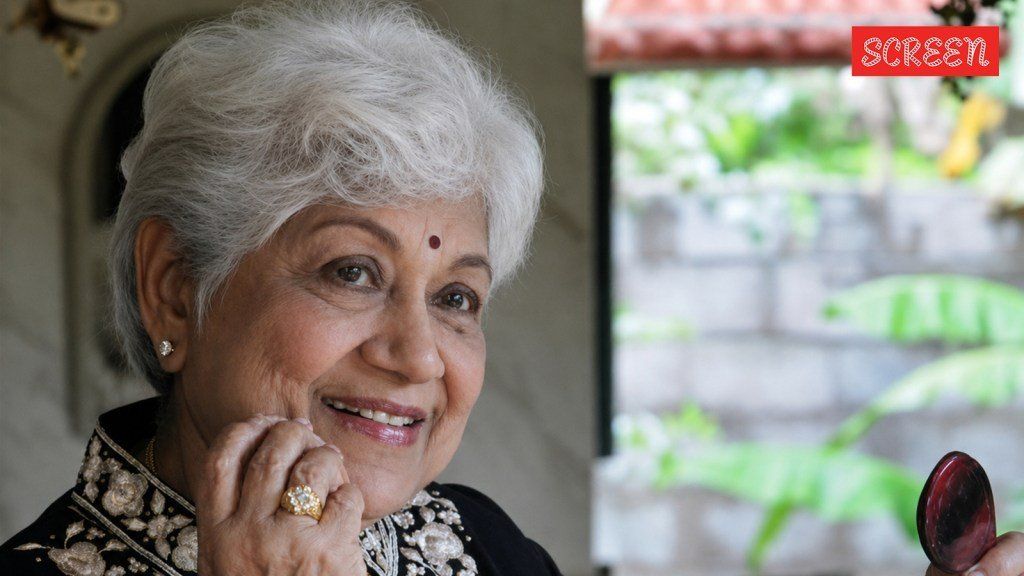
The South Indian film industry mourned the loss of one of its most enduring figures on Friday, August 21, when Sowcar Janaki passed away at a private hospital in Chennai after a short illness. The veteran actress, who had been admitted to intensive care in the days preceding her death, was 94 years old. News of her demise was confirmed by Nassar, president of the South Indian Artistes' Association, who announced that her mortal remains would be displayed at Cenotaph Road in Teynampet from 5 pm that evening.
Sankaramanchi Janaki, professionally known as Sowcar Janaki, represented a golden era of South Indian cinema when actors could seamlessly transition between multiple linguistic film industries. Over seven decades, she accumulated an astonishing portfolio of approximately 400 films, making her one of the most prolific performers in the region's cinematic history. Her ability to work across Tamil, Telugu, Kannada, Malayalam, and Hindi cinema distinguished her from many of her contemporaries and demonstrated the versatility that became her trademark. This linguistic fluidity was particularly remarkable given the distinct film industries that existed in each region, each with its own production systems, narrative conventions, and star networks.
The recognition Janaki received throughout her career underscored the respect she commanded within the film fraternity and beyond. She was honoured with the Padma Shri, one of India's highest civilian awards, cementing her status as a cultural icon. The Kalaimamani Award from the Tamil Nadu government recognised her contributions to Tamil arts and culture. She also received the Filmfare Lifetime Achievement Award alongside two Nandi Awards, accolades that reflected both the breadth of her work and the consistent quality she maintained throughout her long career. Beginning in 1950, her entry into cinema coincided with a period of significant growth and experimentation in South Indian film production.
Tamil Nadu Chief Minister C. Joseph Vijay issued a statement expressing his shock at Janaki's passing, characterising her as an actress whose performances had secured a permanent place in the affections of audiences across multiple generations. In his tribute, delivered in Tamil, Vijay emphasised the span of her artistic journey and noted that her roles across various languages demonstrated her ability to transcend regional boundaries at a time when such crossover was less common. He highlighted the significance of her contributions to cinema as a loss not merely to Tamil cinema but to the entire Indian film industry, acknowledging the breadth of her influence and the regard in which she was held by colleagues and admirers alike.
Among those offering tributes was celebrated actor Kamal Haasan, who recounted a forty-year collaborative relationship with Janaki beginning with the film Paarthaal Pasi Theerum. Haasan reflected on the archetypal nature of the roles she played, observing that she frequently portrayed maternal figures while he embodied younger characters, yet her performances transcended typecasting through the depth and nuance she brought to each portrayal. He credited director K. Balachander, a mentor figure in his own career, with recognising Janaki's talents and consistently casting her alongside the leading heroes of her era. Haasan's emotional tribute, delivered in Tamil and marked by evident personal affection, captured the esteem in which Janaki was held by the generation of actors who came after her and benefited from her example.
Actress Radhika Sarathkumar characterised Janaki as a trailblazer whose independent spirit and strong will had shaped her path through an industry that was far less accommodating to women during the early stages of her career. Sarathkumar noted that Janaki had been a close friend of her father, veteran actor M.R. Radha, and that the two had maintained considerable mutual admiration. This familial connection highlighted how Janaki's influence extended across generations within acting families, becoming a reference point for younger performers navigating their own careers. Director Prabhudeva paid his respects with a vintage photograph, while Telugu star Jr NTR acknowledged Janaki's indelible mark on the Telugu film industry specifically, underscoring the pan-regional impact of her work.
Telugu cinema icons Chiranjeevi and Vishnu Manchu also shared tributes that emphasised the natural quality of her acting and her ability to inhabit diverse roles with authenticity. Chiranjeevi traced her career back to its inception in the film Shavukaru, noting that her journey across nearly seven decades and multiple languages represented an achievement of rare distinction. Vishnu Manchu urged younger performers and audiences to study Janaki's career and legacy, framing her as a model of grace, dignity, and sustained professional excellence. These responses from senior actors across different linguistic film industries demonstrated the genuinely pan-Indian scope of her reputation and influence.
Janaki's later career demonstrated a willingness to adapt to changing media landscapes. Beyond her extensive film work, she ventured into television, extending her reach to audiences who encountered her through small-screen productions. Her final Tamil film appearance came in Biskoth in 2020, while her most recent Telugu project was Anni Manchi Sakunamule in 2023, indicating continued professional engagement well into her nineties. This willingness to work across platforms and adapt to evolving industry conditions reflected the professional resilience that had characterised her entire career and allowed her to remain relevant across transformative decades in Indian cinema.
For Malaysian audiences and Southeast Asian film enthusiasts, Janaki's passing marks the end of an era when regional film industries maintained greater independence and distinctive characteristics than they do today. Her multilingual work anticipated the later development of pan-Asian cinema and the increasing crossover of talent between regional film markets. The substantial body of work she left behind, preserved in 400 films across multiple languages, represents a resource for contemporary viewers interested in understanding the development of South Indian cinema and the performance styles that dominated during the mid-to-late twentieth century. Her career trajectory offers insights into how regional cinema functioned before the consolidation and globalisation that characterised the twenty-first century film industry.

