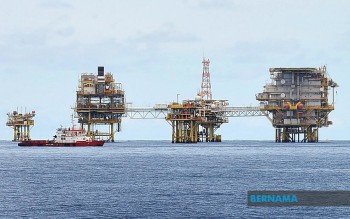
Southeast Asia's oil and gas sector is poised for accelerated capital spending in greenfield projects despite ongoing geopolitical tensions in the West Asia region, according to analysis from Hong Leong Investment Bank. The investment bank expects the region to channel more than US$100 billion into new offshore developments, representing a 12 per cent increase from previous levels and reflecting a strategic pivot towards establishing fresh production infrastructure rather than mere maintenance of existing assets.
The resilience of regional spending comes at a time when global energy markets remain volatile, yet APAC investment generally has demonstrated remarkable steadiness in the aftermath of the West Asia conflict. Beyond Southeast Asia, South Asia is anticipated to drive brownfield capital expenditure higher by 23 per cent, while the region itself is expected to boost spending on existing infrastructure by 3 per cent. These figures underscore a deliberate regional emphasis on securing supply chains and enhancing operational reliability through both new capacity and asset optimisation.
International geopolitical developments have nonetheless created an uncertain backdrop for energy planning. The US-Iran ceasefire agreement, formalised through a 14-point memorandum of understanding, remains fragile according to observers, yet investment analysts believe momentum is trending towards broader de-escalation in West Asian tensions. This cautious optimism has begun to stabilise market expectations and encourage longer-term planning horizons across the energy sector. The signing of the MOU represents a potential inflection point that could gradually reduce the premium that global oil markets have been pricing in for geopolitical risk.
Traffic patterns through the Strait of Hormuz offer a tangible measure of this tentative recovery, with shipping activity showing signs of normalisation following the agreement. However, satellite monitoring suggests that the actual extent of vessel movement may be underestimated, as many ships are transiting through the critical chokepoint with their Automatic Identification System transponders deliberately disabled, likely reflecting residual caution among operators. This discrepancy between reported and actual flows reveals the underlying nervousness that persists among maritime operators despite the headline agreement.
Hong Leong Investment Bank has anchored its sector outlook on two critical investment themes that will shape the trajectory of regional energy spending. The first centres on whether sustained resolution of energy security concerns will lead to elevated inventory reserves and support infrastructure players, particularly those operating pipelines and storage terminals. Companies positioned within the logistics and midstream segments stand to benefit substantially if global energy markets prioritise building buffer stocks to guard against future supply disruptions.
The second and potentially more transformative theme involves the anticipated Petronas capital expenditure cycle commencing around 2027. This cyclical upcycle is projected to generate substantial contracting opportunities for Malaysian oil and gas services and equipment providers, particularly those specialising in upstream exploration and development activities, system hook-ups, commissioning work, vessel-based support services, and fabrication operations. For Malaysian companies in these niches, the coming years represent a critical window to secure contracts and position themselves as preferred partners for the national oil company's expansion programme.
Oil price assumptions have been revised downward by the investment bank, reflecting a more measured outlook on energy markets. Brent crude is now forecasted to average US$80 per barrel in 2026, down from the previous US$90 projection, while 2027 is expected to see sustained prices around US$75 per barrel. These revised forecasts remain substantially elevated compared to pre-conflict baselines, suggesting that geopolitical risk premiums will likely persist even as immediate tensions ease. For businesses across Malaysia and the region dependent on energy cost certainty, these price levels represent an intermediate scenario between crisis-driven spikes and pre-conflict normalcy.
Underlying these price projections is a critical inventory dynamic that will influence energy markets through 2027. The US Energy Information Administration's June outlook projects OECD commercial inventories to decline sharply, with days of supply falling to approximately 50 days by late 2026—substantially below the pre-conflict level of more than 60 days. This inventory contraction will sustain upward pressure on crude prices as global supply chains remain stressed and reserve buffers remain inadequate to meet emerging market demands and security thresholds.
Given the persistent drawdown in global energy inventories, investment analysts expect Brent crude to remain supported above the US$80 per barrel level until international oil flows normalise and inventory positions are rebuilt to more comfortable levels. Should inventory replenishment extend beyond 60 days of supply—a threshold that reflects heightened energy security considerations—Brent crude could maintain support above US$75 per barrel well into early 2027. This extended elevation reflects a structural shift in how global markets price energy reliability and geopolitical risk.
Production recovery timelines pose additional upside risks to oil prices. Shut-in production volumes across the Strait of Hormuz region surged to 45 per cent of capacity by May 2026, compared to 35 per cent in March of the same year. Any delay in restoring these offline facilities would further support prices and extend the period during which regional capex benefits from elevated energy valuations. This production lag translates into sustained financial attractiveness for capital-intensive offshore projects, bolstering investment case justifications across the region.
Crude oil pricing dynamics have begun to stabilise in recent trading, with both Brent and West Texas Intermediate contracts retreating from recent peaks. Current price levels have settled into the US$70 to US$75 per barrel range, according to separate analysis from IPPFA Sdn Bhd. Should these levels prove durable over coming months, the energy sector and broader economy would benefit from more predictable operating conditions, as businesses could hedge costs with greater certainty and reduce exposure to energy-related supply chain disruptions.
Sustained oil prices within this moderate range would generate benefits extending well beyond the energy sector itself. Lower energy-related input costs would help relieve global inflationary pressures that have constrained central bank policy flexibility and dampened consumer purchasing power across emerging markets including Malaysia. By reducing cost-push inflation, stabilised oil markets would enable broader business investment, enhance consumer confidence, and provide monetary authorities with greater latitude to maintain accommodative policy settings. These broader macroeconomic benefits underscore why the trajectory of global oil prices remains a critical consideration for regional policymakers and business planners.
At recent trading levels, Brent crude has appreciated 0.90 per cent to US$69.17 per barrel, while West Texas Intermediate rose 0.94 per cent to US$72.67 per barrel, indicating modest positive momentum in energy markets. These movements reflect ongoing adjustments as markets digest the implications of the US-Iran agreement and recalibrate expectations for global energy supply and demand balances over the coming years. For Malaysian investors, policymakers, and businesses with exposure to energy costs, these price dynamics will determine competitive positioning and profitability across multiple sectors throughout 2026 and 2027.

