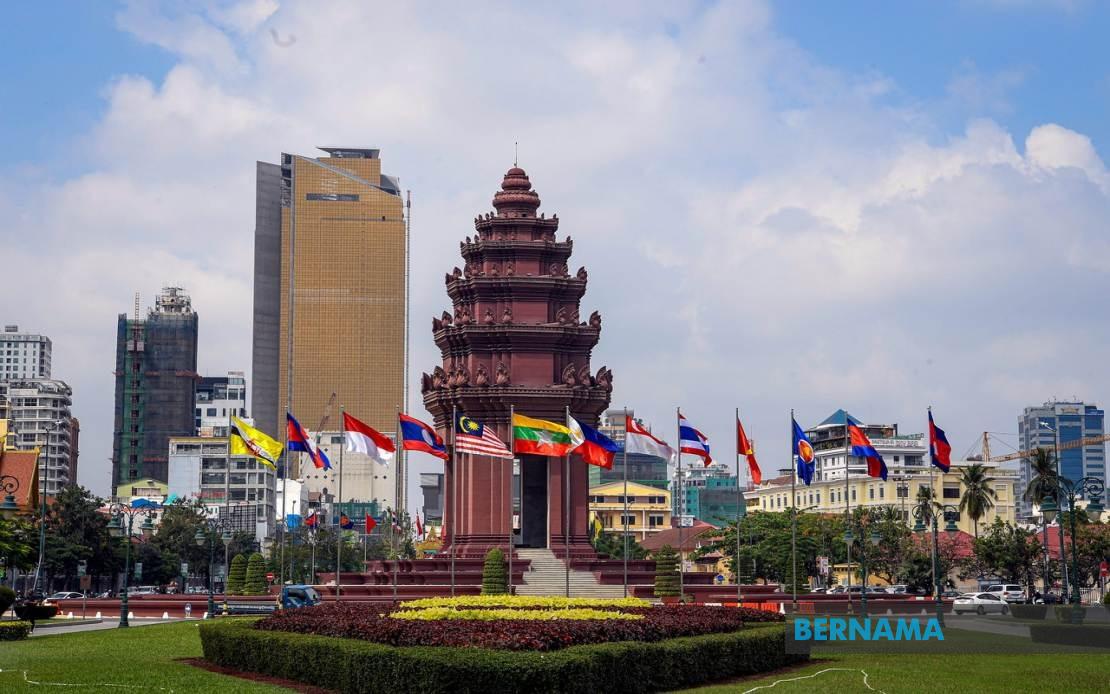
A wave of development initiatives is sweeping across Southeast Asia as nations push forward with infrastructure expansion and institutional modernisation. India and Cambodia have cemented their regional partnership by signing memoranda of understanding to implement two joint projects under the Mekong-Ganga Cooperation framework, targeting rural development in Kratie Province. This collaboration reflects growing recognition among major Asian powers that systematic investment in countryside economies and community-based initiatives strengthens overall regional stability and creates pathways for economic participation beyond urban centres.
Cambodia's Civil Service Ministry is simultaneously undertaking an ambitious modernisation programme designed to transform how government operates and delivers services. The initiative emphasises professional skill development within the bureaucracy and the integration of digital systems across public administration. Such transformations are critical for the region, as several Southeast Asian nations grapple with ageing institutional frameworks that cannot keep pace with citizen expectations or technological advancement. Cambodia's emphasis on efficiency reflects a broader regional acknowledgment that stronger governance underpins sustainable development.
Indonesia is pursuing strategic airport expansion to alleviate congestion at major travel hubs. Transportation Minister Dudy Purwagandhi has endorsed plans to develop Lt. Col. Wisnu Airfield in Buleleng District into a comprehensive air transport hub serving northern Bali. The expansion addresses a significant bottleneck at Ngurah Rai International Airport, which shoulders enormous passenger traffic from both domestic travellers and international tourists. By decentralising air traffic, Indonesia aims to improve travel efficiency, reduce flight delays, and boost economic activity in peripheral regions that currently lack convenient air connectivity.
Indonesia's law enforcement apparatus, meanwhile, is tackling high-profile corruption cases within its own institution. The Indonesian National Police have designated Febrie Adriansyah, a former Junior Attorney General for Special Crimes, as a suspect in a corruption and money laundering investigation. Such prosecutions, although often controversial, demonstrate renewed efforts to address institutional integrity at senior levels. These actions carry significance for Malaysia and the broader region, as neighbouring countries increasingly scrutinise one another's commitment to fighting graft and ensuring transparent governance.
Myanmar has inaugurated two critical infrastructure projects aimed at bolstering transportation and energy security. The newly opened Anisakan Airport in Mandalay Region promises to strengthen domestic connectivity and stimulate local economies by facilitating movement of agricultural products and attracting investment to previously isolated areas. Simultaneously, Myanmar has commissioned the 15-megawatt Shwemyoh solar power plant in Naypyidaw, with government plans to expand capacity through a 25-megawatt second phase and a 30-megawatt third phase. These renewable energy investments address Myanmar's persistent electricity supply challenges and demonstrate a commitment to sustainable power generation that increasingly shapes regional energy policy.
The Philippines continues managing weather-related disruptions and constitutional crises that test institutional resilience. The Philippine Atmospheric, Geophysical and Astronomical Services Administration has warned that the southwest monsoon will persist across Luzon and the Visayas even following Tropical Storm Inday's exit from the Philippine Area of Responsibility. Such seasonal weather patterns underscore the region's ongoing vulnerability to natural disasters and the need for continuous investment in early warning systems and disaster preparedness.
More significantly, the Philippines faces an impeachment trial against Vice President Sara Z. Duterte, with prosecution panellists asserting that foundational elements of their case have been successfully established during the first week of Senate proceedings. This constitutional drama reverberates across Southeast Asia, where questions about institutional checks on executive power remain contested in several nations. The trial's outcome may influence broader regional discussions about accountability, separation of powers, and the mechanisms available to challenge sitting officials.
Singapore is positioning itself at the forefront of digital privacy innovation. Meta-owned WhatsApp has reserved high-profile usernames belonging to Singaporean public figures and government entities ahead of rolling out a new privacy-focused username feature that permits users to connect without disclosing phone numbers. Singapore's leadership in protecting citizen privacy data aligns with the city-state's broader digital governance strategy and distinguishes its approach from neighbours wrestling with data protection frameworks.
Housing policy in Singapore reveals the complexity of managing property access in expensive urban markets. Over the past five years, authorities have approved 845 appeals from executive condominium applicants seeking waivers from income ceilings that typically restrict who may purchase these properties. This data point illuminates ongoing tensions between affordability objectives and market restrictions, a challenge increasingly familiar to Malaysian policymakers managing similar property market pressures.
Thailand faces serious transnational crime challenges that underscore law enforcement coordination gaps across the region. Thai police have issued arrest warrants for a woman suspected of orchestrating a heroin-smuggling network that concealed narcotics in elephant-print bags and recruited an air hostess to courier shipments to Australia. The incident exemplifies how organised crime exploits transportation networks and recruit individuals across professional sectors, creating investigation complexities for single-nation police forces.
Thailand's Department of Special Investigation has simultaneously expanded a probe into nominee networks linked to foreign-owned property and tourism enterprises. Raids across five locations in Surat Thani province uncovered suspected networks with one registered address serving over 100 companies, indicating sophisticated schemes to circumvent foreign ownership restrictions. This discovery carries important implications for Malaysia and other Southeast Asian nations with comparable restrictions on foreign property acquisition, demonstrating how determined actors develop workarounds that regulators must continuously adapt to counter.
Vietnam's inclusion in this regional policy snapshot, though limited, indicates that Southeast Asia's development momentum encompasses all major economies in the subregion. The broader pattern across Cambodia, Indonesia, Myanmar, the Philippines, Singapore, Thailand, and Vietnam suggests a region simultaneously pursuing modernisation, infrastructure expansion, and institutional strengthening while confronting persistent challenges including transnational crime, environmental vulnerability, and questions about governance accountability that will shape the region's trajectory for years ahead.

