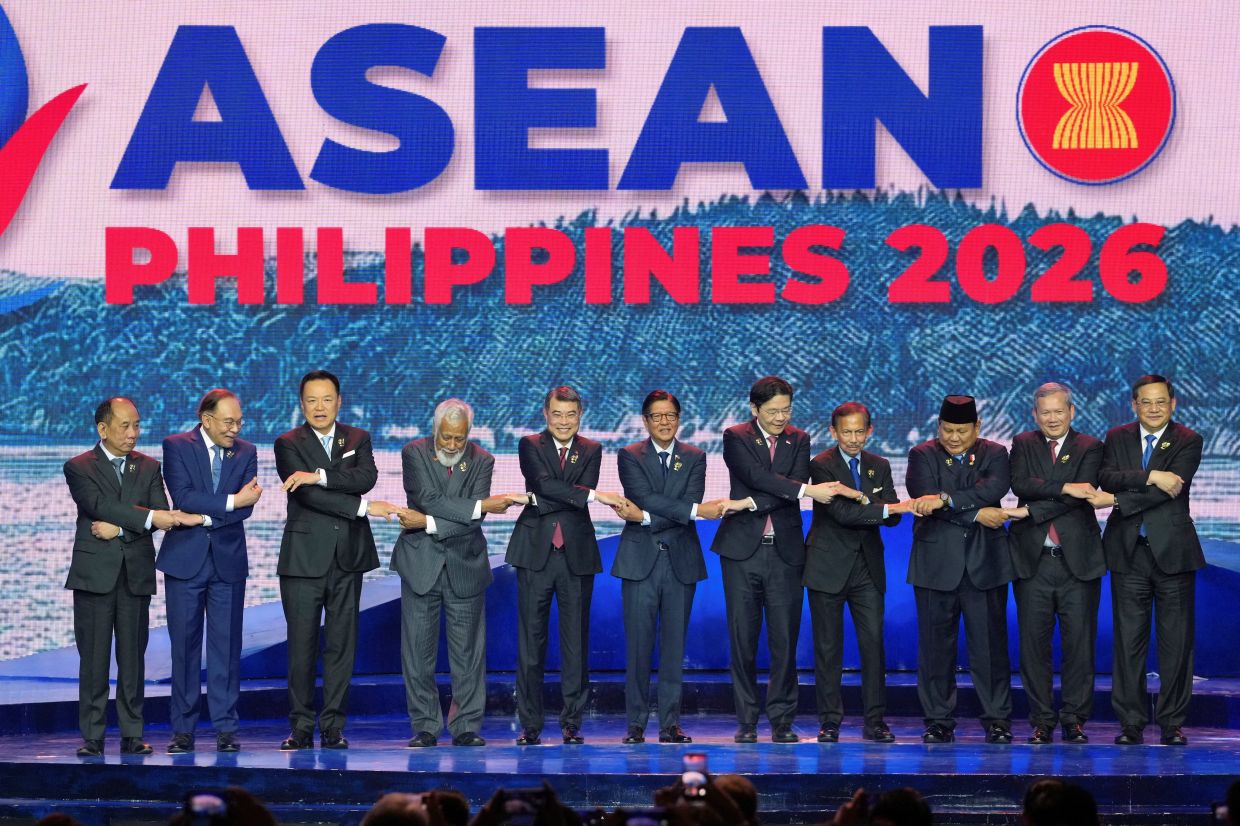
Southeast Asia's foreign ministers have gathered in Manila this week for a critical round of annual diplomatic talks that brings together not only the ten member nations of the Association of Southeast Asian Nations but also major global powers including the United States, China, Russia, and the European Union. The three-day forum, chaired by the Philippines, represents one of the most significant gatherings of regional and international diplomats in recent months, reflecting the mounting pressures facing both the bloc and the broader Indo-Pacific region.
The agenda encompasses some of the world's most pressing international crises, with the escalating conflict between the United States and Iran commanding particular attention from Southeast Asian governments. The region's diplomats plan to issue a joint statement expressing serious concern about the renewed hostilities and calling on both parties to return to the negotiating table. This concern is far from abstract for Southeast Asia: the Strait of Hormuz, through which roughly one-fifth of global oil supplies flow, remains threatened by the spiralling tensions, and any disruption to shipping lanes would have immediate economic consequences for one of the world's most dynamic trading regions.
For Southeast Asia's 680 million residents, the stakes of Middle Eastern conflicts are unusually high. The region depends substantially on oil and gas imports from the Middle East, making it particularly vulnerable to supply disruptions and price shocks. The Philippines already declared a national energy emergency in March specifically to manage fuel availability and prevent panic buying among the population. Malaysian consumers, similarly dependent on imported energy, have watched regional oil prices with growing anxiety. The Trump administration's military focus on the Middle East has simultaneously raised questions about Washington's commitment to the Indo-Pacific, particularly regarding China's increasingly assertive posture in the South China Sea and around Taiwan.
U.S. Secretary of State Marco Rubio's presence at the talks signals Washington's determination to reassure its regional partners of continued commitment despite these Middle Eastern preoccupations. Before departing for Manila, Rubio indicated willingness to meet with Chinese Foreign Minister Wang Yi, though no formal engagement was confirmed. The American diplomat sought to frame the relationship between Washington and Beijing in pragmatic terms, acknowledging that disagreements between major powers are inevitable but insisting that dialogue remains essential. His emphasis on the Trump administration's pledge to help Taiwan resist Chinese pressure underscores how the Indo-Pacific concerns remain central to American strategic planning.
The question of whether Rubio would raise President Donald Trump's accusations of Chinese electoral interference demonstrated the delicate diplomatic dance required at such gatherings. Meanwhile, Rubio suggested expectations of a presidential visit by Chinese leader Xi Jinping to the United States in September, pointing to ongoing diplomatic channels despite underlying tensions. The State Department characterised Rubio's visit as advancing a core American priority: a free and open Indo-Pacific that benefits both the region and American interests through enhanced security and economic opportunity.
On the sidelines of the main ASEAN meetings, Rubio is expected to convene with fellow members of the Quad security partnership, comprising the United States, India, Japan, and Australia. Beijing has repeatedly criticised this grouping as a mechanism designed to contain Chinese influence, viewing it as essentially an American-led containment strategy. For regional observers, the Quad's prominence in these discussions reflects how competition between Washington and Beijing has become embedded within ASEAN's diplomatic framework, with member states attempting to balance relationships with both powers.
The Myanmar crisis presents an equally vexing challenge for ASEAN's collective diplomacy. Since the military coup in 2021 that deposed the democratically elected government led by Aung San Suu Kyi, the country has descended into devastating civil conflict. According to the Assistance Association for Political Prisoners, more than 8,100 people have been killed and nearly 22,500 remain detained. The ASEAN-issued five-point peace plan from 2021 has spectacularly failed to achieve its objectives, largely because Myanmar's military leadership has declined to comply with its provisions. This failure prompted ASEAN to ban Myanmar's senior leadership from attending the bloc's highest-level meetings, including this week's Manila gathering.
In a surprising diplomatic manoeuvre this month, ASEAN foreign ministers, led by Philippine Foreign Secretary Theresa Lazaro, met with their Myanmar counterpart for the first time in five years in Bangkok. The following day, Lazaro and Thai Foreign Minister Sihasak Phuangketkeow held separate consultations with representatives of Myanmar's ethnic armed organisations in the Thai coastal city of Pattaya. These moves signalled a potential shift toward renewed engagement, though human rights organisations sharply criticised the decision to meet with Myanmar's Foreign Minister Tin Maung Swe as effectively abandoning the sanctions regime and rewarding military leaders without extracting meaningful concessions. Lazaro defended the approach as necessary diplomacy rather than capitulation, insisting that peace could only be achieved through engagement with all parties to the conflict.
The South China Sea territorial disputes remain another chronic source of tension that ASEAN must collectively address. Foreign ministers are expected to discuss the ongoing negotiations with China regarding a proposed code of conduct designed to manage tensions and prevent disputes from escalating into military confrontation. The disagreements involve China, Taiwan, and four ASEAN members—Brunei, Malaysia, the Philippines, and Vietnam—but recent years have witnessed particularly sharp confrontations between Chinese and Philippine coast guard and naval forces. Malaysian interests in the South China Sea remain significant, with territorial claims and fishing rights at stake, making progress on the code of conduct directly relevant to Malaysian security concerns.
The diplomatic challenge facing ASEAN is fundamentally about managing competing interests and external pressures while maintaining the bloc's coherence and voice. The presence of multiple global powers with divergent strategic interests—including the United States seeking to preserve its Indo-Pacific dominance, China pressing its regional influence, and Russia maintaining a strategic presence—means that ASEAN's foreign ministers must navigate treacherous diplomatic waters. The region's economic importance and geographic centrality ensure that these disputes will continue commanding international attention, but ASEAN's ability to forge consensus and enforce collective positions remains constrained by internal divisions and the strategic leverage wielded by external powers.
Looking ahead, the success or failure of this Manila gathering will be measured not merely by the issuance of carefully worded statements but by whether ASEAN can translate diplomatic rhetoric into concrete progress on Myanmar, the South China Sea, and regional responses to global crises. For Malaysia and other ASEAN members, the outcomes will shape the region's security environment and economic prospects for years to come.

