Sustainable finance has shifted from a niche offering to a core banking strategy in Southeast Asia, driven by surging consumer demand for electric vehicles, renewable energy solutions, and environmentally conscious housing. The transformation reflects not only changing market conditions but a fundamental recalibration of how financial institutions throughout the region view their role in supporting the energy transition. Malaysia and Indonesia are emerging as key drivers of this shift, with EV adoption rates accelerating and residential renewable energy installations expanding rapidly across both markets.
The pace of change is striking when measured against recent performance data. Malaysia's electric car sales doubled during 2025, while Indonesia achieved even more impressive growth, with sales more than doubling year-on-year according to the International Energy Agency. These figures signal a decisive shift in consumer preferences toward lower-carbon transport, a transition that extends well beyond affluent urban centres into mainstream vehicle purchasing decisions. This acceleration has not occurred in isolation but reflects coordinated policy support, improving vehicle affordability, and critically, the availability of tailored financing solutions that make electric vehicles accessible to a broader demographic.
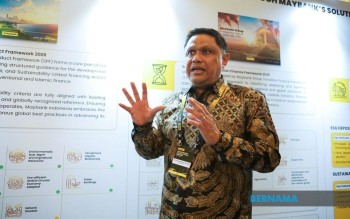
Maybank Group's expansion trajectory illustrates how mainstream banks are responding to this opportunity. The institution has committed to mobilising RM300 billion in sustainable finance across ASEAN between 2026 and 2030, a significant escalation from its previous five-year programme. What distinguishes this commitment is not merely its scale but the velocity of uptake. Less than six months into implementation, Maybank is tracking toward its targets, suggesting that demand from corporate clients and individual consumers substantially exceeds what many financial analysts had projected. Datuk Shahril Azuar Jimin, the group's chief sustainability officer, emphasised during the inaugural Maybank Indonesia Sustainable Finance Forum 2026 that banks no longer face liquidity constraints in supporting sustainability initiatives. The constraint, he argued, was never capital availability but rather institutional readiness and market awareness.
The group's historical performance validates this confidence. Under its 2021-2025 commitment, Maybank mobilised RM176 billion in sustainable finance, more than doubling the original RM80 billion target announced at the programme's inception. This overperformance across diverse market conditions and economic cycles suggests that sustainable finance responds to genuine demand rather than manufactured market segments. The shift from aspirational target to surpassed commitment indicates that financial institutions underestimated both corporate appetite for transition financing and household willingness to adopt green solutions when properly supported.
Government policy has reinforced this momentum, particularly in Malaysia. The Energy Transition and Water Transformation Ministry expanded the Net Energy Metering Rakyat programme by adding 100 megawatts of residential solar capacity in May 2025, an increase implemented after the previous allocation was fully subscribed. This rapid exhaustion of available quotas underscores that policy constraints, not consumer interest, limit renewable energy adoption at the household level. The expansion signals recognition that residential rooftop solar represents not a luxury amenity but an increasingly mainstream energy solution that financial institutions must actively support through dedicated mortgage and loan products.
The scope of sustainable finance offerings has broadened substantially beyond traditional green project financing. Maybank's Sustainable Product Framework now encompasses transition finance for carbon-intensive industries undertaking decarbonisation, electric vehicle financing structured for consumer affordability, green mortgage products designed specifically for energy-efficient homes, social finance addressing community development alongside environmental goals, and green bonds providing capital market access. This diversification reflects sophisticated understanding that the energy transition requires differentiated solutions across multiple economic sectors and consumer segments. Transition finance, in particular, addresses the challenge of supporting incumbent industries undergoing structural transformation, a politically and economically sensitive area that requires tailored approaches.
This expansion has fundamentally altered how banks relate to clients. Relationship managers must now function as sustainability advisors capable of explaining climate risks, assessing project environmental impact, and guiding clients through transition pathways. This transformation demands substantial investment in capacity building and professional certification. Maybank has committed considerable resources to training relationship managers in climate literacy and sustainability assessment, a costly but essential investment in institutional capability. The shift from transaction-focused banking to advisory relationships represents a cultural evolution within institutions traditionally organised around transaction volume and margin optimisation.
Indonesia demonstrates particular momentum in sustainable finance adoption. Maybank Indonesia mobilised approximately Rp17 trillion under the group's previous commitment period, establishing a strong foundation for expanded activity under the 2026-2030 programme. Maria Triffany Fransiska, head of sustainability at Maybank Indonesia, identified transportation as the strongest sustainable financing segment, reflecting Indonesia's rapid EV adoption trajectory. The bank has strategically extended sustainable finance beyond high-value commercial projects to serve lower-income communities through affordable housing financing and electric two-wheeler financing, demonstrating how green finance increasingly addresses everyday consumer needs rather than exclusively funding large-scale infrastructure.
The Indonesian operation is pioneering ecosystem expansion beyond traditional lending. Maybank Indonesia introduced an environmental, social, and governance deposit product, the first such offering within the group, with Malaysia expected to follow. This innovation allows retail depositors to direct savings toward institutions prioritising sustainability criteria, creating a complementary funding channel for sustainable lending operations. Additionally, the bank is developing green bond capabilities, positioning itself within the capital markets infrastructure supporting larger transition projects. These initiatives reflect recognition that sustainable finance requires multi-faceted institutional capabilities spanning retail deposits, commercial lending, and capital markets access.
The broader implications for Southeast Asia are substantial. As sustainable finance transitions from specialised banking niche to mainstream service offering, capital allocation mechanisms are reorienting toward lower-carbon investments. This reorientation creates competitive advantages for companies demonstrating robust sustainability performance, while those lagging in energy transition risk facing higher financing costs and restricted capital access. Malaysian and Indonesian financial institutions are positioning themselves as leaders in ASEAN sustainable finance, potentially attracting multinational corporations and regional investors seeking banking partners capable of managing transition complexities. The acceleration also signals that carbon-intensive industries must accelerate decarbonisation planning, as financing constraints will increasingly determine investment feasibility.
What emerges from this analysis is not merely cyclical banking sector evolution but structural reorientation reflecting alignment between regulatory frameworks, consumer preferences, and capital availability. The energy transition in Southeast Asia increasingly depends less on government mandates and subsidies than on market mechanisms directing capital toward low-carbon alternatives. Maybank's ability to exceed sustainable finance targets substantially while attracting diverse client segments suggests that this transition possesses genuine economic logic beyond environmental ideology. Financial institutions recognising this structural shift early gain competitive positioning in markets where sustainable finance will represent ordinary banking practice within five years rather than specialised offering.

