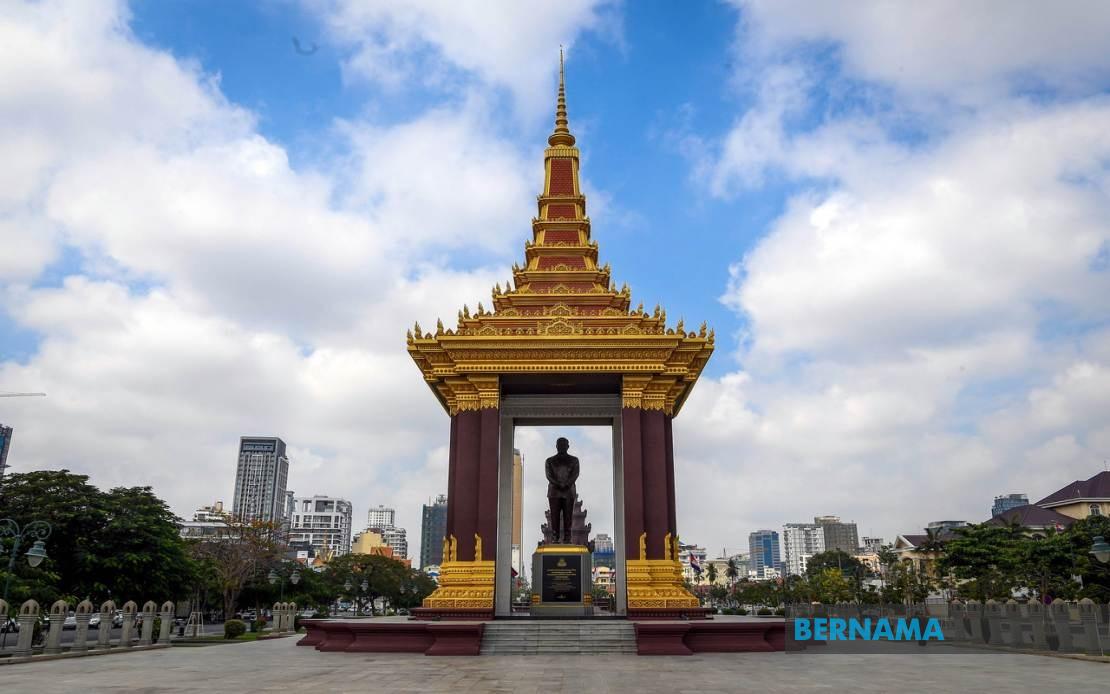
Across Southeast Asia, governments are reshaping their development trajectories through strategic international partnerships and ambitious domestic initiatives. The week of July 18, 2026, revealed a region actively engaging with global governance structures while advancing initiatives to support economic growth and environmental sustainability. From Cambodia's entry into international AI frameworks to Indonesia's aggressive renewable energy programme and Myanmar's coastal management strategy, the policy landscape reflects competing priorities balanced between modernization and environmental stewardship.
Cambodia took a significant step in global governance by becoming a founding signatory to the Agreement on the Establishment of the World Artificial Intelligence Cooperation Organisation in Shanghai. This move represents more than ceremonial engagement with international organisations; it signals Cambodia's determination to participate actively in shaping global artificial intelligence standards and governance mechanisms that will increasingly influence technological development and deployment worldwide. For a nation seeking to strengthen its international standing and leapfrog traditional development stages, positioning itself within the emerging AI governance architecture offers strategic advantages in attracting tech investment and talent. The decision also reflects broader Southeast Asian interest in AI cooperation, with regional nations recognising that collaborative approaches to regulating and developing artificial intelligence technologies can help smaller economies avoid being sidelined by larger powers or multinational corporations establishing frameworks without local input.
Chinese Premier Li Qiang's visit to Cambodia reaffirmed Beijing's commitment to the bilateral relationship, describing it as an "ironclad" friendship prioritised in Chinese diplomacy. This characterisation carries weight in Southeast Asian geopolitical calculations, where relationships with major powers directly influence trade flows, investment patterns, and security arrangements. Cambodia's strategic location as a gateway to mainland Southeast Asia and its role within the Mekong region make the Sino-Cambodian relationship consequential not only for those two nations but for the broader regional balance of power and economic integration patterns that Malaysian and Singaporean policymakers monitor closely.
Indonesia's ambitious renewable energy agenda took concrete form through President Prabowo Subianto's announcement of plans to establish up to 50 new ethanol plants supporting the E20 fuel programme. This initiative mandates fuel blends containing a minimum of 20 percent bioethanol, representing one of the region's most aggressive biofuel policies. The programme addresses multiple policy objectives simultaneously: supporting domestic agricultural producers, reducing petroleum import dependence, and advancing environmental goals. For Southeast Asian nations with significant agricultural sectors and refining industries, Indonesia's model offers both lessons and competitive concerns, particularly regarding feedstock availability and market distortions that could affect commodity prices across the region.
Complimenting its biofuel strategy, Indonesia is developing a national electric motorcycle as part of broader efforts to strengthen domestic automotive manufacturing while promoting environmentally conscious transportation. This dual approach—simultaneously supporting traditional industrial capacity and building new green technology sectors—reflects pragmatic policymaking that attempts to satisfy incumbent industries while meeting climate commitments. For Malaysia and other regional manufacturing hubs, Indonesia's moves signal intensifying competition in electric vehicle and motorcycle segments, suggesting that automotive supply chains across Southeast Asia will experience significant restructuring as electrification accelerates.
Myanmar's government outlined an Integrated Coastal Management strategy grounded in green, blue, and circular economy principles. This approach aims to reconcile environmental protection with economic development by sustaining coastal ecosystems while generating employment and improving living standards for fishing communities. Simultaneously, Myanmar is deploying the MSME Development Fund to provide loans supporting cotton cultivation and related processing activities. These parallel initiatives reveal the challenge facing resource-constrained developing economies: balancing environmental conservation against immediate livelihood needs in regions where populations depend directly on natural resources.
Singapore's Central Narcotics Bureau reported seizing more than S$34,000 worth of drugs during an islandwide operation that arrested 100 suspected offenders. This enforcement activity reflects Singapore's zero-tolerance approach to narcotics trafficking, a policy stance that influences drug trafficking patterns throughout Southeast Asia by increasing interdiction risks and enforcement costs for criminal networks. Singapore's position as a regional financial and logistics hub means its security policies carry externalities across neighbouring jurisdictions, affecting law enforcement priorities and cross-border cooperation mechanisms.
Singapore's Prime Minister Lawrence Wong emphasised mother tongue languages as cornerstones of the education system and cultural identity, touching on an issue relevant across multicultural Southeast Asia. Language policies serve broader nation-building functions beyond pedagogy, shaping identity formation and cultural cohesion in diverse societies. Wong's remarks acknowledge the balance required between preserving linguistic heritage and preparing students for economic participation in an anglophone-dominated global economy.
Thailand's policy initiatives reflected both success and unintended consequences. A Grade 3 student, Pavin Pattanavekin, secured world-leading positions in international coding competitions held in Rome, demonstrating Thailand's capacity to develop world-class talent in technology fields. Conversely, the Commerce Ministry's proposed 40-baht khao kaeng subsidy scheme intended to ease living costs instead exposed market realities: many street vendors already operate at price points matching government support levels without subsidies. This revelation suggests that price controls or subsidies addressing cost-of-living concerns may prove ineffective when market competition has already driven prices toward minimal sustainable levels.
Vietnam's focus on productivity-driven growth models indicates recognition that raising output per worker and improving factor productivity offer more sustainable development paths than factor accumulation alone. This approach reflects lessons from economic development literature and regional experience, where nations achieving sustained prosperity have combined improved efficiency with human capital development. For Malaysian policymakers, Vietnam's emphasis on productivity resonates with Malaysia's own productivity paradox, where despite significant investments in technology and human capital, productivity growth has lagged regional comparators.
Collectively, these developments across Cambodia, Indonesia, Myanmar, the Philippines, Singapore, Thailand, and Vietnam reveal a region navigating complex tradeoffs between growth and sustainability, between global integration and domestic priorities, and between traditional industries and emerging technologies. Policy choices made in major regional economies ripple across borders, affecting investment flows, commodity markets, supply chains, and security arrangements. Malaysia's position within this landscape requires careful attention to how regional competitors are positioning themselves within AI governance frameworks, renewable energy sectors, and automotive manufacturing—sectors increasingly central to long-term prosperity and geopolitical influence in Southeast Asia.

