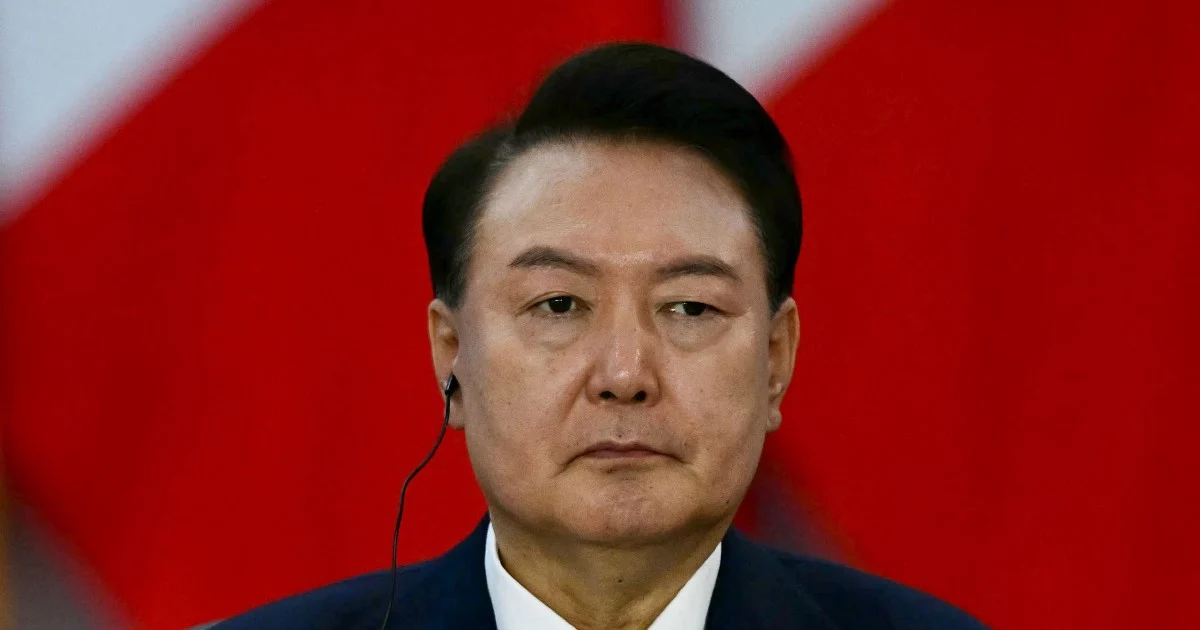
South Korea enters a pivotal moment in its recent political history as the nation's Constitutional Court prepares to deliver its judgment Thursday regarding former president Yoon Suk Yeol's ill-fated martial law declaration and the turbulent period that followed. The case represents one of the most significant tests of constitutional governance the country has faced in recent decades, with implications reaching far beyond the individuals directly involved to touch fundamental questions about the limits of presidential power and the resilience of democratic institutions.
Yoon Suk Yeol, who ceased to be president when his term ended, faces serious allegations stemming from his shocking decision to impose martial law in December 2024. The emergency declaration triggered immediate constitutional crisis, as lawmakers rushed to parliament to challenge the order while security forces moved to secure government buildings. The chaotic hours that followed saw parliament ultimately voting to reject the martial law decree, leading to its swift revocation. However, the incident exposed deep fissures within South Korea's political landscape and raised fundamental questions about the vulnerability of the nation's democratic safeguards against executive overreach.
The Constitutional Court, as South Korea's highest judicial body with specific authority over constitutional matters, bears the responsibility of interpreting whether Yoon's actions violated the nation's supreme law. This tribunal carries special weight in South Korea's governmental structure, as decisions regarding the validity of presidential actions carry implications for future administrations and set binding precedent for how power can be exercised and constrained. The court's composition and reasoning will likely influence South Korean constitutional law for generations to come, particularly regarding the circumstances under which emergency powers can be invoked and the procedures required before such measures take effect.
The broader context of this case extends into South Korea's complex recent political history. The nation has witnessed multiple transfers of power between rival political blocs, with each transition occasionally threatened by accusations of wrongdoing by previous administrations. Former presidents have faced corruption charges, impeachment proceedings, and various legal challenges—a pattern that some observers attribute to deep partisan divisions, while others view it as demonstrating the judiciary's independence. Understanding how the Constitutional Court navigates the present case will reveal much about how South Korea calibrates the balance between accountability and political stability.
For regional observers, particularly in Southeast Asia, the South Korean situation offers instructive lessons about maintaining constitutional order during periods of acute political tension. Malaysia itself has experienced debates about executive power, constitutional interpretation, and the proper scope of emergency provisions. The mechanisms by which South Korea's institutions responded to Yoon's martial law declaration—particularly parliament's ability to rapidly convene and formally reject the measure—demonstrate how constitutional architecture can function as a practical defense against authoritarian impulses. The Constitutional Court's ruling will illuminate whether this institutional resilience extends to the judicial dimension of governance.
Domestic political ramifications in South Korea will be substantial regardless of the court's direction. Yoon commands significant support among conservative constituencies who view him as a victim of judicial overreach by an opposition-controlled legislature. Conversely, progressive forces see his martial law declaration as a dangerous abuse of power that threatened to undermine parliamentary democracy. The court's verdict will either vindicate or delegitimize one of these narratives, potentially intensifying existing divisions or providing a basis for reconciliation through acknowledged constitutional clarity.
International observers, including allies such as the United States and regional powers like Japan, have maintained diplomatic discretion regarding the case's substance. However, South Korea's demonstrated ability to manage constitutional crises through established judicial channels rather than through military intervention or authoritarian consolidation of power strengthens the nation's democratic credentials on the global stage. The Constitutional Court's ruling will be interpreted internationally as a statement about South Korea's institutional maturity and commitment to constitutional governance.
The economic implications, though secondary to constitutional considerations, remain relevant. South Korea's status as a major advanced economy partly rests on the stability provided by functioning democratic and legal institutions. Prolonged uncertainty about the validity of executive actions or the reliability of constitutional safeguards could create long-term confidence challenges for investors who depend on predictable governance structures. The Constitutional Court's definitive ruling will provide necessary certainty about how South Korean law treats presidential emergency powers going forward.
Thursday's verdict will be detailed and comprehensive, as constitutional court decisions typically provide thorough legal reasoning that addresses the various statutory, constitutional, and historical dimensions of the case. The court will need to interpret provisions governing martial law, examine the procedures Yoon followed or failed to follow, and articulate principles that will guide future cases. The quality of this reasoning will likely exceed the immediate verdict itself in long-term importance, as it will establish the framework within which similar disputes will be evaluated in years to come.
The case also raises practical questions about the enforcement and operationalization of such major constitutional decisions. Should the Constitutional Court invalidate the martial law declaration entirely, it must clarify the legal status of government actions taken during the brief period when the decree was ostensibly in effect. Should it uphold some aspects while striking down others, it must explain how mixed validity affects subsequent governmental authority. These technical questions carry real implications for how the judgment translates into practical law and policy.
Beyond the immediate participants and affected institutions, South Korean citizens will observe the verdict as a test of whether their constitutional system protects democratic rights when they face existential challenge. Public confidence in constitutional courts depends significantly on perceptions that such bodies judge impartially and explain their reasoning transparently. The Constitutional Court's handling of this high-profile, intensely political case will shape public understanding of whether judicial independence remains viable in an era of deep partisan division.
The Constitutional Court's announcement Thursday closes one chapter of South Korea's recent constitutional history while simultaneously opening questions about implementation, potential further legal proceedings, and the broader trajectory of South Korean governance. Whether viewed as vindicating constitutional limits on executive power or as concluding a constitutional controversy, the verdict will stand as a defining moment in how South Korea navigates the tension between democratic majority rule and constitutional constraint.

