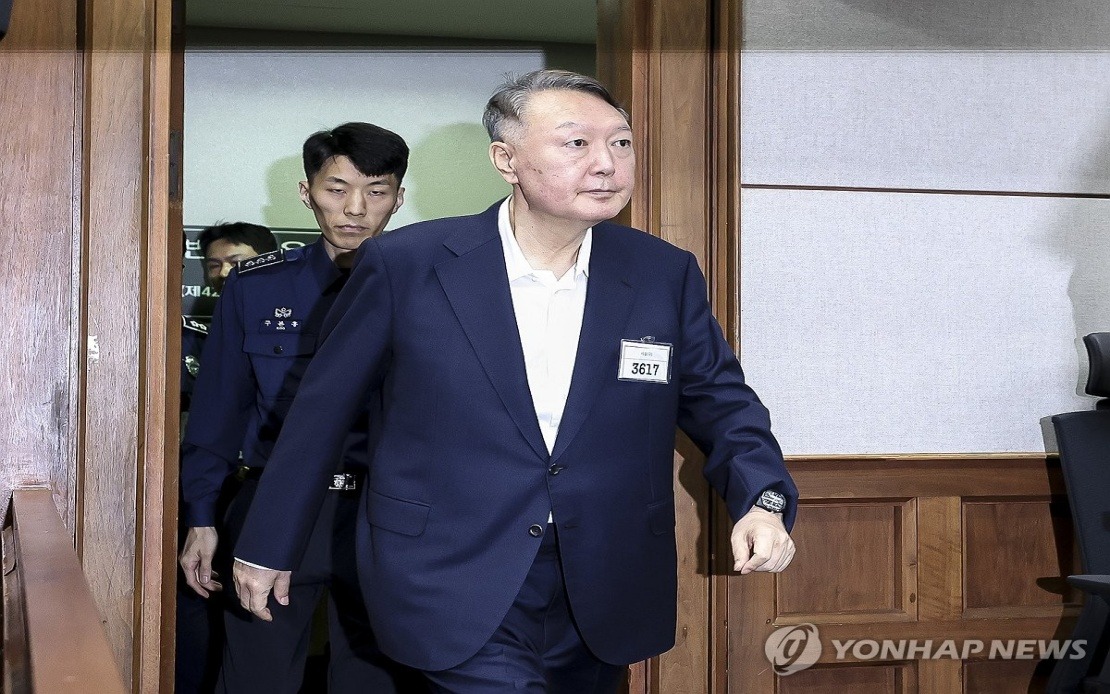
South Korea's Supreme Court has sanctioned a live broadcast of its verdict in the obstruction of justice case against former President Yoon Suk Yeol, marking a pivotal moment in the high-profile trial that has captivated the nation. The ruling, to be delivered Thursday at 2 pm, represents the first Supreme Court decision in proceedings linked to Yoon's dramatic and ultimately unsuccessful martial law proclamation in December 2024. The decision underscores the court's commitment to transparency in a case of considerable constitutional and political importance, even as it raises fresh tensions between judicial openness and the defendant's right to privacy.
Yoon's legal representatives had vigorously opposed the televised verdict, arguing that permitting cameras and broadcasters to transmit the proceedings could inflict lasting damage to his defence strategy and personal reputation, potentially compromising the fairness of his trial. The legal team contended that such exposure would constitute an "irreparable harm" to their client's rights and standing. However, the Supreme Court determined that the public interest in witnessing a defining judicial pronouncement on the actions of a former head of state outweighed these concerns. The court has arranged for licensed broadcasters to use its own camera equipment, ensuring controlled and professional coverage rather than unregulated media access.
The obstruction of justice charges represent merely one dimension of Yoon's broader legal troubles. In January 2025, weeks after declaring martial law and subsequently lifting it, Yoon faced accusations of instructing his presidential security detail to physically prevent investigators from executing a lawful detention warrant against him. This confrontation between executive security forces and law enforcement underscored the extraordinary circumstances surrounding his political downfall and the institutional conflicts his actions triggered throughout South Korea's government apparatus.
Beyond the obstruction allegations, prosecutors have constructed a multifaceted indictment spanning several distinct offences. Yoon stands accused of violating the constitutional rights of nine Cabinet ministers by failing to convene a preparatory meeting before implementing the martial law decree, denying them opportunity to review or contest the extraordinary measure. Authorities also charge him with falsifying official documents by amending the martial law proclamation after its revocation, an action allegedly designed to conceal procedural irregularities and legal vulnerabilities in the original decree. Additionally, he is accused of subsequently destroying this revised document, further obstructing potential investigation and accountability.
The special counsel's office, headed by Cho Eun-suk, had formally petitioned for permission to broadcast the verdict the previous week. This request reflected a strategic calculation that public visibility of the proceedings would serve prosecutorial and public accountability objectives, particularly given the exceptional nature of prosecuting a sitting or recently departed national leader. The special counsel team has maintained its position that maximum transparency serves democratic governance and public trust in institutional processes.
An appellate court had previously sentenced Yoon to seven years imprisonment in April following guilty verdicts on the obstruction charges. That ruling represented a judicial compromise of sorts—higher than the initial five-year sentence imposed by a lower court, yet substantially below the ten-year imprisonment term that the special counsel's team had recommended. The intermediate appeals court's decision to augment the punishment reflected its assessment that while Yoon's actions were egregious, they fell short of warranting the most severe possible penalty within the sentencing range.
Simultaneously, Yoon confronts even graver legal exposure through a separate trial addressing charges of leading an armed insurrection by orchestrating the martial law declaration itself. That proceeding, still ongoing before an appellate court, resulted in an initial life sentence—the maximum possible punishment under South Korean law. The distinction between the obstruction case reaching the Supreme Court this week and the insurrection trial reflects the complexity of Yoon's legal predicament across multiple judicial forums and charge categories.
For Malaysian and regional observers, this case illuminates fundamental questions about institutional resilience in democracies confronting executive overreach. South Korea's response to Yoon's attempted martial law—through swift judicial invalidation, criminal investigation, and now public trial with transparent broadcasting—demonstrates how constitutional courts and prosecutorial independence can constrain even a sitting president's extraordinary powers. The decision to allow live broadcasting of the verdict suggests confidence in the legitimacy of these proceedings and contrasts sharply with approaches that might sequester such trials behind closed proceedings or limit public scrutiny.
The broadcasting decision also reflects evolving global practices regarding judicial transparency and the right to information. While Yoon's defence team worried about prejudicial publicity, the court evidently concluded that preventing public knowledge of a Supreme Court verdict in a case of this magnitude would itself undermine democratic accountability. This tension between fair trial protections and public access to justice remains unresolved in many democracies, and South Korea's choice offers a model—albeit one that particular legal systems might adapt differently based on their own constitutional frameworks and judicial traditions.
The implications extend beyond South Korea's borders. In an era when executive power assertions occasionally test constitutional limits across Asia-Pacific democracies, the Korean precedent demonstrates how judicial systems can maintain independence and public legitimacy even when scrutinising former heads of state. The fact that a Supreme Court would televise its judgment suggests institutional confidence that the law has been properly applied and that public exposure reinforces rather than undermines judicial authority.

