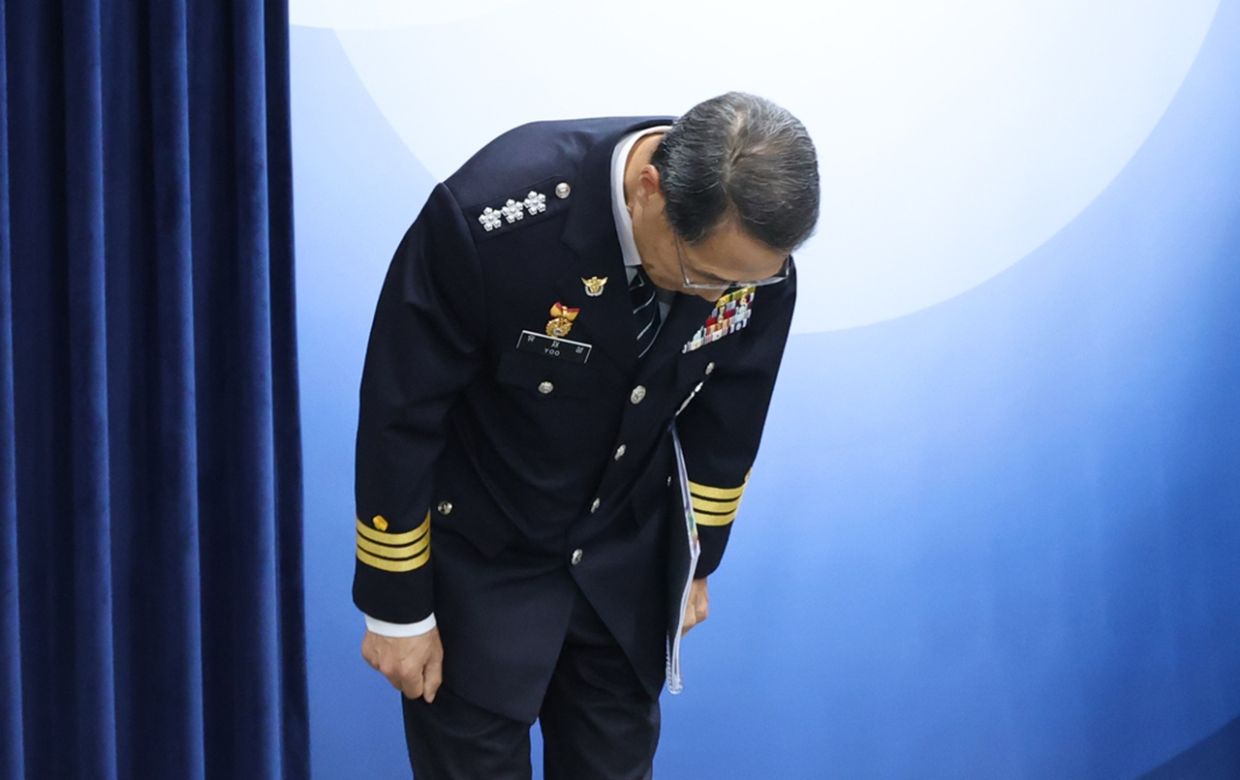
The integrity of South Korea's police force has come under intense scrutiny as Acting National Police Agency Commissioner General Yoo Jae-sung unveiled an ambitious reform agenda aimed at addressing systemic failures exposed by an ongoing murder investigation scandal. During a public briefing at Government Complex Seoul on Monday, Yoo acknowledged the gravity of public concern and committed the National Police Agency to fundamental change, signalling the government's recognition that institutional credibility has been seriously compromised by recent events.
At the heart of the controversy lies the investigation into Jang Yoon-gi, arrested for the alleged murder of a teenage girl in Gwangju in May. What initially appeared to be a straightforward criminal case has ballooned into a crisis of confidence in police procedures and professional ethics. Investigators stand accused of leaking sensitive investigation details to Jang's father, who holds a position within the police force himself, and critically, of failing to preserve and secure pivotal evidence that could have strengthened the prosecution's case. The allegations suggest a troubling pattern of preferential treatment linked to professional connections, undermining the principle that all citizens deserve equal treatment under the law regardless of social standing.
Yoo's announcement of a comprehensive investigative reform task force represents an attempt to demonstrate institutional accountability and commitment to systemic change. The proposed task force, scheduled to commence operations by the end of July, will comprise seven to ten members, with external experts comprising more than half the panel. This deliberate emphasis on outside participation reflects recognition that internal reform efforts lack sufficient independence to convince a sceptical public. By prioritising external expertise over internal-only solutions, the police agency acknowledges that trust has been eroded to the point where institutional insiders alone cannot credibly lead the reform process.
The scope of the proposed reforms extends beyond addressing the immediate scandal. The task force will examine structural arrangements that inadvertently create opportunities for improper relationships between officers and local communities, potentially establishing conditions where personal connections influence professional judgment. Additionally, the reforms target procedural weaknesses in how the police handle cases involving socially vulnerable populations, a concern particularly relevant in a society where cases of violence against young women have sparked national outrage and calls for systemic change. These measures suggest the police agency recognises that the scandal reflects deeper institutional vulnerabilities rather than isolated incidents of individual misconduct.
A particularly significant development involves the establishment of an internal affairs investigation unit operating under the National Office of Investigation. This unit will possess authority to investigate serious crimes committed by police personnel at all levels of the organisational hierarchy, eliminating the previous privilege where senior officials could shield themselves from certain forms of scrutiny. The removal of rank-based protections in internal investigations represents a fundamental shift in institutional culture, signalling that accountability applies uniformly across all organisational strata. For officers concerned about preferential treatment, this structural change carries symbolic weight beyond its immediate investigative capacity.
Further institutional oversight would operate through the Korean National Police Commission, with approximately one hundred civilian investigators comprising a new body tasked with examining alleged human rights violations and misconduct within police investigations. Yoo emphasised that the body's establishment requires amendments to the Police Act, with relevant legislation already submitted to the National Assembly. The police agency has committed to presenting detailed arguments during the legislative process, recognising that external parliamentary scrutiny of police authority requires careful institutional design. For the oversight body to function effectively, Yoo stressed that its findings must generate concrete recommendations for personnel changes and disciplinary action, preventing the emergence of a toothless oversight mechanism that would merely document problems without consequences.
The proposed expansion of the police rotation system introduces complex practical considerations that illustrate tensions between reform ambitions and operational realities. Currently, only officers at the superintendent level undergo mandatory nationwide rotations, with some senior inspectors similarly affected. Extending this system to lower-ranking personnel presents substantial logistical and financial implications, particularly regarding official housing provisions currently limited to senior officers. Yoo acknowledged these difficulties directly, suggesting the police agency would pursue a phased implementation strategy rather than comprehensive immediate expansion, incorporating feedback from frontline officers who would bear the practical burden of enhanced rotational assignments.
The timing and sequencing of implementation reflects calculated strategic thinking about institutional change. Rather than announcing all reforms simultaneously and attempting universal implementation, the police agency plans to introduce measures capable of prompt deployment while allowing the task force to deliberate on more complex reforms requiring detailed planning. This staged approach seeks to demonstrate immediate responsiveness to public criticism while avoiding the perception of hasty, poorly considered changes that might prove counterproductive. For Malaysian observers monitoring police reform efforts across the region, the South Korean approach illustrates the tension between the urgency demanded by public opinion and the deliberate pace required for meaningful institutional transformation.
Regarding Jang's father, the police chief indicated that the internal inspection would remain pending completion of the special investigation team's final report. This decision reflects institutional caution, avoiding premature conclusions while external investigations continue. However, the decision also carries political risk, as it postpones accountability for the most controversial allegations, potentially inviting criticism that the police agency is protecting one of its own despite public pressure for swift action. The handling of this specific matter will substantially influence public perception of whether announced reforms represent genuine institutional change or merely strategic public relations positioning.
For Southeast Asian governments grappling with similar challenges regarding police institutional integrity and public trust, South Korea's approach offers instructive lessons about both the possibilities and limitations of reform initiatives undertaken in response to public scandal. The emphasis on external expertise, transparent procedural changes, and civilian oversight reflects international best practices in police reform, yet the phased implementation and acknowledgment of practical constraints suggest that comprehensive institutional change proceeds more gradually than public expectations typically permit. The scandal's resolution will ultimately depend less on announced reforms than on their rigorous implementation and genuine commitment to accountability across all organisational levels.
The broader context suggests that public confidence in South Korean policing has reached a critical juncture. Yoo's statement that the police would "faithfully carry out duties without clinging to position" carries particular weight given mounting calls from civil society for senior officials to resign. Whether this commitment translates into substantive personnel changes or represents merely rhetorical acknowledgment of accountability concerns will substantially influence the credibility of the entire reform agenda. The coming months will test whether institutional announcements generate meaningful change or merely provide temporary respite from public criticism.

