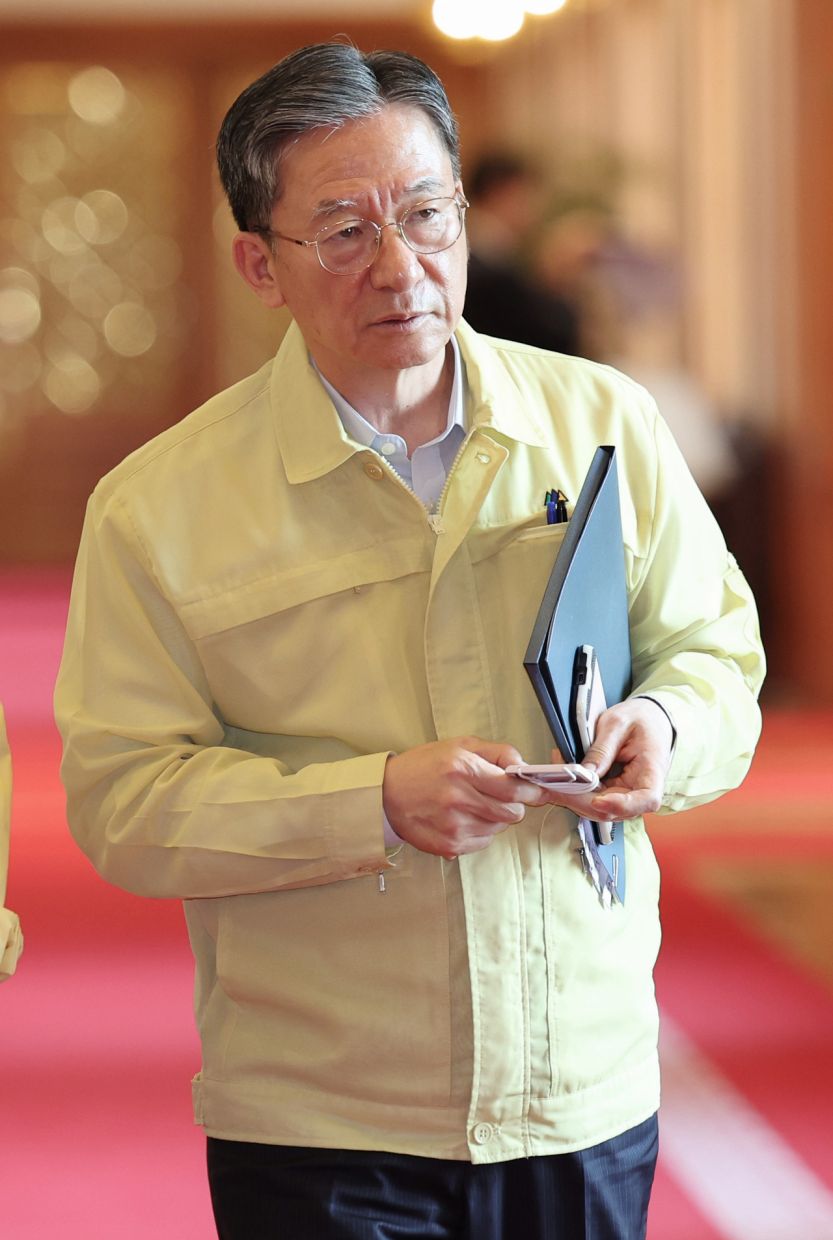
South Korea's Justice Minister Jung Sung-ho stepped down on Tuesday afternoon, marking another casualty in the country's ongoing tussle over the balance of power within its criminal justice system. The resignation reflects mounting tensions between the justice ministry and the ruling Democratic Party over fundamental questions about how prosecutors should conduct their work, particularly their ability to launch supplementary investigations when police inquiries are deemed incomplete.
Jung's departure stems from a substantive disagreement that goes to the heart of South Korean criminal justice reform. While the justice minister harboured reservations about stripping prosecutors of their supplementary investigation authority, his colleagues in the Democratic Party have championed a complete overhaul that separates investigative and prosecutorial functions. The party's reasoning is straightforward: concentrating too much power in the hands of prosecutors creates the potential for abuse, a concern that resonates across Asia where judicial independence and prosecutorial accountability remain contentious issues.
Under the current system, prosecutors possess broad latitude to conduct supplementary investigations after receiving cases from police. When they determine that the initial police investigation falls short of standards required for prosecution, they can launch their own inquiries to fill gaps or gather additional evidence. This power has been a defining feature of South Korean prosecution for decades, though critics argue it enables prosecutors to operate as both investigators and charging authorities, a duality that can be problematic.
The arrival of a revised Criminal Procedure Act on October 2 will fundamentally reshape this landscape. Once implemented, prosecutors will lose the ability to conduct supplementary investigations themselves. Instead, their role will narrow to reviewing findings from police investigations, making charging decisions based on available evidence, and representing cases in court. This represents a philosophical shift toward limiting prosecutorial discretion and preventing what reformers view as excessive concentration of power in a single institution.
Jung's stated reasons for resignation centred on health considerations, a common justification in Korean politics that sometimes masks deeper policy disagreements. However, his departure statement, reported by Yonhap News Agency and other local outlets, carried additional weight: he suggested that the transition to the new criminal justice framework would proceed more smoothly under fresh leadership. This formulation suggests Jung felt his continued presence might complicate or obstruct the implementation of reforms his party deemed necessary.
The timing of Jung's exit carries implications for how smoothly South Korea manages this significant institutional change. Prosecutorial independence versus accountability represents a perennial challenge across East Asia, where several countries have wrestled with similar questions about checking prosecutorial power. Taiwan and Japan have both grappled with comparable reforms, and South Korea's approach will be closely watched by jurisdictions considering similar restructurings.
Southeast Asian observers, particularly those from countries like Indonesia and the Philippines working to strengthen judicial independence and reduce prosecutorial overreach, may find lessons in South Korea's experience. The political will to limit prosecutorial power, even when it requires government ministers to resign, demonstrates the seriousness with which Seoul treats institutional reform. Yet it also highlights the challenges inherent in implementing such changes, especially when entrenched interests within the prosecution resist diminishment of their traditional authority.
Vice Justice Minister Lee Jin-soo will assume acting responsibilities, pending formal acceptance of Jung's resignation. Lee's handling of the transition period will be crucial, as the October 2 deadline for the Criminal Procedure Act's implementation approaches. The acting justice minister must shepherd the prosecution through a significant transformation while managing internal resistance and ensuring that practical operations continue without disruption.
Beyond personalities, Jung's resignation underscores how deeply South Korea's political establishment is committed to prosecutorial reform, even at the cost of ministerial continuity. This stands in contrast to some other democracies where prosecutors have successfully resisted constraints on their authority. The Democratic Party's willingness to accept Jung's departure rather than compromise on core reform principles suggests the party views this restructuring as fundamental to its vision of balanced criminal justice.
The October transition will inevitably create teething problems. Prosecutors accustomed to investigating cases may initially struggle with a narrower mandate focused on prosecutorial review and court representation. Police forces, conversely, may feel pressured to conduct more thorough initial investigations, knowing they cannot rely on prosecutorial supplementary work to fill investigative gaps. Training programmes, procedural guidelines, and institutional culture adjustments will all be necessary as this new system beds down.
For Malaysia and other countries in the region, South Korea's criminal justice evolution offers a relevant case study. As Southeast Asian nations seek to modernise their legal systems and address concerns about prosecutorial accountability, the South Korean model of separating investigative and prosecutorial functions presents both promise and caution. The system incentivises police to be more thorough initially while constraining prosecutors to focus on their core charging and advocacy functions. However, achieving this balance requires not just legislative change but cultural and institutional transformation.
Jung's resignation thus represents more than a single minister's departure; it signals South Korea's determination to proceed with substantial criminal justice restructuring despite political costs. As the October deadline approaches, all eyes will be on Lee Jin-soo and the prosecution to demonstrate that this new framework can function effectively while genuinely constraining the excessive concentration of power that reformers have long viewed as problematic.

