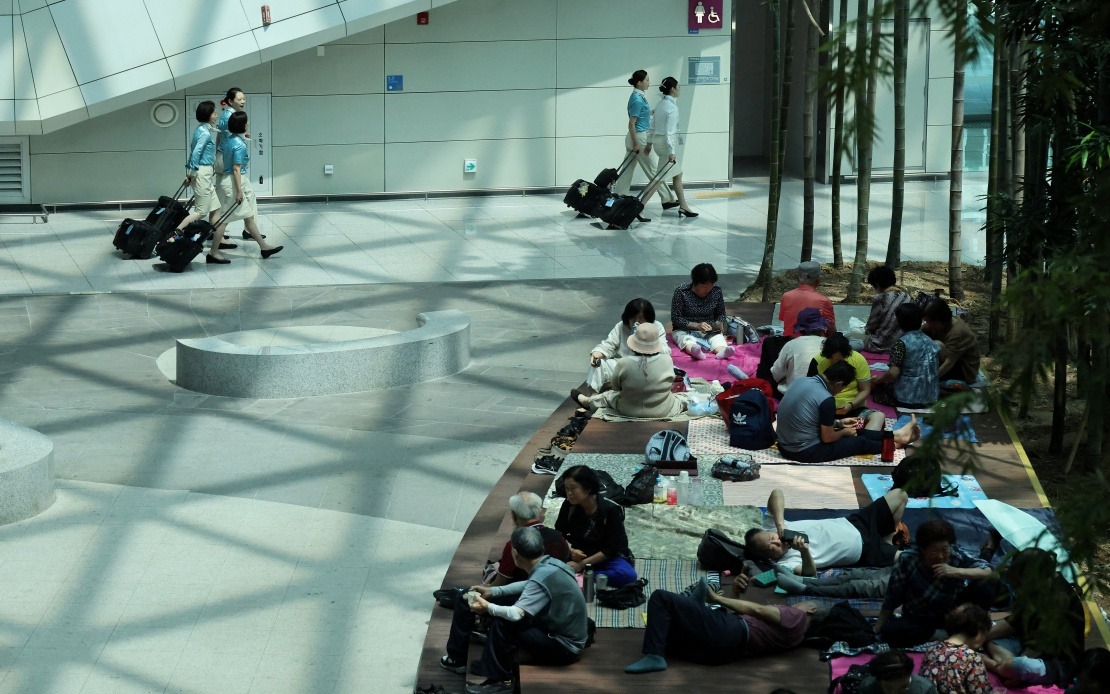
South Korea is grappling with an accelerating public health crisis driven by escalating summer temperatures, with new government data revealing that heat-related illness cases have nearly tripled over the past ten years. The Korea Disease Control and Prevention Agency's findings underscore how persistently elevated temperatures—particularly during the crucial late-summer period from ipchu (the astronomical start of autumn, falling on August 7 this year) through the end of August—are placing unprecedented strain on the nation's healthcare infrastructure and vulnerable populations.
The scale of the increase is substantial. Between 2011 and 2015, an annual average of just 215 patients sought medical attention for heat-related conditions during the late-summer window. This baseline figure has undergone dramatic transformation. From 2016 to 2020, the annual average climbed to 658 cases—more than triple the earlier period. The trend has persisted with even greater intensity in recent years, with the 2021-2025 average holding at 638 cases annually, indicating that elevated temperatures during this specific seasonal window have become the new normal rather than an anomaly.
More concerning than the raw caseload is the mortality trajectory. Heat-related deaths have not merely followed the patient numbers upward; they have risen disproportionately, suggesting that cases are becoming more severe. The annual average of heat deaths increased from 3.3 fatalities during 2012-2015 to over four deaths per year across the 2016-2025 decade. This upward shift in fatality rates hints that medical systems, while responding to increased volume, may be encountering more extreme cases requiring intensive interventions. For Malaysian observers and policymakers in Southeast Asia, this serves as a cautionary signal about how climate intensification in temperate regions can overwhelm even advanced healthcare systems.
The 2024 season has proven particularly harsh. From ipchu through late August, South Korea recorded 1,299 heat-related illness cases with 12 fatalities. These figures demonstrate that the concerning trend documented over the decade is not merely statistical—it reflects real human suffering unfolding in real time. On a single day in early August, emergency departments across the nation treated 202 patients for heat-related conditions, with three deaths occurring, showcasing how rapidly the situation can deteriorate during peak heat periods.
Government monitoring systems, operational since mid-May, have captured an expansive picture of the crisis. As of early August, the comprehensive tracking initiative had documented 3,089 heat-related cases nationwide, with 26 deaths recorded. These figures span the entire summer season rather than just the late-summer period, indicating that thermal stress is becoming a concern across broader stretches of the year. The persistence of problematic conditions through late August reflects how traditional seasonal boundaries no longer reliably predict when dangerous temperatures will strike, complicating public health planning and emergency preparedness.
Meteorological forecasts suggest that relief remains distant. Authorities anticipate that heat waves will persist through the end of August, with daytime temperatures anticipated to range between 31 and 35 degrees Celsius throughout the country. These sustained elevated temperatures create cumulative physiological stress, particularly for elderly residents, outdoor workers, and those without reliable air conditioning access. The extended duration means that heat-related illness will likely remain a significant emergency room burden for weeks to come.
The trajectory documented in South Korean data carries important implications for Malaysia and other Southeast Asian nations. While tropical regions experience endemic heat year-round, South Korea's crisis reveals how temperate countries are confronting heat stress patterns that previously were anomalous. The tripling of cases and rising mortality rates suggest that climate adaptation—encompassing infrastructure hardening, public education campaigns, and enhanced emergency response protocols—cannot be delayed. South Korea's experience demonstrates that even wealthy, technologically advanced nations face genuine difficulty managing the health impacts of temperature escalation.
For Malaysia, where heat-related illness already affects vulnerable populations during monsoon transitions and dry seasons, the South Korean situation provides a sobering precedent. The data suggest that incremental improvements in monitoring and response may prove insufficient if underlying temperature trends continue. The fact that South Korea has implemented a formal monitoring system since May and still recorded such substantial caseloads indicates the challenge of matching intervention capacity to climate-driven demand increases.
The social dimensions of this crisis merit consideration. Heat-related illness disproportionately affects the elderly, the socioeconomically disadvantaged, and workers employed in outdoor occupations. The rising fatality rates suggest that certain population segments lack adequate resources for adaptation—whether through cooling facilities, medical care access, or the ability to modify work schedules during dangerous heat. This distributional aspect creates both humanitarian and economic challenges, as healthcare systems must absorb costs while society bears the burden of preventable mortality.
Looking forward, South Korea's experience underscores that heat adaptation must extend beyond seasonal vigilance toward structural transformation. Building standards, urban planning that incorporates cooling infrastructure, workplace heat regulations, and equitable access to protective technologies all constitute essential elements of climate resilience. The trajectory from 215 cases annually a decade ago to over 600 cases in recent years demonstrates that reactive crisis management ultimately proves insufficient. Only proactive systemic adaptation can arrest the rising toll.
For policymakers across Asia, the South Korean case study offers both warning and instruction. The warning is that climate intensification is reshaping the epidemiology of heat-related illness in ways that overwhelm traditional adaptive capacity. The instruction is that comprehensive monitoring, infrastructure investment, and equitable health resource distribution represent necessary foundations for managing this evolving challenge. As temperatures continue their upward trajectory, nations that delay such adaptations will likely face the escalating burdens now confronting South Korea's healthcare system.

