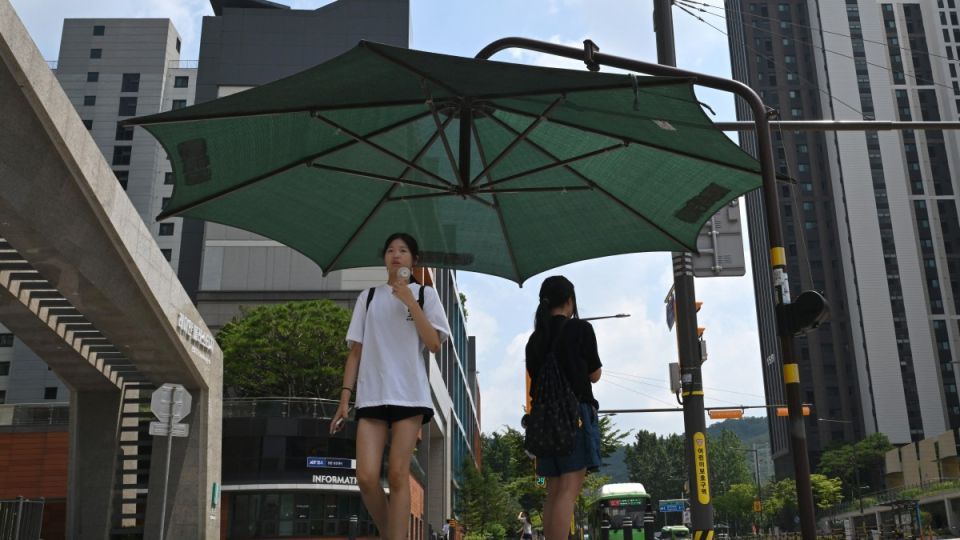
South Korea's unprecedented summer heat has prompted major corporations to fundamentally restructure how their workers operate, introducing extended rest periods, sophisticated cooling technologies, and revised work schedules to combat heat-related illnesses. Yet this corporate adaptation masks a troubling reality: the protections remain largely the preserve of conglomerates, while workers at smaller enterprises and outdoor worksites face mounting danger as temperatures soar to dangerous levels across the country.
The scale of the heat emergency is undeniable. Yangsan in South Gyeongsang Province recorded a national temperature peak of 42.5 degrees Celsius, whilst Seoul endured sustained extreme heat warnings for consecutive days, signalling conditions far beyond seasonal norms. Underlying this meteorological crisis is a grim occupational toll: between 2022 and mid-2023, South Korea's Workers' Compensation and Welfare Service documented 195 heat-related workplace accidents, including 20 fatalities. More concerning still, thirteen cases—four proving fatal—had already been recognised by June this year, before the traditionally deadliest months of July and August arrived.
The legal landscape has shifted decisively in workers' favour following last year's watershed moment when a district court convicted a construction company under the Serious Accidents Punishment Act for an employee's heatstroke death. This landmark ruling, the first criminal conviction specifically targeting heat-related fatality, fundamentally altered corporate risk calculations and prompted major employers to invest substantially in protective infrastructure. Construction firms, which shoulder disproportionate responsibility for industrial fatalities, have led the adaptation efforts, recognising both moral and legal imperatives to shield their workforce from extreme conditions.
Amongst South Korea's construction and heavy industry titans, innovation in heat protection has become increasingly sophisticated. Lotte E&C operates an Internet of Things monitoring system across roughly eighty construction sites that measures perceived temperature every five minutes and assigns heat risk across five distinct categories, enabling real-time intervention. Hyundai Engineering & Construction incentivises workers through rewards for utilising designated rest zones, whilst Daewoo E&C permits workers to cease labour without penalty if they experience physical distress. These measures extend particularly to migrant workers, a vulnerable population: Hyundai E&C distributes emergency guidance in twenty-two languages and supplies cooling vests equipped with integrated fans and oral rehydration solutions to workers deemed especially susceptible to heat stress.
Industries operating continuously have implemented rigid work-and-rest protocols calibrated to temperature thresholds. Posco, whose blast furnaces demand round-the-clock operation, mandates fifteen-minute rest intervals following every forty-five minutes of labour when perceived temperatures exceed thirty-five degrees, scaling to ten-minute breaks after fifty minutes when temperatures surpass thirty-one degrees. Hyundai Steel enforces minimum hourly rest of ten minutes above thirty-one degrees and fifteen minutes above thirty-five degrees. Shipbuilders similarly extended summer respite: Hanwha Ocean doubled morning and afternoon breaks from ten to twenty minutes through August's conclusion, lengthens lunch by thirty minutes when temperatures exceed twenty-eight degrees, and extends it by a full hour when surpassing thirty-one point five degrees. HD Hyundai Heavy Industries lengthened lunch breaks from one hour to ninety minutes and operates over 270 cooling facilities across its shipyards whilst distributing cooling vests, ice water and electrolyte supplements.
Yet these comprehensive measures remain almost exclusively the domain of sizeable corporations with capital reserves sufficient to install cooling infrastructure and reorganise complex operational schedules. The data reveals a starkly inequitable distribution of protection. Among the 195 documented heat-related accidents since 2022, more than half occurred at workplaces employing fewer than fifty workers, whilst forty-two incidents happened at businesses operating with fewer than five employees. Workers at smaller enterprises typically lack dedicated safety personnel, adequate cooling equipment, and proper rest facilities—structural disadvantages that intensify vulnerability during extreme weather conditions.
Agriculture and outdoor labour sectors present particularly acute dangers. Last month alone, a Thai seasonal worker collapsed fatally whilst working in fields in Haenam, South Jeolla Province, and a Vietnamese national died whilst undertaking outdoor farm work in Goesan, North Chungcheong Province. These deaths underscore how migrant labourers, already marginalised within South Korea's employment hierarchy, face disproportionate exposure to lethal conditions with minimal safety infrastructure or language-accessible support systems.
Representative Kim Wi-sang of the ruling People Power Party has emerged as an advocate for equalising protections, urging the government to transcend its apparent concentration on large workplace safety and substantially strengthen inspections and tangible protections targeting seasonal migrant workers and employees at small outdoor worksites. His intervention reflects growing parliamentary recognition that corporate voluntarism, whilst commendable, cannot substitute for systematic regulatory frameworks ensuring comprehensive coverage across all employment categories. The construction sector's tragic history and the recent legal precedent provide momentum for regulatory expansion, yet translating policy intention into effective ground-level protection for the most vulnerable workers remains an unresolved challenge for South Korean policymakers grappling with accelerating climate extremes.

