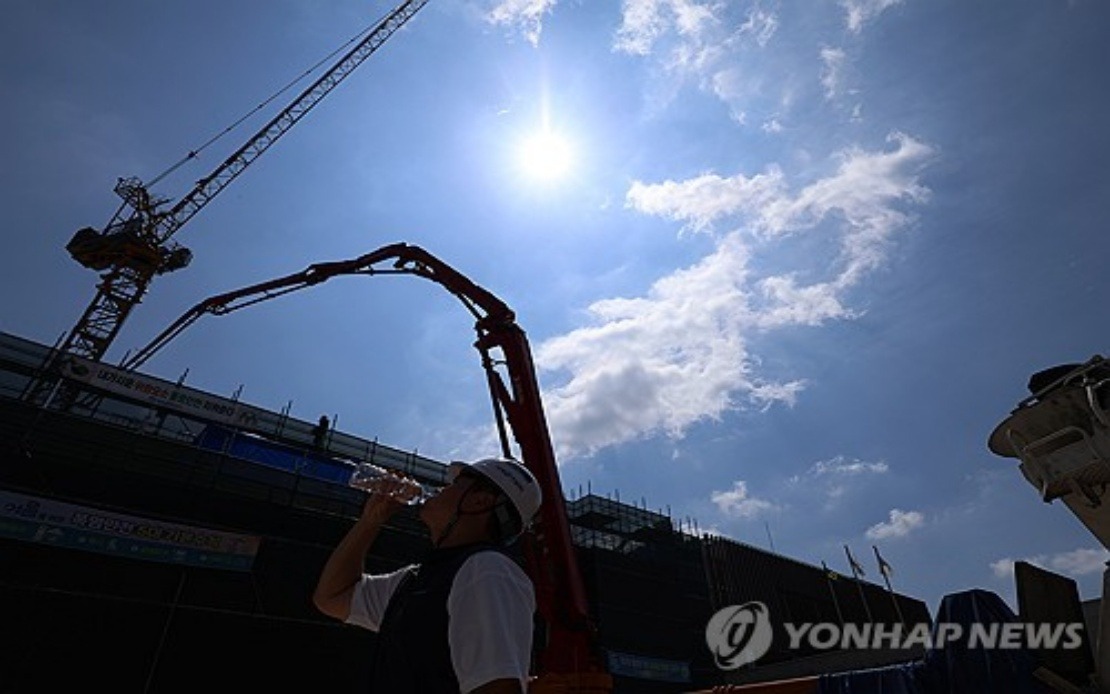
South Korea is gripping with an unprecedented heat emergency as its state weather agency escalated warnings across the greater Seoul metropolitan area on Wednesday, bringing nearly half the region under the most severe alert status. The Korea Meteorological Administration activated top-tier serious heat wave warnings affecting 20 of the 46 land weather advisory zones in the capital region, representing 43 per cent of the greater Seoul area. This expansion of critical alerts underscores the intensity of the weather system that has been battering the nation's most densely populated region with relentless thermal pressure.
The additional warnings came into force at 11 am across southern Incheon and nine municipal districts and cities in Gyeonggi Province, including Gwangmyeong, Yeoncheon and Hwaseong. This latest escalation follows Tuesday's unprecedented decision to place all of Seoul under the highest alert level for the first time since the heat wave warning system was formally introduced on June 1. The cascading expansion of critical zones reflects how rapidly conditions have deteriorated across the metropolitan region, affecting millions of residents who depend on public infrastructure and cooling facilities that are increasingly strained by demand.
The serious heat wave designation carries significant implications for residents and businesses across affected areas. According to KMA guidelines, authorities issue the top-tier warning when apparent temperatures are forecast to reach 38 degrees Celsius or higher, or when daily maximum temperatures climb to 39 degrees Celsius or above in regions where the highest apparent temperature has exceeded 35 degrees Celsius for two or more consecutive days. The technical thresholds trigger mandatory public health interventions and emergency protocols designed to minimize harm during extreme thermal events.
The heat wave's geographical reach continues to expand beyond the capital region. Cheongyang in South Chungcheong Province received a serious heat wave warning on Wednesday, marking a historical first: the highest alert level has now been implemented for the first time in the central Chungcheong provinces. This geographic expansion indicates that the thermal system affecting the Korean Peninsula is becoming increasingly widespread and intense, threatening communities across multiple regions simultaneously rather than remaining localized to the capital area.
Temperatures have reached extraordinary levels not seen in the modern meteorological record. The southeastern city of Yangsan recorded 42.5 degrees Celsius, establishing the highest temperature since systematic weather observations began in 1904. Such readings represent a degree of heat stress that challenges existing infrastructure, public health systems, and human physiology. For Southeast Asian readers accustomed to tropical climates, these readings are comparable to the most extreme conditions experienced during the region's worst heat waves, yet they represent a striking anomaly for East Asia's typically more temperate climate patterns.
The human cost of the sustained heat emergency is mounting rapidly. The Korea Disease Control and Prevention Agency documented 2,221 heat-related hospitalizations between May 15 and Monday of the preceding week, with 19 fatalities attributed to the extreme conditions. These figures represent not merely statistics but reflect a broader public health crisis affecting vulnerable populations including elderly residents, outdoor workers, and those without adequate access to cooling facilities. The trajectory of hospitalizations suggests that numbers may continue climbing as the heat wave persists through the remainder of the summer season.
The situation carries particular relevance for Malaysia and other Southeast Asian nations as it highlights the increasing vulnerability of regions not traditionally accustomed to extreme heat. While tropical countries have developed adaptive strategies and infrastructure over centuries, temperate regions like South Korea are grappling with climate conditions that exceed the historical parameters for which their systems were designed. This mismatch between infrastructure capacity and climatic reality offers cautionary lessons for Malaysia as global warming intensifies, potentially bringing unprecedented heat challenges even to already-warm regions.
Public health authorities across South Korea have activated emergency protocols in response to the expanding crisis. Heat wave warnings trigger mandatory public announcements, operation of emergency cooling centers, heightened monitoring of vulnerable populations, and coordination between municipal authorities and healthcare facilities. The sheer number of areas under the highest alert level means that resources and personnel are being mobilized at unprecedented scale across the capital region, stretching administrative capacity and emergency response systems.
The climate implications warrant serious consideration beyond the immediate crisis. The sustained intensity and geographic breadth of the current heat wave suggest shifting atmospheric patterns potentially linked to broader climate change dynamics. For a technologically advanced nation like South Korea, the need to adapt infrastructure, urban planning, and public health systems to accommodate more frequent and severe heat events is becoming undeniable. This recognition is gradually influencing policy discussions and resource allocation decisions across the country.
For Malaysian observers, the South Korean experience serves as a reminder of heat wave dynamics regardless of geographic location or development status. While Malaysia's tropical climate means residents possess greater cultural familiarity with hot conditions, extreme heat events still impose significant stress on healthcare systems, outdoor workers, and vulnerable populations. The preventative measures, early warning systems, and public health responses being implemented in South Korea offer models that Southeast Asian health authorities might adapt to their own contexts as global temperatures continue rising.

