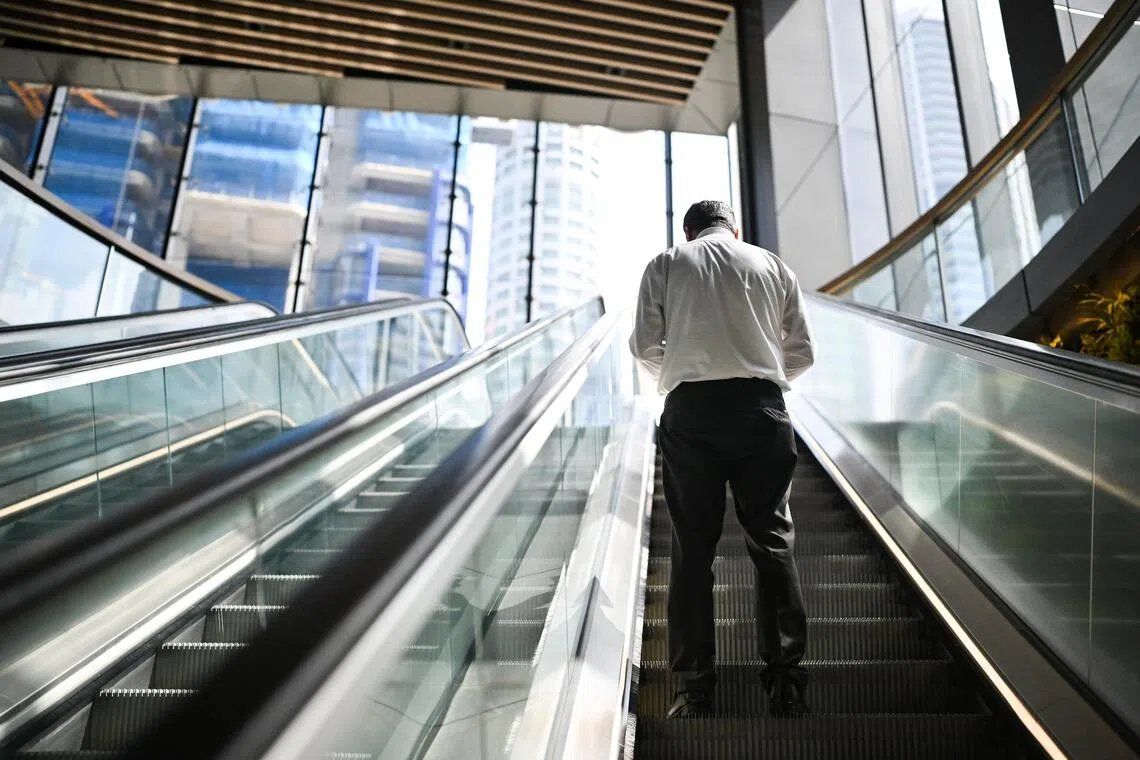
The question of how to ride an escalator has become an unexpectedly divisive issue in South Korea, with the nation's commuters locked in an almost perfect stalemate over a matter that touches daily life for millions. A government survey spanning 1,000 adults across seven major cities has found the country nearly evenly split, with barely half a percentage point separating the two camps—50.1 per cent believe passengers should stand on one side and leave the other open for those in a hurry, while 49.9 per cent advocate for standing still across both lines. This razor-thin divide reflects the complexity underlying what might seem like a simple question of public transit behaviour, and it has breathed new life into a contentious debate that has simmered in South Korean society for decades.
The intensity of this discussion became apparent when the government convened a public forum in Seoul on August 29, bringing together approximately 200 citizens, transport experts, and safety specialists to hash out whether escalators truly function better when everyone stands motionless or when one lane remains available for pedestrians. The forum highlighted a fundamental tension that extends far beyond mere preference—it touches on competing values of individual efficiency versus collective capacity, and raises genuine questions about the safety implications of different user behaviours. Jang Gye-ryeon, a public administration researcher at the Korea Institute of Industrial Relations, articulated this complexity succinctly, arguing that the answer cannot be reduced to a simple binary choice. Instead, he contended that policymakers must consider whose efficiency matters most, and whether the same approach makes sense in different spaces and at different times of day.
The efficiency argument forms one pillar of this debate. While a person rushing to catch a train can clearly save time by walking up a moving escalator rather than standing still, the picture becomes murkier when considering aggregate passenger flow. Research conducted at a crowded British train station demonstrated that passenger capacity increased between 25 and 30 per cent when travellers occupied both sides of the escalator simultaneously, rather than leaving one side clear for walkers. A smaller-scale test conducted at Guri Station near Seoul produced comparable results, with approximately 190 people using the escalator during the same period when both sides were occupied, compared with only 164 when a one-side-standing protocol was in place. However, researchers exercised appropriate caution about these findings, acknowledging that the Guri Station experiment involved too limited a sample to warrant definitive conclusions about broader passenger behaviour patterns.
Yet efficiency represents only part of the equation, and safety concerns have grown increasingly prominent in the policy discussion. Sensor-based testing conducted on escalator steps revealed that downward walking generates an impact equivalent to approximately 2.01 times a person's body weight, while upward walking produces roughly 1.54 times body weight. Professor Heo Yun-seop from Korea Lift College explained that these repeated impacts from walking, combined with the uneven mechanical stress created when passengers stand on only one side, can place considerable strain on specific escalator components. While evidence remains insufficient to definitively establish a causal link between one-sided standing and equipment breakdowns, the potential for accumulated wear affecting both the escalator's operational lifespan and maintenance costs presents a legitimate concern for transit authorities managing sprawling urban systems.
South Korea's shifting approach to escalator etiquette reflects the evolving understanding of these competing factors over the past quarter-century. The government initially began promoting one-side standing in 1998, and the practice gained nationwide momentum around the 2002 FIFA World Cup as a means of accommodating passengers with time constraints. However, mounting concerns regarding user accidents and the mechanical costs of equipment maintenance prompted a policy reversal, with officials actively encouraging two-line standing between 2009 and 2014. This pendulum swing eventually led to a position of official neutrality beginning in 2015, when the government stepped back from prescribing either approach and instead focused on three fundamental safety guidelines: holding the handrail, avoiding walking or running on the steps, and remaining within safety markings.
This inconsistent policy history goes some distance toward explaining why South Korean commuters remain so evenly divided on the issue. The government's repeated changes of direction have meant that different cohorts of the population absorbed different messages during their formative commuting years, establishing varied habits and preferences that persist today. Meanwhile, accident statistics provide fresh impetus for policy reconsideration. Data covering escalator incidents from 1993 through 2025 reveals that user behaviour accounted for 72.3 per cent of recorded accidents, with passengers aged 60 and older representing 53.3 per cent of those involved in accidents. These figures underscore how escalator safety intersects with demographic change, particularly relevant for South Korea and much of East Asia facing rapidly ageing populations.
The August 29 forum itself demonstrated how public deliberation can shift perspectives, though far from decisively. Before the discussion commenced, 45.9 per cent of forum participants favoured the two-line standing approach, while only 13.4 per cent supported leaving one side open for walkers. However, after several hours of debate among experts and fellow citizens, support for one-side standing rose to 29.9 per cent, while backing for two-line standing declined to 31.4 per cent. The most striking outcome was that 38.1 per cent of participants came to favour a flexible approach, with different rules applied based on location and crowd density. This shift suggests that exposure to diverse expert perspectives and practical evidence can move people away from fixed positions toward more contextual thinking, even on an issue as seemingly straightforward as escalator use.
For Malaysian and Southeast Asian observers, this South Korean experience offers instructive lessons as urban transit systems across the region grapple with similar questions. As cities like Kuala Lumpur, Bangkok, and Singapore expand their metro networks and shopping mall footprints, questions about escalator etiquette become embedded in broader transit culture development. The South Korean example demonstrates that neither one-line nor two-line standing represents a universally optimal solution, and that different contexts—rush-hour versus off-peak usage, crowded shopping centres versus business districts, different age demographics—may warrant different approaches. Interior Minister Yun Ho-jung's commitment to apply the forum's conclusions toward future escalator safety improvements suggests that South Korea is moving toward evidence-based, context-sensitive policy rather than top-down mandates.
The practical implications extend beyond mere courtesy or habit. For transit operators, maintenance supervisors, and public health authorities, the South Korean debate highlights the interconnections between user behaviour, infrastructure longevity, and safety outcomes. An approach that optimises passenger throughput might compromise equipment lifespan, while an approach that maximises safety might frustrate time-conscious commuters and reduce overall system utility. These tensions prove particularly acute in densely populated Asian cities where millions of people depend daily on escalators, and where even marginal changes in efficiency or accident rates affect enormous populations. Furthermore, the demographic dimension—with older passengers representing a disproportionate share of escalator accidents—suggests that effective policy should perhaps differentiate between different user groups or different times of day rather than imposing uniform rules.
The South Korean government's evolution from prescriptive guidance toward basic safety principles while allowing flexibility on usage patterns may represent a more sustainable approach than attempting to enforce universal behavioural standards. This framework acknowledges that commuters possess legitimate reasons for their preferences, that different contexts create genuinely different optimal solutions, and that public acceptance of transit guidelines depends partly on citizens understanding the reasoning behind them. Rather than dismissing the escalator etiquette question as trivial, transit authorities across Southeast Asia might benefit from similar deliberative processes that bring together users, engineers, and safety experts to develop contextually appropriate guidelines. The South Korean experience suggests that even seemingly settled questions about public behaviour deserve periodic reexamination as new evidence emerges and urban circumstances evolve.

