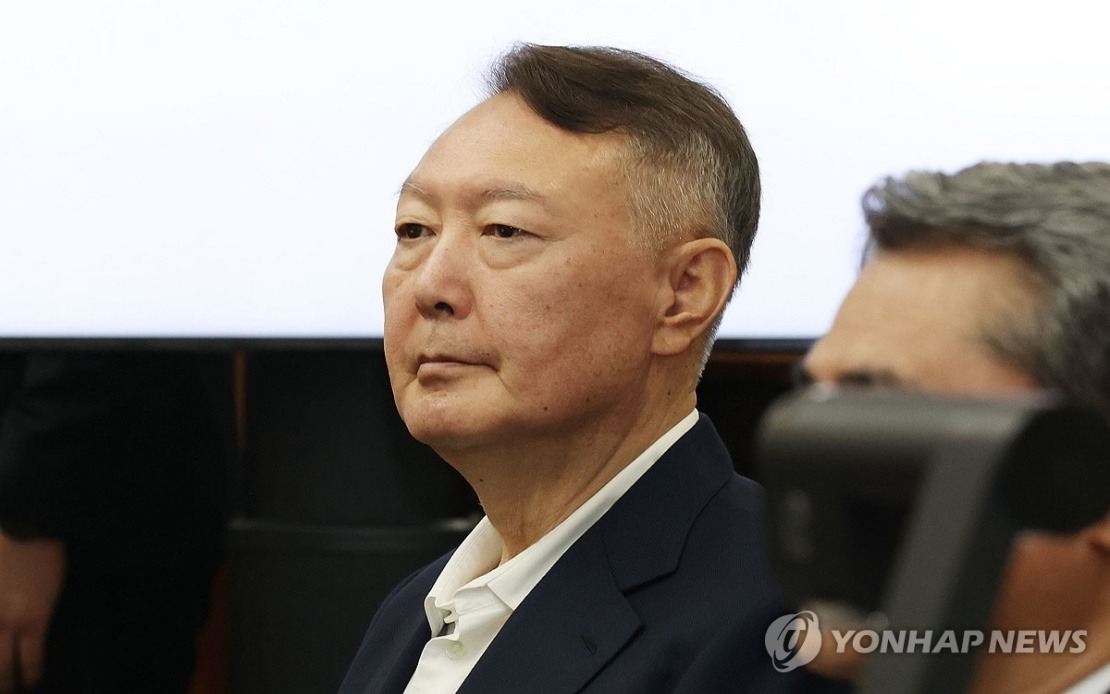
Former South Korean President Yoon Suk Yeol faces a two-year prison sentence following his conviction on charges of accepting illegal political funds disguised as free opinion polls, in a ruling that underscores the deepening legal jeopardy confronting one of Asia's most prominent political figures. The Seoul Central District Court delivered the verdict on Monday, finding Yoon guilty of violating the Political Funds Act after he received opinion surveys worth approximately 270 million won (US$180,100) from Myung Tae-kyun, a self-styled political power broker and businessman, between April 2021 and March 2022.
The conviction carries particular significance because it diverges sharply from a separate case involving Yoon's wife, former first lady Kim Keon Hee, who was acquitted on identical charges in April by the Seoul High Court. That earlier ruling reasoned that because Myung distributed similar opinion polls to other individuals, the couple could not be deemed to have derived tangible benefit from the arrangement. The divergent outcomes in the two trials highlight the complexities inherent in prosecuting cases where the line between legitimate political activity and corruption becomes blurred, and suggest that the courts have adopted differing interpretations of what constitutes improper gain in such circumstances.
Special counsel Min Joong-ki's investigative team had alleged that Yoon orchestrated a quid pro quo arrangement with Myung, trading political favours for polling data. Specifically, prosecutors argued that Yoon promised to support former Representative Kim Young-sun's nomination as a candidate for the conservative People Power Party in parliamentary by-elections scheduled for June 2022 in exchange for receiving the surveys. The court accepted this central premise, determining that Yoon had indeed received fourteen of the opinion polls without compensation, thereby violating campaign finance regulations that strictly govern how political figures may acquire such materials.
Beyond the imprisonment order, the court mandated that Yoon forfeit 13.96 million won, a sum representing the estimated value of the free polls he received. Meanwhile, Myung himself received an eighteen-month prison sentence for his role in the scheme, considerably lighter than the four-year term prosecutors had sought. The disparity between the sentences handed down and the prosecution's recommendations reflects judicial scepticism about certain aspects of the case, even as the court convicted on the core charges.
The implications for Malaysia and the broader Southeast Asian region warrant examination. South Korea's criminal prosecution of a former head of state, though not unprecedented globally, demonstrates the institutional strength of its judicial system and commitment to anti-corruption enforcement at the highest levels. This stands in contrast to patterns observed in some neighbouring democracies, where former leaders have occasionally escaped prosecution through political protection or structural limitations. For Malaysian observers monitoring governance standards across Asia-Pacific, the Korean precedent offers both an encouraging model of institutional independence and a cautionary tale about the vulnerability of political figures to legal exposure once they leave office.
Yoon's legal troubles extend far beyond this opinion poll conviction. In February, he received a life sentence for his role in orchestrating an abortive martial law declaration in December 2024, an extraordinary episode that briefly suspended democratic institutions and shocked the international community. That insurrection conviction represents a far more serious legal jeopardy than the current case, though appeals will likely consume years of litigation. The accumulation of convictions suggests a pattern of legal reckoning that will define Yoon's post-presidential legacy and potentially reshape South Korean politics for years to come.
The opinion poll case itself illuminates how political funding regulations operate in competitive democracies and the creative methods through which politicians sometimes attempt to circumvent campaign finance restrictions. By accepting opinion surveys rather than direct monetary contributions, Yoon reportedly sought to evade detection and circumvent transparency requirements. Such schemes, while perhaps less brazen than outright bribery, nonetheless undermine the integrity of electoral systems by allowing undisclosed support to flow toward political actors. The Korean court's willingness to prosecute such conduct, even against a former president, demonstrates institutional commitment to maintaining campaign finance boundaries.
The divergence between the court's treatment of Yoon and the earlier acquittal of his wife introduces an element of legal unpredictability that could complicate future prosecutions. Prosecutors have appealed the acquittal in the first lady's case, arguing that the court's reasoning was flawed. Should the higher court overturn Kim's acquittal and convict her, the symmetry of punishment would be restored but questions would linger about why the initial trial court adopted such a lenient interpretation of the evidence. Conversely, if the acquittal stands, observers might question whether judicial inconsistency reflected different judges' assessments or some other variable.
The broader context of South Korea's anti-corruption efforts reveals an increasingly assertive prosecutorial apparatus willing to target even the most powerful figures. The special counsel system, which appointed Min Joong-ki to investigate Yoon, represents an institutional innovation designed to insulate corruption investigations from political interference. Unlike conventional prosecutors, special counsels operate with enhanced independence, though they remain subject to time limits and must justify their mandates. The system's deployment against a sitting or recently-departed president indicates a threshold-lowering in acceptable targets for criminal investigation, a trend that could reverberate through East Asian governance practices.
For regional observers, the Yoon cases underscore that even consolidated democracies with established rule of law traditions can experience political crises of breathtaking proportions. The martial law episode shocked Korea's political establishment and international partners precisely because the country's democratic institutions appeared firmly entrenched. The subsequent criminal prosecution of the perpetrator offers a form of institutional reassurance, yet also raises uncomfortable questions about how such episodes become possible in the first place. As Southeast Asian nations continue developing their own institutional safeguards and judicial independence mechanisms, the Korean experience provides instructive lessons about both the capacities and vulnerabilities of democratic systems.
The conviction also reflects evolving international norms regarding political accountability. Whereas previous generations of Asian leaders sometimes escaped legal consequences through amnesties, pardons, or political settlements, contemporary expectations increasingly demand genuine judicial reckoning. The Korean public, despite divisions over Yoon's policies and the martial law declaration, has generally accepted that legal processes must run their course. This acceptance of accountability mechanisms, even when politically inconvenient, represents a maturing democratic culture that contrasts with resistance to prosecution elsewhere in the region.

