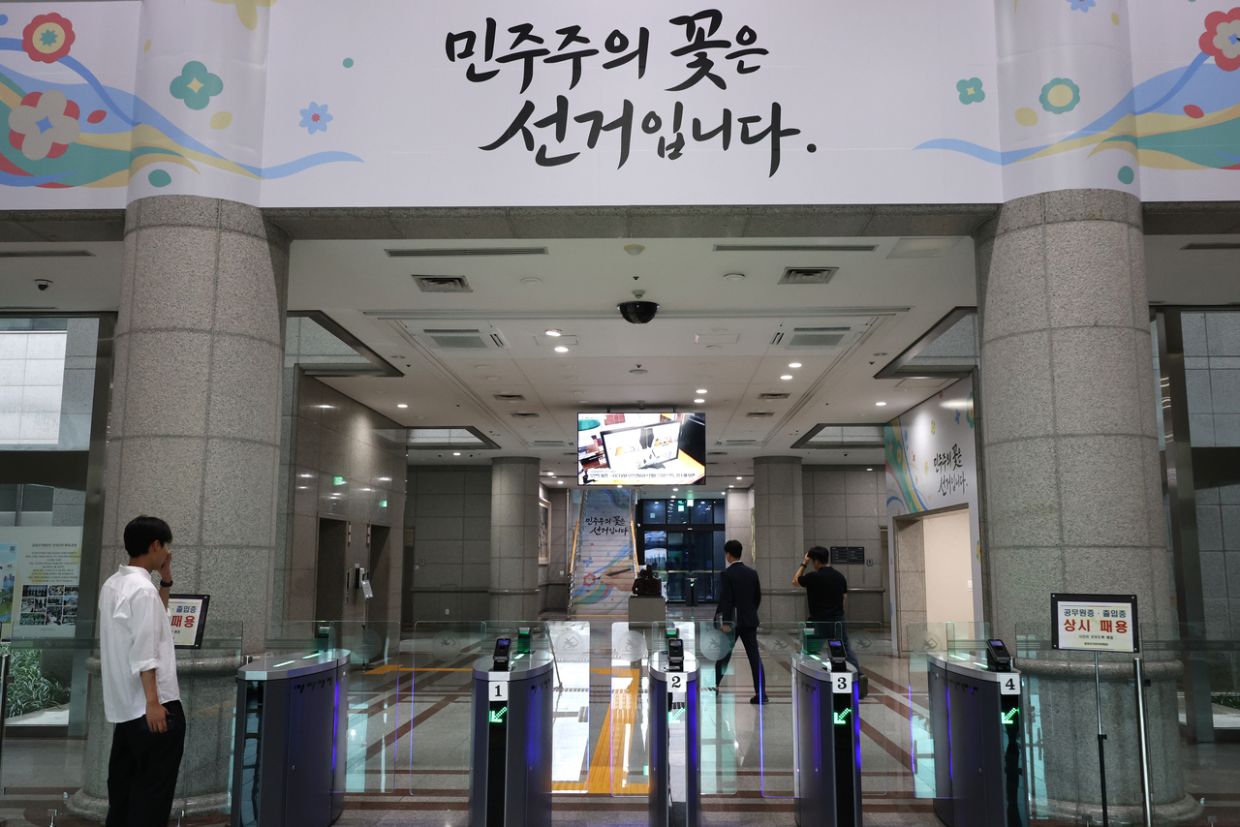
South Korean prosecutors and police moved swiftly on Thursday to investigate potential misconduct at the National Election Commission, with a joint task force executing a search warrant at the agency's Gwacheon headquarters just outside Seoul. The operation signals escalating concern among authorities over the integrity of administrative systems surrounding the country's electoral process, particularly following widespread reports of voting irregularities during the June 3 local elections.
At the heart of the investigation lies an allegation that undermines public confidence in one of democracy's most fundamental institutions. According to legal sources briefed on the matter, certain employees within the National Election Commission are suspected of deliberately altering statistical records stored on the commission's computer systems. The alleged purpose of these manipulations was to obscure and downplay administrative failures related to inaccuracies in voter registration numbers, effectively covering up errors that contributed directly to election day disruptions.
The concrete manifestation of these alleged administrative failures emerged on election day itself, when multiple polling stations across the country reported critical shortages of ballot papers. This was no minor inconvenience—voters at affected locations found themselves unable to cast their ballots and were forced to leave polling stations without exercising their fundamental democratic right. The scale of the disruption raised immediate questions about whether the election commission had adequately prepared for the voting process, and whether the shortages reflected negligence, poor planning, or systemic weakness in ballot distribution protocols.
For Malaysian observers and those across Southeast Asia, this episode offers a cautionary lesson about the vulnerability of electoral institutions to internal mismanagement and potential manipulation. While Malaysia has its own experience with election administration through the Election Commission, the South Korean case demonstrates how even in established democracies with mature institutional frameworks, lapses in oversight and accountability can occur at critical junctures. The incident highlights the importance of maintaining robust checks and balances within electoral bodies, and ensuring that data integrity protocols are treated as seriously as the voting process itself.
The formation of a joint prosecution-police task force to investigate the matter indicates that Seoul's authorities are taking the allegations with appropriate gravity. Such inter-agency collaboration typically signals that investigators believe the scope and severity of the suspected wrongdoing warrants intensive scrutiny. By combining prosecutorial expertise with police investigative capabilities, the task force can pursue multiple angles simultaneously—examining not only the alleged data manipulation itself, but also identifying who authorized or participated in the cover-up, and whether broader systemic vulnerabilities enabled such actions to occur.
The timing of the investigation also carries significance. Occurring just weeks after the June elections, the swift action demonstrates that electoral authorities and oversight bodies are prioritizing transparency and accountability while public memory of voting day remains fresh. This contrasts sharply with scenarios where investigations into election irregularities drag on for months or years, allowing public attention to wane and political incentives to shift.
From a regional perspective, South Korea's robust institutional response to allegations of electoral misconduct reflects the country's commitment to democratic norms and rule of law. Unlike some democracies where election-related scandals become entrenched in partisan disputes, Seoul's approach of involving independent prosecutors and police suggests a determination to pursue facts rather than political advantage. This institutional maturity in handling electoral crises provides a model worth studying for newer or more fragile democracies in Southeast Asia grappling with similar challenges.
The investigation into the National Election Commission raises important questions about safeguards within electoral institutions. How did the alleged data manipulation escape detection initially? Were there inadequate audit trails or insufficient segregation of duties within the commission's IT systems? Did supervisory personnel fail to oversee their subordinates' access to sensitive electoral data? These questions matter not only for South Korea but for any democracy concerned with preventing future electoral administration failures.
The broader implications extend to voter confidence and democratic legitimacy. When citizens learn that ballot shortages disrupted their voting experience, and subsequently discover that commission employees allegedly manipulated data to hide the scope of those failures, trust in electoral institutions erodes. The South Korean public now faces a credibility problem: if the election commission failed to prepare adequately for voting day and then allegedly attempted a cover-up, what confidence can voters place in the institution's future performance and honesty?
For Malaysia and other Southeast Asian nations, the South Korean case underscores the necessity of insulating election commissions from political pressure while simultaneously maintaining transparent, independent oversight of those commissions themselves. The best electoral institutions are those that can investigate and correct their own failures without external interference, yet remain subject to public and prosecutorial accountability. Achieving this balance requires clear legal frameworks, professional staff adequately trained in both electoral administration and ethical conduct, and willingness by leadership to support investigators even when findings prove embarrassing.
As the investigation proceeds, authorities will likely examine whether the data manipulation was confined to a handful of rogue employees or reflected broader organizational culture or directives. The distinction matters enormously for determining remedial measures. If isolated individuals acted against institutional norms, targeted disciplinary action may suffice. But if the manipulation reflected systemic pressure or institutional tolerance for cover-ups, the National Election Commission will require comprehensive reform of its governance, auditing, and accountability structures.
The South Korean investigation ultimately serves as a reminder that democratic institutions require constant vigilance and investment. Electoral commissions around Asia must implement robust internal controls, ensure transparency in their data systems, and foster organizational cultures where integrity is prioritized over convenience. The June election irregularities and subsequent investigation suggest that South Korea's democratic safeguards, while imperfect, remain sufficiently robust to address failures when they occur—an important qualification even as the nation grapples with this significant institutional challenge.

