South Korea stands at a cultural crossroads as it prepares to bring down the curtain on a centuries-old culinary practice. In February 2027, the country's groundbreaking legislation prohibiting the breeding, slaughter, and sale of dog meat will take full effect, marking the end of an era that has shaped Korean food culture since at least the Joseon Dynasty. The transformation represents not merely a change in dietary habits, but a profound generational and philosophical shift in how South Koreans view the animals they once consumed as routine sustenance.
The path to this moment has been neither swift nor easy. Parliament passed the landmark ban in January 2024 after decades of contentious debate that exposed deep rifts between traditionalists defending ancestral practices and younger South Koreans increasingly aligned with international animal welfare norms. Rather than imposing an immediate prohibition, lawmakers granted farmers a three-year grace period to wind down operations, a crucial concession that acknowledged the economic stakes for those whose livelihoods depended on the trade. This measured approach has already proven effective: by May 2026, the Ministry of Agriculture reported that more than 80 percent of the nation's approximately 1,500 dog meat farms had permanently closed, leaving fewer than 300 still operating as the deadline approaches.
Government intervention has been instrumental in facilitating this transition. The state has offered compensation packages of up to 600,000 won per dog—approximately US$426—to incentivise farmers to cease breeding operations before the February 2027 deadline. Beyond direct financial compensation, authorities have established low-interest loan programmes and employment support schemes including job-transition assistance and re-employment counselling services. These mechanisms recognise that individuals who built their economic security around dog farming deserve a dignified exit from the industry rather than abandonment to market forces.
Yet the collapse extends beyond farms into the restaurant sector, where the human cost of transition is increasingly visible. Owners of establishments serving boshintang—the traditional dog meat stew historically consumed during South Korea's hottest days—report that business has contracted to roughly one-third of previous levels. The three boknal or "dog days" of summer, falling on July 15, July 25, and August 14 this year, represent the final chapter of a tradition rooted in the belief that the dish replenishes energy and stamina depleted by extreme heat. For generations, these sweltering summer weeks marked the peak dining season for dog meat restaurants; this year's boknal will be the last before the ban takes full effect.
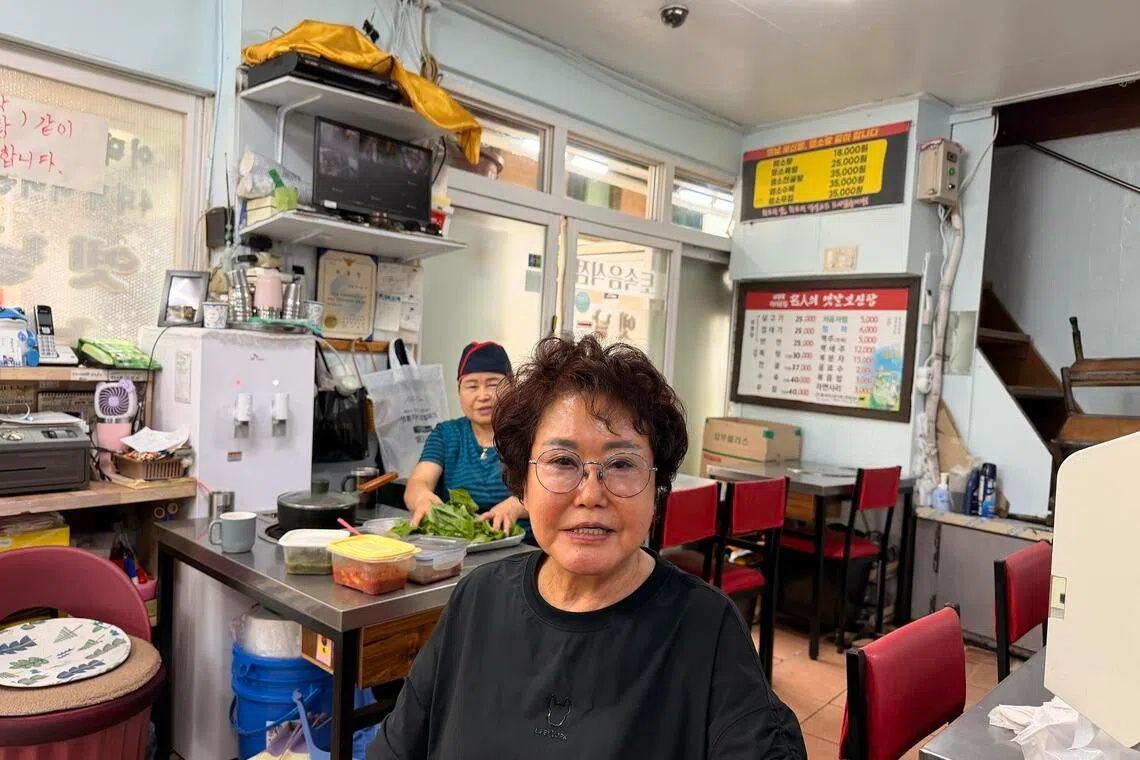
The economic pressure on established restaurant operators has become acute. Long-standing proprietors like Lee Deok-sung, who has operated a dog meat stew restaurant near Seoul's popular Dongdaemun Market for 45 years, describe this summer as a "bust" for business. Forced to raise prices from 16,000 won to 25,000 won per bowl to offset surging meat costs—driven by scarcity as the industry contracts—restaurant owners find themselves trapped between diminishing demand and rising expenses. Lee Deok-sung has acknowledged the existential threat approaching, stating plainly that survival becomes uncertain once the ban takes effect next year. These are not abstract market adjustments but expressions of genuine anxiety from individuals facing the potential collapse of their primary income source.
Across a narrow alley from Deok-sung's establishment stands another institutional boshintang restaurant operated by Lee Kyung-ja, which has similarly served the community for over 40 years. Both establishments represent neighbourhood institutions recognised by regular patrons, yet both face the same grim calculus. Neither owner has been idle in confronting the challenge: both restaurants began introducing black goat stew earlier in 2026, selecting this alternative because it offers similar texture and gamey flavour to dog meat. The logic is sound from a culinary perspective, yet consumer behaviour has proven resistant. Lee Kyung-ja reports that traditional customers consistently express preference for dog meat on grounds of superior taste, and some indicate that Korean medical practitioners continue recommending dog meat to patients recovering from serious illness. At 75 years old, she faces the daunting prospect of rebuilding her customer base from scratch, an undertaking she acknowledges becomes increasingly difficult with advancing age.
The human drama extends beyond restaurant owners to individual animal rescuers navigating the moral transformation of their society. South Korean musician Annie Ko exemplifies this new consciousness: in 2015, she adopted DeeJay, a Labrador and runt of a litter destined for slaughter on a dog meat farm in Wonju, about two hours from Seoul. Ko was working with Humane World for Animals, a non-profit organisation that has rescued approximately 2,800 dogs from breeding facilities, facilitating their adoption abroad in the United States, Britain, and Canada. That DeeJay remains in South Korea rather than being exported reflects the changing domestic context—a society increasingly capable of embracing rescued dogs as companions rather than commercial commodities. Yet Ko's initial adoption occurred long before the ban's passage, when choosing to rescue a dog from slaughter required confronting powerful cultural currents and prevailing social norms.
The transformation in consumption patterns reflects broader demographic and cultural realignment. Younger South Koreans increasingly view dog meat consumption with the same ethical concern that Western societies have long expressed, aligning themselves with international animal welfare frameworks rather than national culinary tradition. This generational divide has made the ban politically viable in ways previous decades could not accomplish. The government's approach of gradual phase-out rather than abrupt prohibition acknowledges the legitimacy of existing practitioners' economic interests while simultaneously validating the emerging moral consensus among the broader population.
The supply-side shock is starkly evident in Seoul's remaining commercial markets. At Gyeongdong Market, one of the few locations where dog meat continues to be sold, a vendor reported that prices have tripled from approximately 20,000 won per kilogramme in 2024 to 60,000 won currently—a 200 percent increase in just two years. Such dramatic price escalation reflects the collapsing supply as farms close and demand contracts, yet it simultaneously prices the product beyond reach for many traditional consumers. The vendor declined further comment, citing the sensitivity of the issue—itself an indication of how thoroughly social attitudes have shifted even among those still engaged in the trade.
Historically, dog meat consumption in Korea carries deep roots extending back centuries. The Donguibogam, a foundational 17th-century medical text compiled by royal physician Heo Jun, categorised dog meat as a warming food believed to replenish energy and vitality, legitimising consumption through traditional medical frameworks. The practice became significantly more widespread during Japan's colonial rule from 1910 to 1945 and intensified in the aftermath of Korea's devastating three-year war, when widespread poverty and acute food shortages drove many citizens toward inexpensive protein sources regardless of cultural preference. These historical circumstances transformed dog meat from relatively niche consumption into a more widespread practice embedded in working-class food culture and popular tradition.
As February 2027 approaches, South Korea faces the practical completion of one of the world's most comprehensive bans on a previously legal food product. No other major developed economy has undertaken such a transformation at this scale or pace. The success of this transition will depend largely on the capacity of displaced workers—from farm operators to restaurant owners—to successfully transition into alternative livelihoods, and whether the cultural embrace of dogs as companion animals rather than food sources can fully take root across society. The final boknal of the dog meat era serves as a symbolic marker of how rapidly social values can shift when regulatory frameworks align with emerging public sentiment, even when confronting practices rooted in centuries of tradition.

