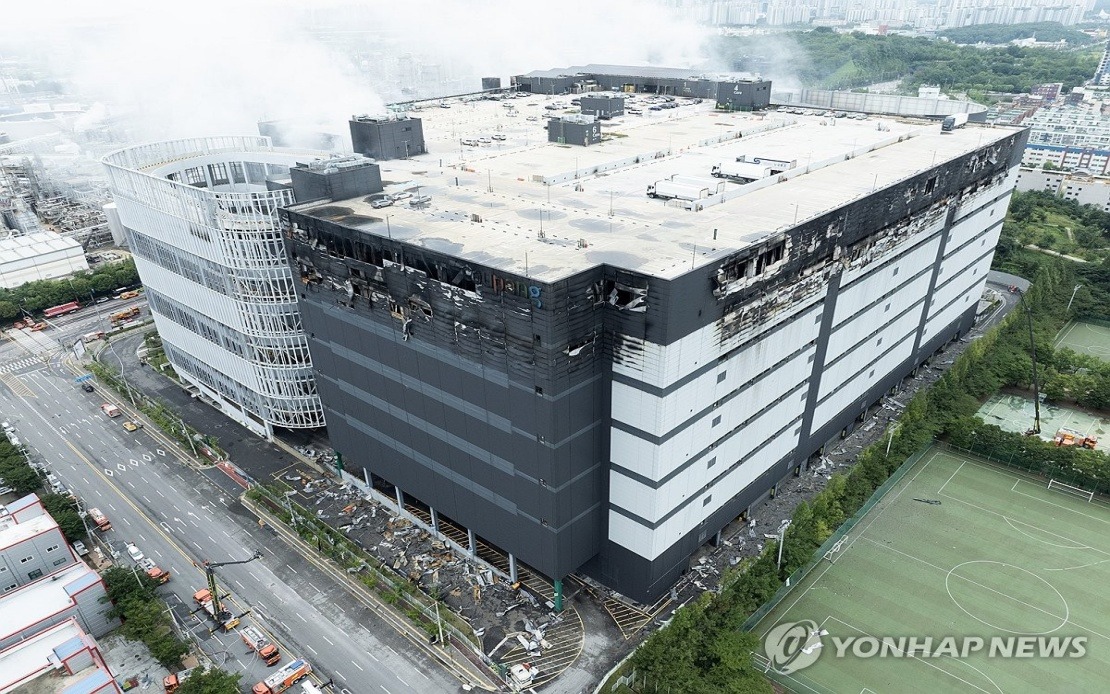
Firefighting teams in South Korea achieved initial control of a catastrophic warehouse fire at a Coupang logistics facility in Incheon on Monday evening, ending a gruelling 61-hour battle that tested the nation's emergency response capabilities and left hundreds displaced from their homes.
The Incheon firefighting headquarters declared the blaze under initial control at 8 p.m. local time, marking a critical milestone in containing what had become one of the region's most challenging industrial fires. The logistics centre, situated just west of Seoul in Incheon, had become an inferno after the fire broke out on Saturday, with flames and smoke visible from considerable distances. The scale of the operation reflected the severity of the situation: authorities mobilized 812 firefighters and deployed 231 pieces of equipment following a national order issued the day the fire started, demonstrating the extraordinary commitment of resources required to suppress the blaze.
The structural complexity of the warehouse and the enormous quantities of combustible materials stored within created formidable obstacles for emergency crews throughout the operation. The building's layout and the density of flammable goods meant that conventional firefighting approaches proved insufficient, requiring teams to adapt strategies repeatedly as the fire spread and shifted. Progress remained painstakingly slow over the first two days, with firefighters gaining only incremental ground against the flames. However, a fortunate development emerged on Monday when rainfall swept across the region, providing unexpected assistance that helped tip the balance in firefighters' favour and accelerated their containment efforts.
The human toll of the disaster extended far beyond the warehouse itself. Local authorities issued an evacuation order late Sunday afternoon for all residents living within 116 metres of the warehouse's ramp zone, a precautionary measure driven by safety concerns about potential structural collapse and the spread of toxic fumes. This evacuation affected hundreds of people in the surrounding residential area, who were forced to abandon their homes with minimal warning. A total of 178 residents subsequently took shelter at nearby schools, which became makeshift emergency centres providing accommodation and basic services during the crisis.
The fire's impact rippled through the local education system, forcing difficult decisions about public safety. Local authorities directed daycare centres and elementary schools in the vicinity to close on Monday as a precautionary step, given the uncertainty about air quality and ongoing fire conditions. This closure order affected one elementary school and 14 daycare centres in the area, disrupting education for hundreds of young children and creating additional logistical challenges for families already displaced by the evacuation.
For Malaysian observers, this incident underscores the vulnerabilities that exist even in advanced industrial economies when major logistics hubs experience catastrophic fires. Coupang, South Korea's largest e-commerce logistics provider, operates similarly massive facilities throughout the region, and this fire highlights the cascading consequences when such facilities fail. The incident raises important questions about warehouse safety standards, fire prevention protocols, and emergency preparedness that are equally relevant to Malaysia's rapidly expanding logistics and e-commerce sectors.
The fire also demonstrates how industrial disasters can compound into regional problems that affect civilians far from the incident site. The evacuation of hundreds and the closure of schools illustrate how a single warehouse fire can disrupt community life in ways that extend far beyond property damage. For Southeast Asian nations including Malaysia, which are experiencing explosive growth in logistics infrastructure to support e-commerce and regional trade, this event serves as a cautionary tale about the critical importance of rigorous safety standards and rapid emergency response systems.
The involvement of such massive firefighting resources—among the largest deployments in recent memory—also reflects the modern reality of industrial fires in densely populated areas. When a single facility fire requires over 800 firefighters and 230 pieces of equipment, it places tremendous strain on local emergency services and demonstrates the need for regional mutual aid agreements and coordinated response protocols. This becomes particularly relevant for the ASEAN region, where rapid industrialization and urban concentration have increased the frequency of major industrial incidents.
The progression from initial outbreak on Saturday to partial control on Monday, despite the deployment of unprecedented resources, suggests that modern warehouse fires have become increasingly difficult to manage. The combination of complex building design, synthetic materials used in modern logistics facilities, and the sheer scale of operations means that traditional firefighting approaches require significant adaptation. South Korea's experience provides valuable lessons for Malaysian authorities overseeing workplace safety and emergency management in the logistics sector.

