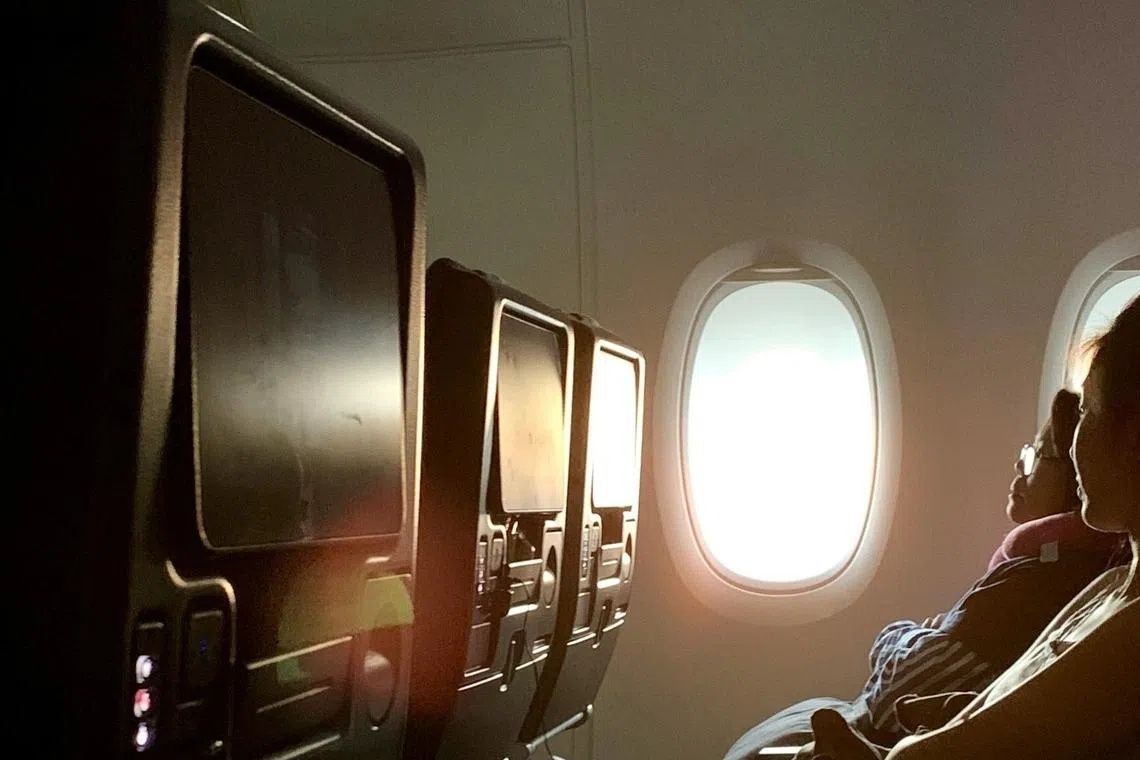
A middle school student in South Korea has formally petitioned the government to implement stricter controls over in-flight entertainment, highlighting growing concerns about child safety in the aviation sector. The complaint, submitted through the Petition 24 platform managed by the Ministry of the Interior and Safety, details how the petitioner and their younger sibling were involuntarily exposed to violent and sexually explicit scenes during a flight, sparking wider discussions about passenger protection standards across the region's major carriers.
The teenager's petition underscores a specific vulnerability in aircraft cabin environments where parents and guardians have limited ability to regulate content exposure. Unlike watching films at home or in cinemas where families can make informed viewing choices before attending, in-flight entertainment systems present content across shared cabin spaces where young passengers sitting nearby cannot easily avoid inappropriate material. The petitioner expressed frustration that despite attempting to ignore the problematic content, the inherent design of seat-back monitors made avoidance impossible, raising fundamental questions about how airlines balance passenger freedom with child protection responsibilities.
The situation involved two minors from the same family, with the petitioner attending middle school and their sister in fourth grade primary education. This multi-generational exposure highlighted how a single airline's programming decision can affect passengers across different developmental stages, each with distinct psychological vulnerabilities to violent imagery. The petitioner's sister, in particular, at an age when psychological research indicates children are especially susceptible to trauma from graphic content, had no ability to understand or process what she witnessed.
Recognising existing legal frameworks, the petitioner grounded their complaint in provisions already enshrined in South Korean law. Both the Child Welfare Act and Youth Protection Act explicitly mandate societal protection for minors from harmful media content, creating a legal foundation for stronger enforcement or expansion of existing protections. The petitioner proposed implementing mandatory physical privacy measures, including screens on seat-back monitors that would block the display of content rated 18-plus or 19-plus from neighbouring viewers' sightlines, mirroring technologies already employed in some premium cabin configurations.
The petition emerged despite Korean Air and Asiana Airlines, the nation's two largest carriers, already maintaining policies prohibiting the broadcast of content classified for adult audiences. Both airlines carefully curate their in-flight libraries to exclude films rated for viewers aged 19 and above, reflecting a deliberately conservative approach to cabin entertainment. Additionally, both carriers typically source edited versions of films where the most graphic violent or sexual sequences have been substantially cut or replaced with alternative footage, ostensibly providing a buffer against the most extreme content.
However, the teenager's complaint reveals potential gaps in these existing measures. The edited versions shown onboard, while theoretically less extreme than theatrical releases, apparently retained sufficient violent and sexual material to provoke the complaint. This suggests that airline interpretation of what constitutes suitable edited content may not align with parental or child advocacy perspectives on age-appropriateness, creating a grey zone where content technically complies with rating policies yet still exposes younger passengers to unsuitable material.
A notable precedent emerged in 2020 when both Korean Air and Asiana removed the internationally acclaimed film Parasite from their in-flight playlists despite its 15-plus rating. That film's removal, prompted by concerns over violent and sexual content, demonstrated that airlines can exercise discretionary judgment to exclude material they deem problematic for the cabin environment, regardless of official public ratings. Yet Parasite's removal also underscored the subjective nature of such decisions and raised questions about consistency in application across their broader catalogues.
The anonymity surrounding exactly which film prompted the current petition complicates assessment of whether current airline policies adequately addressed the concern. Without knowing the specific title, it remains unclear whether the content was officially rated 15-plus and slipped through current screening mechanisms, or whether it fell into a category airlines consider acceptable despite its potentially disturbing impact on young viewers. This information gap points to a broader transparency issue in how airlines make programming decisions and communicate their rationale to passengers.
For Southeast Asian carriers facing similar pressures, this South Korean petition carries instructive implications. Airlines across the region, including those in Malaysia, Singapore, and Thailand, operate comparable entertainment systems and serve diverse passenger demographics including substantial numbers of families with children. The petition suggests that current industry-standard practices—relying on rating systems and edited versions—may not fully satisfy evolving parental expectations and child protection standards. As aviation becomes increasingly family-oriented with younger passengers representing a significant market segment, carriers may face mounting pressure to demonstrate more proactive, visible safeguards.
The teenager's proposal for mandatory privacy screens represents one technological solution, though implementation challenges exist around cost, retrofitting fleets, and determining which content triggers such protections. Alternative approaches might include pre-flight notification systems allowing parents to pre-approve or block certain content, enhanced editing standards that remove more discretionary violent scenes, or designated family cabin sections with stricter content curation. Each approach carries different operational and commercial implications for carriers already operating under tight margin pressures.
The petition process itself reflects how digital engagement platforms have democratised policy advocacy, enabling individual citizens, particularly younger voices, to formally raise grievances that previously might have remained private family complaints. This shift means airlines can no longer assume that service gaps affecting only a handful of passengers will remain unaddressed; viral petitions can rapidly escalate isolated incidents into systemic policy challenges requiring corporate response.
Government response to this petition remains pending, but preliminary indications suggest South Korean regulatory bodies may examine whether existing legislation requires strengthening or whether voluntary industry standards need mandatory baseline enforcement. This trajectory could establish precedent across the region, particularly if successful advocacy results in measurable policy changes that competing airlines feel compelled to adopt for competitive positioning. For Malaysian passengers and carriers, monitoring developments in Seoul offers advance warning of child protection expectations likely to emerge domestically within the coming years.

