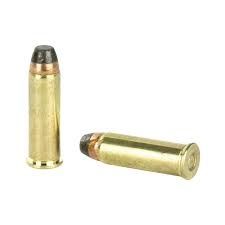
A Gyeonggi province police officer now faces formal investigation after attempting to board an aircraft at Jeju Airport carrying live ammunition, authorities announced on July 3. The 30-something officer, who works for the provincial force, was discovered to have two bullets in his possession while preparing to board a flight bound for Gimpo Airport on June 28 at approximately 8.40pm local time. The incident has prompted officials from Jeju Seobu Police Station to launch a comprehensive inquiry into the breach of the Act governing the safety management of guns, swords and explosives.
The discovery of the ammunition represents a significant lapse in security protocols at one of South Korea's major transportation hubs. Airport officials at Gimpo had conducted screening when the officer initially departed for Jeju on June 26, finding no irregularities in his luggage. However, when preparing to return, the officer was found carrying the problematic ammunition. The National Forensic Service subsequently determined that the two bullets were designed for a .38-calibre pistol, the standard-issue weapon provided to most law enforcement officers throughout South Korea.
What makes this case particularly noteworthy is that the officer was not actually carrying a firearm at the time of the attempted boarding—only the loose ammunition itself. This distinction raises questions about how the officer obtained and transported the rounds, and whether current screening procedures adequately address ammunition as a standalone security concern. The presence of ammunition without an accompanying weapon demonstrates a gap in airport security awareness, as authorities may have focused scanning protocols on detecting complete firearm systems rather than isolated ammunition that could pose risks aboard an aircraft.
When questioned by police, the officer provided an explanation that adds a human element to what might otherwise appear as a deliberate violation. He claimed he had received the bullets from a recently retired colleague, suggesting a casual handover of ammunition between law enforcement personnel rather than a calculated attempt to circumvent aviation security. This account is now central to the ongoing investigation, as authorities seek to determine whether the transfer was authorized and whether proper documentation existed for the ammunition exchange.
South Korea maintains among the world's most stringent regulations regarding civilian and law enforcement firearm ownership and transportation. The country's approach to gun control reflects a broader societal commitment to maintaining public safety through strict regulatory frameworks. For police officers specifically, the regulations are equally exacting—personal firearms must be stored securely at the relevant police station's armoury rather than kept in officers' homes or carried casually between locations. These protocols exist to prevent unauthorized access, loss, or misuse of weapons and ammunition.
The investigation underscores a tension that often emerges in enforcement contexts: the gap between written regulations and practical compliance, even among those tasked with upholding the law. A police officer, trained in regulations and expected to model legal compliance, nonetheless found himself violating the very statutes he is sworn to enforce. This scenario has prompted South Korean authorities to examine whether training and awareness programs for law enforcement personnel adequately emphasize the seriousness of firearm and ammunition regulations, or whether complacency has developed among officers who handle weapons routinely.
The incident also raises procedural questions about how inter-agency coordination functions within South Korea's law enforcement structure. The fact that a Gyeonggi province officer was able to travel to Jeju Island with ammunition, apparently without triggering internal police protocols or advance security warnings, suggests potential weaknesses in information-sharing systems between provincial forces and national security agencies responsible for airport screening. Such breakdowns can occur when different agencies operate with separate databases or lack real-time communication mechanisms.
From a regional perspective, South Korea's response to this incident reflects its broader commitment to aviation security and public safety. Unlike some neighbouring countries or jurisdictions where enforcement might be inconsistent, South Korean authorities are pursuing a formal investigation despite the officer's rank and profession. This demonstrates institutional commitment to applying rules uniformly, regardless of an individual's status within law enforcement. The willingness to investigate a fellow officer sends a clear message that no sector of society stands above regulatory compliance.
The outcome of this investigation will likely influence how South Korean law enforcement agencies handle ammunition storage, transfer, and accountability going forward. If the investigation concludes that the officer acted with negligence rather than malice, it may prompt enhanced training requirements for all police personnel regarding firearms and ammunition handling. Conversely, if evidence suggests more deliberate wrongdoing, it could lead to harsher penalties and revised protocols for inter-colleague transfers of weapons and ammunition.
For Malaysian and Southeast Asian observers, this incident serves as a useful case study in how advanced economies approach regulatory enforcement within their own institutions. South Korea's willingness to rigorously investigate and prosecute violations, even when officers of the law are involved, demonstrates a mature approach to institutional accountability. As Southeast Asian nations continue developing and refining their own aviation security and firearms regulations, the South Korean model—characterized by strict rules applied consistently—offers instructive lessons about maintaining public confidence in both law enforcement and transportation security systems.

