A prestigious Michelin-starred restaurant owner in Seoul is confronting the prospect of a year-long prison sentence after prosecutors pursued serious criminal charges over the unauthorised use of black ants in a frozen dessert. The charges centre on the chef's decision to crown palate-cleansing sorbet with the insects as a culinary technique meant to impart a sour flavour profile, according to reporting on the case heard before Seoul's courts this week. The prosecution has framed the incident as a deliberate violation of South Korea's carefully calibrated food safety framework, requesting not only imprisonment but also a substantial monetary penalty.
South Korea maintains one of Asia's most stringent regulatory systems governing which insects may legally enter the human food chain. The approved list encompasses precisely ten species, including grasshoppers and brown mealworm larvae, each vetted through rigorous safety protocols. The black ants in question fell far outside this authorised inventory, rendering their deployment in the restaurant's kitchen a clear breach of established law. What distinguishes this case from typical food safety infractions is the deliberate nature of the violation and the commercial scale at which it allegedly occurred across nearly four years of operation.
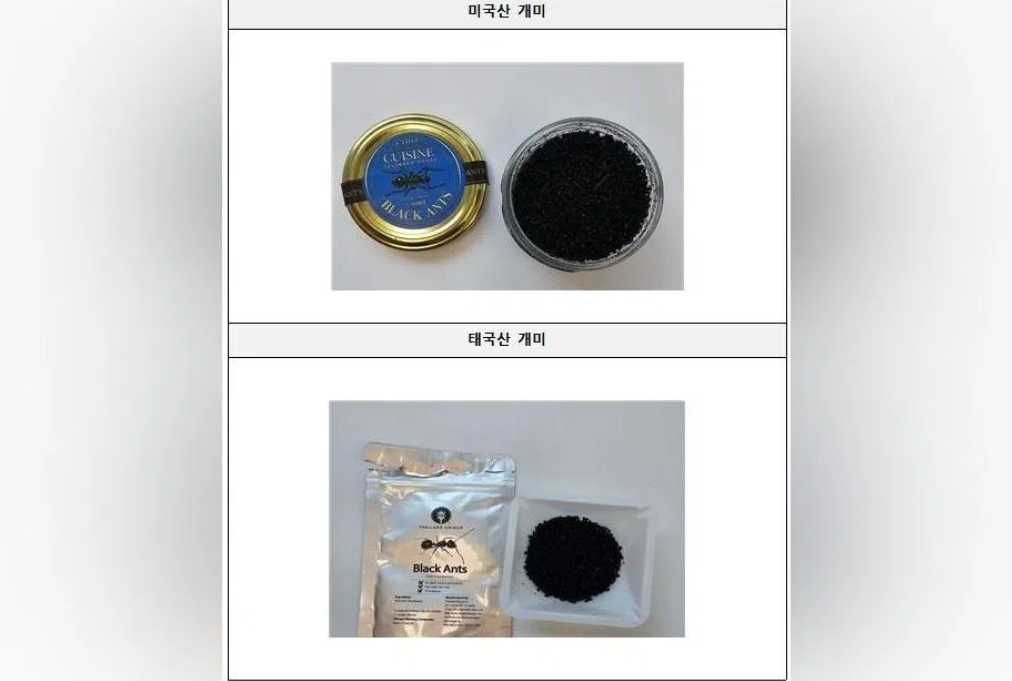
The investigation, initiated by South Korea's food safety ministry last year, uncovered evidence that the unnamed establishment had sourced its ant supply from international suppliers based in Thailand and the United States. Authorities identified documentation suggesting that between three and five individual ants crowned each sorbet served to diners. The practice generated substantial revenue for the operation, with investigators calculating approximately 12,000 transactions involving the ant-garnished desserts, accumulating sales valued at 120 million won—equivalent to roughly US$81,000—through January 2025. This financial dimension strengthens prosecutors' assertion that the violation represented a knowing, systematic breach rather than an isolated error in judgment.
Photographic evidence released by the food safety ministry depicted commercial packaging labelled "Cuisine Black Ants" housed in distinctive round metal containers, suggesting the chef maintained a deliberate supply chain for the unapproved ingredient. Such documentation proves particularly damaging to any defence strategy centring on negligence or misunderstanding. The visual record demonstrates forethought, procurement infrastructure, and ongoing operational integration of the prohibited substance into the restaurant's signature offerings. For a two-Michelin-star establishment—a designation representing exceptional culinary achievement in South Korea's competitive fine dining landscape—the incident represents a profound reputational crisis extending far beyond the immediate legal consequences.
Prosecutors have requested not only the one-year custodial sentence but also a 20 million won financial penalty, equivalent to roughly US$13,500. This dual approach reflects the serious view South Korean authorities take toward food safety transgressions at high-profile establishments. The prosecution's position implicitly sends a signal that culinary innovation cannot serve as justification for circumventing safety regulations, regardless of whether the violation occurs at modest street-food vendors or internationally recognised fine dining venues. The principle underpinning such enforcement is straightforward: regulatory frameworks exist to protect public health, and their violation demands proportional consequences.
The defence strategy has centred on several mitigating factors that may resonate with the Seoul Western District Court, where proceedings reached their culmination this week. The restaurant's legal representatives contended that only customers who had explicitly consented in advance received the ant-topped sorbet, suggesting the practice involved informed participation rather than covert adulteration. This argument attempts to reframe the violation as a transparent culinary experiment undertaken with full diner awareness rather than deceptive practice. Additionally, the defendant acknowledged responsibility in closing statements, expressing regret that insufficient familiarity with applicable regulations had led to the violation. Such contrition occasionally influences judicial sentencing, particularly when coupled with evidence of remedial measures undertaken following detection.
The case illuminates broader questions about culinary freedom within regulated frameworks, particularly pertinent to Asia's booming fine dining sector where chefs increasingly experiment with unconventional ingredients sourced globally. South Korea's food safety apparatus reflects a cautious approach to novel consumption practices, maintaining that regulatory approval must precede commercial deployment rather than permitting market-driven innovation to lead regulatory adaptation. This philosophy contrasts with jurisdictions where adventurous dining and experimental cuisine receive greater latitude. The tension between gastronomic creativity and public health protection manifests acutely in cases involving insects, given their novel status in most contemporary fine dining outside Southeast Asian contexts where entomophagy maintains deeper cultural roots.
The Seoul court is scheduled to pronounce its verdict in early September, determining whether prosecutors' recommended sentence receives judicial endorsement or whether mitigating factors warrant a more lenient approach. The ruling will establish important precedent for how South Korean courts balance innovative culinary practice against regulatory compliance, with implications extending throughout the nation's premium restaurant sector. Establishments operating at comparable prestige levels will likely scrutinise the outcome carefully, particularly those contemplating incorporation of non-traditional ingredients into their menu offerings. The case also carries implications for South Korea's tourism industry, given how international dining experiences influence destination attractiveness and the concerns such violations may generate among international visitors prioritising food safety.
For the wider Southeast Asian region, the episode underscores divergent regulatory philosophies governing food safety and ingredient approval. While Thailand and Vietnam maintain more permissive frameworks regarding insect consumption—reflecting both cultural traditions and established supply chains—South Korea's prescriptive approach reflects a different social contract between regulators and the food industry. The fact that the restaurant sourced ants specifically from Thailand and the United States suggests an international dimension to culinary experimentalism that national regulators find increasingly challenging to control. As cross-border ingredient sourcing becomes routine within premium culinary networks, regulatory bodies across Asia face mounting pressure to harmonise standards or clarify their enforcement priorities.

