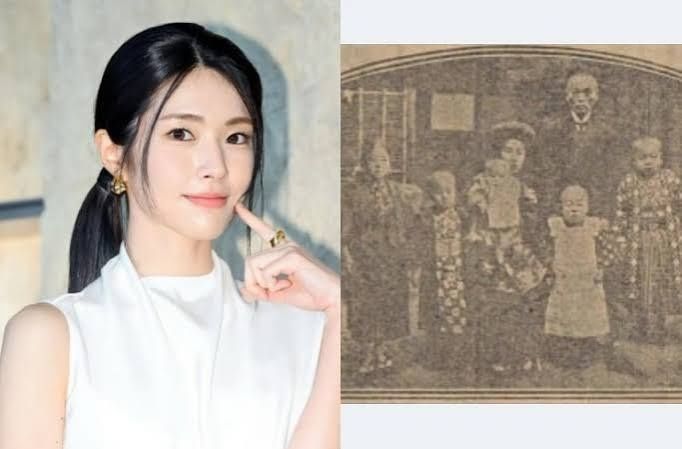
A genealogy website that helps South Koreans explore their ancestral roots has collapsed under unexpected traffic as citizens rush to investigate their own family histories, triggered by mounting public scrutiny of actress Ahn Ha-young's family connections to the Japanese colonial period. The platform, which maintains records of 287 different family lineage groups across South Korea, encountered severe technical difficulties beginning on the evening of August 12, with its servers becoming overwhelmed for several hours before continuing to experience sporadic crashes throughout August 13. The sudden surge illustrates how a single celebrity controversy can mobilise widespread public engagement with historical and genealogical inquiry, turning a personal scandal into a national conversation about colonial-era collaboration.
The controversy centres on Ahn Ha-young's great-grandfather, Ahn Sang-ho, whom the actress had publicly described as a pioneering physician who established Seoul's first Western-style medical clinic and provided treatment to Emperor Gojong during the late nineteenth and early twentieth centuries. In discussing her family's contributions to Korean history on television, Ahn Ha-young spoke with evident pride about her ancestor's medical achievements and royal connections. However, when internet users began investigating historical records, allegations emerged suggesting that Ahn Sang-ho had maintained ties to pro-Japanese collaborators during the thirty-five-year period of colonial occupation from 1910 to 1945, a era that remains deeply sensitive in South Korean collective memory.
Initially, Ahn Ha-young's agency responded to these allegations with categorical denials, insisting that the accusations were unfounded and that the actress's family history contained no such connections. This defensive stance, rather than dampening public curiosity, appeared to intensify it. The agency's refusal to acknowledge the claims prompted further investigation by online users determined to uncover historical documentation, setting off a chain reaction of genealogical searches that ultimately overwhelmed the ancestry-tracing platform. The episode demonstrates how institutional responses to historical questions can paradoxically amplify public demand for transparency and historical truth-seeking.
By August 12, facing mounting public pressure and accumulated evidence, Ahn Ha-young issued a public apology acknowledging that she had been genuinely unaware of the problematic aspects of her family's past. The actress expressed regret for having publicly celebrated her ancestor's accomplishments without understanding the full historical context surrounding Ahn Sang-ho's activities during the colonial administration. Her contrition appeared to signal acceptance of historical accountability, though it came only after sustained public investigation forced the issue into unavoidable prominence. The delayed acknowledgement underscored tensions between personal family narratives and documented historical records.
The timing of this controversy carries particular significance for South Korea's national consciousness. The scandal erupted just days before the country's observance of Liberation Day on August 15, an annual commemoration marking Korea's emancipation from Japanese colonial rule in 1945. Liberation Day holds profound emotional weight in South Korean society, serving as a moment for national reflection on the suffering endured during occupation and celebration of restored independence. Against this backdrop, allegations of collaborative behaviour by historical figures carry intensified meaning and provoke deeper examination of family legacies.
The genealogy website that became the focal point of this search surge operates as a comprehensive repository of Korean family history, maintaining detailed information on the origins of different lineage groups and their population distributions across the nation. Such platforms serve important cultural functions in Korean society, where family genealogy, or "jokbo," holds traditional significance as a means of understanding identity, social position, and historical continuity. By providing systematic access to this information, the website bridges personal curiosity with historical documentation, enabling citizens to trace their own connections to broader historical narratives.
For Malaysian and Southeast Asian observers, this episode illuminates how celebrity scandals can catalyse broader public engagement with historical reckoning in East Asia. South Korea's willingness to publicly scrutinise the colonial-era activities of historical figures, even when they involve prominent families, reflects a society grappling openly with its past. This contrasts with how some neighbouring nations approach similar historical complexities, where institutional or social pressures may discourage public investigation of uncomfortable family or national histories. The incident reveals civil society mechanisms through which digital platforms enable citizens to verify claims and demand historical accountability.
The controversy also demonstrates the enduring significance of the Japanese colonial period in Korean historical consciousness, nearly eighty years after liberation. In South Korea, questions of wartime or colonial-era collaboration remain politically charged and personally consequential. Families accused of collaboration during this period have historically faced social stigma, and contemporary descendants may encounter lasting reputational consequences. This creates an environment where historical allegations against public figures trigger immediate and vigorous public response, particularly when institutional denials suggest resistance to historical scrutiny.
The genealogy website's technical failures, while superficially a matter of server capacity, symbolise something deeper: the hunger among citizens to ground personal identity in verifiable historical fact. The rush to access genealogical records reflected not merely prurient interest in celebrity scandal, but genuine concern about what historical connections might reveal about family legacies. This impulse suggests that for many South Koreans, understanding their own ancestral past within the context of colonial history remains an active and unresolved question, one that celebrity controversies can unexpectedly bring into sharp focus.
Moving forward, the incident may prompt discussion about institutional responsibilities in historical verification and the role of digital platforms in facilitating public access to genealogical and historical information. For families with potential colonial-era connections, the Ahn Ha-young case establishes a precedent wherein public scrutiny, once initiated, becomes difficult to contain or dismiss. The episode ultimately illustrates how in contemporary digital societies, historical accountability operates through decentralised mechanisms of verification, where citizen investigation and information-sharing can compel institutional acknowledgement regardless of initial institutional resistance.

