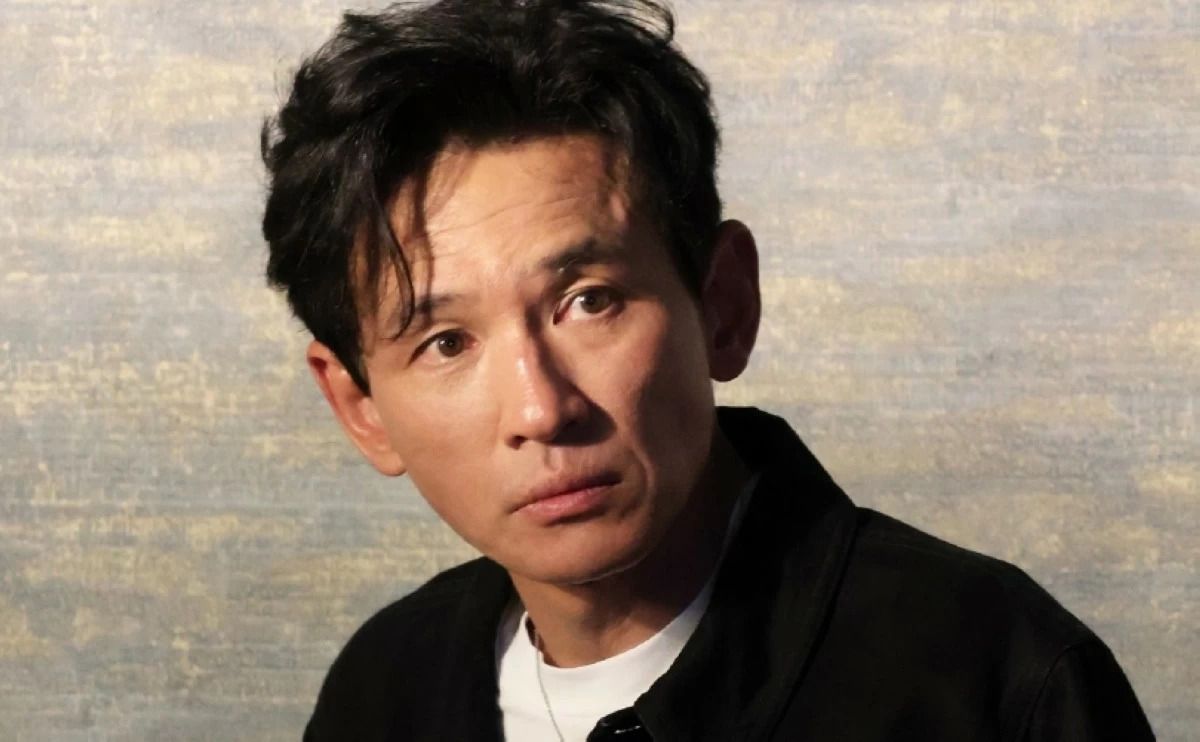
South Korean cinema's leading man Hwang Jung-min has found himself at the centre of a public dispute after his management company issued a forceful denial on July 29 regarding accusations of infidelity. The actor's agency characterized the woman making these allegations as a criminal suspect involved in an ongoing stalking case, signalling the celebrity's intention to pursue additional legal remedies. This latest development in the controversy underscores the intensifying legal battle between Hwang and his accuser, a conflict that has already consumed considerable judicial resources and public attention in South Korea.
The woman in question had previously taken to social media platforms to broadcast materials she claimed substantiated her assertions of a romantic relationship with the 55-year-old performer. Her posts included what she identified as text message exchanges, photographic evidence, and an audio recording purporting to capture Hwang's voice. The public airing of such intimate documentation, if unverified, represents a serious escalation in the dispute and suggests the accuser believed she possessed compelling proof of her allegations. However, the agency's response has effectively reframed the narrative, positioning these revelations not as credible evidence but as weaponized content disseminated by someone with a documented history of harassment.
According to the management company's official statement, the social media postings originated from what it characterised as a persistent harassment suspect who has repeatedly engaged in unwanted contact with the actor. This framing carries significant weight in South Korea, where stalking and harassment complaints have gained increased legal attention in recent years. Hwang himself initiated criminal proceedings against the woman in 2025, bringing formal charges that set in motion a judicial process that has already produced tangible consequences for the accuser. The actor's decision to pursue criminal remedies rather than remain silent suggests his team views the allegations as sufficiently serious and damaging to warrant formal intervention through the courts.
The South Korean legal system has responded to Hwang's complaint by imposing restraining orders against the woman on three separate occasions, indicating that a judge or judicial officer found sufficient grounds to restrict her ability to contact or approach the actor. Additionally, a summary order resulted in a financial penalty of three million won, equivalent to approximately RM8,525, a sum that underscores the courts' assessment of the seriousness of her conduct. These judicial actions carry significant implications for how the dispute will be perceived by the South Korean public and entertainment industry, as court-imposed measures lend official credibility to Hwang's characterization of the woman as a disruptive party acting without legitimate cause.
The woman has not accepted these legal determinations quietly. She has actively contested the financial penalty issued against her and formally requested a full trial before a court, signalling her determination to challenge the judicial findings. Beyond her criminal defence, she has also filed a civil lawsuit against Hwang seeking monetary damages, suggesting she views herself as wronged by the actor. These parallel legal proceedings create a complex judicial situation where both parties are simultaneously pursuing claims against each other through different branches of the legal system, a pattern that often indicates deep-seated conflict unlikely to resolve without substantial intervention.
The agency's response emphasized that the materials posted by the woman had been deliberately manipulated, characterizing them as "maliciously edited" versions of content that may or may not be authentic in their original form. This allegation of tampering is crucial because it allows Hwang's team to acknowledge that some materials might be genuine while simultaneously challenging their meaning and context. Notably, the statement conspicuously avoided confirming whether the audio recording was authentic, a strategic omission that invites interpretation. By focusing on editing rather than outright denial, the agency maintains plausible deniability while still dismissing the accusations.
Hwang has been married to Kim Mi-hye since 2004, a marriage spanning two decades that has produced no public indication of marital discord until these recent allegations emerged. Kim Mi-hye is herself a notable figure in South Korean entertainment, serving as a theatre and musical producer and heading SEM Company, the very agency defending her husband's reputation. The revelation that Hwang's spouse is also his management company's director adds another layer to this dispute, as it transforms what might otherwise be a private family matter into a corporate concern. This arrangement potentially raises questions about the agency's impartiality, though it also demonstrates Kim Mi-hye's confidence in her husband's account of events.
The actor occupies a prominent position within South Korean cinema, having anchored numerous commercially successful films that have made him one of the industry's most reliable box-office attractions. His star power extends beyond regional boundaries, with recent projects involving major Hollywood talent, including the upcoming action thriller featuring acclaimed international names. This prominence means that any allegations against him carry implications beyond personal reputation, potentially affecting production schedules, distribution agreements, and investor confidence. The timing of these allegations and their public airing through social media creates a significant reputational risk that extends to his professional collaborators and projects.
Looking forward, Hwang's agency has indicated its intention to pursue additional legal action against the woman, suggesting this matter remains far from resolution. The agency simultaneously expressed regret for the concern the controversy has generated, attempting to position Hwang and his team as reluctant participants forced into legal conflict rather than aggressive pursuers. However, the accumulation of restraining orders, financial penalties, criminal complaints, and now threatened further legal action indicates an escalating confrontation. For Malaysian and Southeast Asian observers, this case illustrates the complex intersection of celebrity, technology, and the justice system in East Asia, where social media can amplify personal disputes into matters of public concern with lasting professional consequences.

