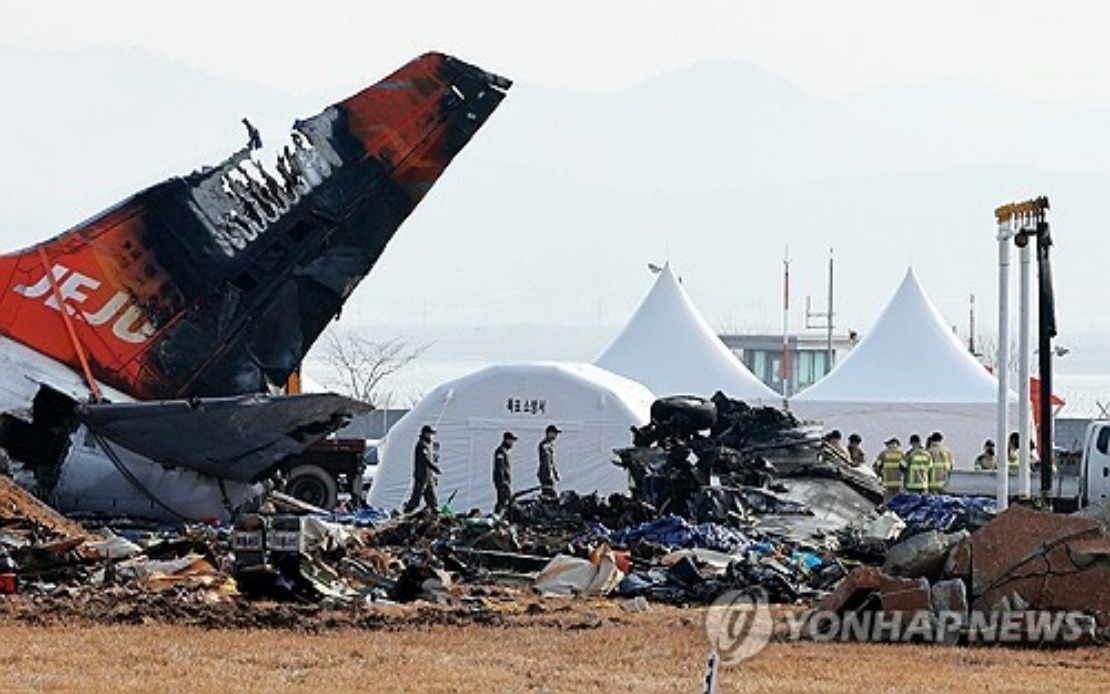
South Korean authorities have escalated their investigation into the Jeju Air disaster by referring seven transport ministry officials to prosecutors on charges of obstructing the inquiry into what may have contributed to one of the nation's deadliest aviation accidents. The officials stand accused of deliberately concealing the faulty status of critical navigation equipment through misleading public statements, raising serious questions about governmental oversight and accountability in South Korea's aviation sector.
The tragedy unfolded on December 29, 2024, when Jeju Air Flight 2216 attempted an emergency belly landing at Muan International Airport, located approximately 290 kilometres south of Seoul. During the descent, the aircraft struck a concrete structure positioned beneath a localiser—a sophisticated radio navigation system designed to guide aircraft safely onto the runway during landing approaches. The impact proved catastrophic, claiming the lives of 179 passengers and crew members in what represented a significant loss of life for South Korean aviation.
Investigators have focused particular attention on the placement and condition of the localiser apparatus. The navigation device was housed within a concrete mound at the airport, and the positioning of this protective structure relative to the runway became central to understanding whether the crash's severity was exacerbated by inadequate safety standards. The localiser's role in the sequence of events leading to such a high casualty count prompted authorities to examine whether regulatory compliance had been properly maintained and verified.
The seven officials under investigation held positions within South Korea's transport ministry and are suspected of crafting official press statements that falsely represented the localiser installation as fully compliant with national aviation regulations. According to findings from a specially convened police investigation team, the officials deliberately drafted and distributed communications asserting regulatory compliance despite possessing knowledge that the equipment and its installation did not meet established safety standards. This alleged deliberate misrepresentation constitutes a serious breach of public trust and governmental transparency.
The decision to refer these individuals to prosecution marks an important juncture in the investigation, signalling that authorities view the cover-up as a distinct criminal matter separate from the crash itself. By treating the alleged concealment as a prosecutable offence, South Korean investigators are establishing clear accountability for officials who may have prioritised damage control over the disclosure of critical safety information that could have informed the public and the aviation industry about potential hazards.
This development carries broader implications for aviation safety governance across East Asia and beyond. Malaysia and other regional aviation authorities must consider how governance structures ensure that safety compliance information is neither suppressed nor subject to political or bureaucratic pressure. The case demonstrates how institutional failures can compound disasters—not only did equipment fail in actual operation, but parallel failures in accountability mechanisms prevented timely disclosure that might have prompted corrective action elsewhere in the system.
The transport ministry officials' alleged actions represent a form of institutional misconduct that extends beyond simple negligence. By knowingly issuing false compliance statements, the officials allegedly took active steps to mislead regulatory bodies, fellow government agencies, and the public about genuine safety vulnerabilities. Such conduct undermines the entire foundation of aviation safety, which depends fundamentally on accurate information flowing through regulatory channels and institutional transparency.
For Malaysian aviation authorities and policy makers, the Jeju Air case offers instructive lessons about the importance of establishing robust whistleblower protections, transparent audit mechanisms, and clear accountability chains within aviation oversight bodies. When safety information becomes subject to institutional cover-up, the consequences can be measured in lives lost. The case reinforces why aviation safety regimes must be insulated from pressures that might compromise the integrity of compliance reporting and safety investigations.
The alleged conduct also raises questions about corporate and governmental culture in handling negative findings. Rather than treating equipment deficiencies as technical problems requiring immediate remediation, the officials apparently treated them as reputational matters to be managed through misleading communications. This inverts the proper hierarchy of concerns in aviation safety, where technical integrity must always supersede institutional image considerations.
As the prosecution phase begins, South Korea's legal system will determine whether the referrals result in formal charges and, ultimately, convictions. The case will likely establish important precedents regarding the accountability of government officials who obstruct investigations into major disasters. Such precedents influence how aviation authorities throughout the region approach their own safety compliance and transparency obligations.

