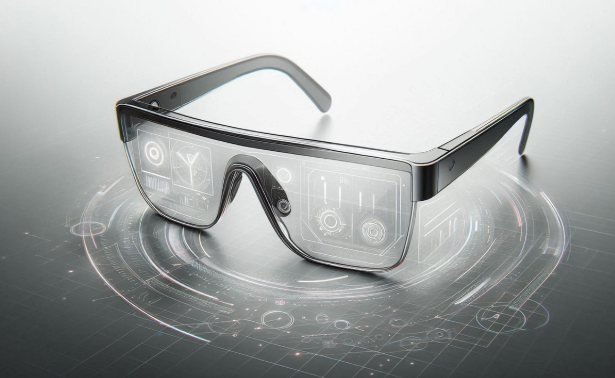
A breakthrough moment in South Korea's battle against sophisticated exam fraud has culminated in the country's maiden prosecution involving AI-enabled eyewear. Prosecutors in Gwangju brought formal charges last month against a middle-aged man accused of deploying smart glasses equipped with artificial intelligence capabilities to gain an unfair advantage during a fire protection facilities engineer certification test. The case represents a watershed moment for South Korean education authorities grappling with how emerging technology is fundamentally transforming the landscape of academic dishonesty and credential fraud.
The defendant's scheme unraveled in May when an attentive exam supervisor noticed something peculiar: light bouncing off the surface of his glasses in an unusual pattern. This seemingly minor observation proved instrumental in exposing what officials now recognise as a sophisticated cheating apparatus. Under interrogation, the accused man provided investigators with revealing insight into his methodology, acknowledging that he had personally developed a custom artificial intelligence application configured to work seamlessly with the eyewear device. He claimed his motive was experimental rather than purely self-serving, stating he wanted to verify whether the system could accurately retrieve and display correct answers during the examination.
The Gwangju case, while the first to result in prosecution under the National Technical Qualification Act, arrived amid a broader pattern of suspected AI glasses abuse across South Korea's examination infrastructure. Authorities identified two additional men in their twenties attempting to employ identical technology at qualification exam venues in Seoul and Mokpo during the same month. The parallel incidents suggest this is not an isolated criminal aberration but rather an emerging vulnerability in proctoring systems that was only recently discovered and remains inadequately addressed across the country's examination apparatus.
The problem extends beyond occupational certification exams. English language proficiency testing, specifically the TOEIC examination, has become another battleground where candidates are attempting to leverage AI glasses technology. At least three instances surfaced between May and June, with two individuals apprehended in May and a third caught the following month. These repeated attempts at major standardised test centres indicate that word of the technology and its potential effectiveness has circulated among cheating networks, creating copycat incidents that threaten the integrity of credentials millions of job seekers depend upon.
The proliferation of these cases within a compressed timeframe prompted South Korea's examination authorities to convene an emergency summit on July 10. Representatives from agencies responsible for administering the country's most significant national qualification examinations gathered to formulate an urgent response strategy. Their discussions were driven by recognition that current regulatory frameworks had not anticipated this technological threat and therefore lacked adequate preventive mechanisms. The meeting reflected broader governmental concern that without swift action, AI-glasses cheating could become endemic across South Korea's testing ecosystem.
Among the remedial measures under serious consideration is the explicit formal prohibition of AI glasses and similar wearable artificial intelligence devices within examination spaces. Currently, the banned items lists at most test centres had not specifically enumerated AI-powered eyewear, creating a regulatory grey area that determined cheaters exploited. Adding explicit language targeting these devices would establish unambiguous authority for proctors to confiscate such items during screening processes and would strengthen the legal foundation for prosecution under qualification examination statutes.
Simultaneously, authorities are contemplating substantially escalating penalties for candidates convicted of utilising such technology. The assumption underlying this approach is that heightened legal consequences will function as a deterrent, discouraging individuals from attempting similar schemes. Currently, the punishment framework may not adequately reflect the serious breach of examination integrity that sophisticated technological cheating represents, potentially failing to communicate the gravity with which authorities view such misconduct.
This development carries significance beyond South Korea's borders. Across Southeast Asia and the wider region, education systems relying on standardised examinations for professional credentialing and university admissions face identical vulnerability. The swift propagation of AI glasses cheating methods suggests that comparable incidents could emerge in Malaysia, Singapore, Thailand, and other nations operating high-stakes examination systems. Educational authorities throughout Asia may need to proactively review their current prohibited items policies and examination protocols before similar cases become commonplace.
The broader implication concerns the adequacy of examination security infrastructure in an age of rapid technological change. Traditional proctoring methods—visual observation, metal detectors, and bag searches—were designed to catch conventional cheating tools such as written notes or simple communication devices. Wearable AI technology represents a qualitatively different threat category: devices that are subtle enough to escape immediate notice yet powerful enough to provide real-time assistance during testing. Responding effectively requires not merely tightening existing rules but fundamentally reconceptualising how examination integrity is maintained.
The South Korean case also highlights broader questions about the accessibility and proliferation of AI applications that can be customised for problematic purposes. The defendant's ability to independently develop an AI application integrated with smart glasses suggests this is not a scenario involving rare, specialised technology available only to sophisticated actors. Rather, it demonstrates how increasingly capable AI tools and commodity hardware are converging to enable novel forms of fraud that previously would have required prohibitive expertise or resources.
Looking forward, South Korea's response will likely establish precedents that other examination authorities in Asia closely monitor. The combination of explicit technology prohibitions, enhanced penalties, and upgraded proctoring vigilance represents a multi-layered approach that could serve as a template for jurisdictions seeking to preempt similar problems. However, the underlying dynamic—that technological innovation consistently outpaces regulatory adaptation—suggests this represents merely the initial skirmish in a longer contest between examination security systems and determined cheaters equipped with evolving tools.

