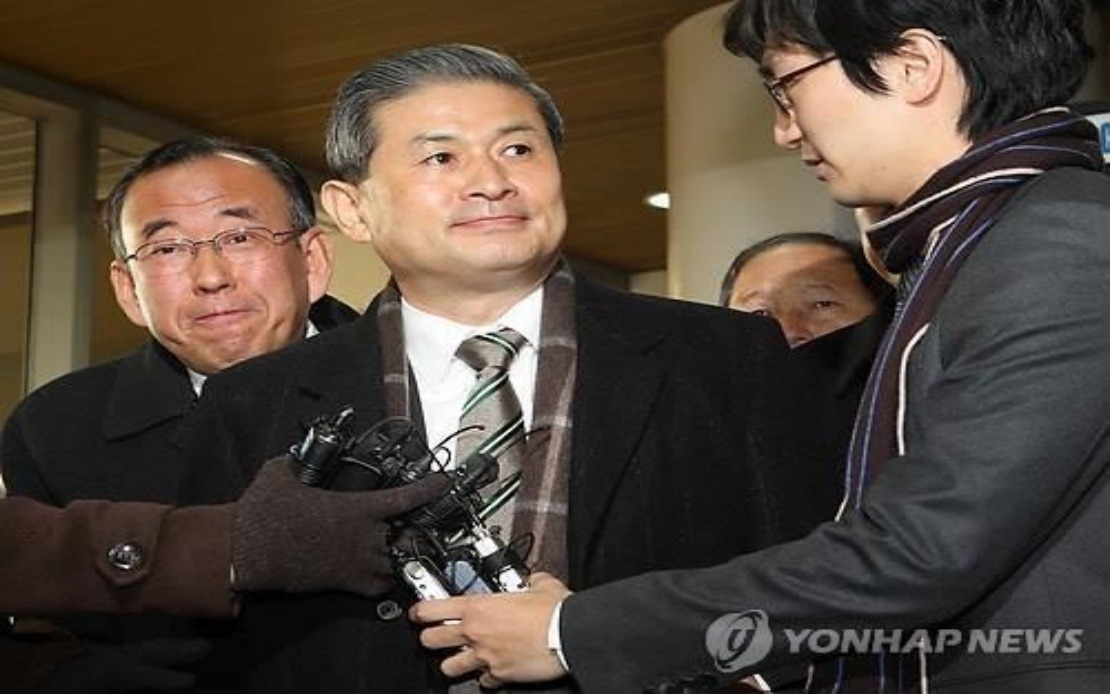
South Korea's interior ministry has formally revoked the nation's most prestigious science and technology award from former Seoul National University professor Hwang Woo-suk, nearly two decades after honouring his purported breakthroughs in stem cell research. The revocation took effect this week following presidential approval granted on Tuesday, marking the final administrative closure to one of modern science's most notorious fraud cases.
Hwang originally received the Top Science and Technology Award in 2004, along with a monetary prize of 300 million won (approximately US$201,200), for his acclaimed work on human embryonic stem cell research. At the time, his achievements were considered a major contribution to South Korea's scientific standing and technological advancement, elevating both the researcher and the nation's global reputation in the rapidly expanding field of regenerative medicine and biotechnology.
The scandal erupted in 2005 when independent investigations revealed that Hwang had fabricated the foundational data in his landmark research paper. His celebrated claims to have created the world's first cloned human embryo were entirely false, constructed through forged experimental results rather than genuine scientific discovery. This revelation shattered his credibility and triggered widespread questioning about the peer-review processes that had initially validated his work at one of Asia's most respected universities.
Following the exposure of the scientific fraud, Hwang was dismissed from Seoul National University in 2006. However, the administrative consequences extended far beyond employment termination. In 2020, the government initially moved to strip him of his presidential honour, only to encounter an unexpected legal setback when a court determined that the revocation procedure had violated established administrative protocols and was therefore invalid.
The 2020 revocation's failure on procedural grounds created an unusual situation where the disgraced researcher technically retained a presidential award despite the scientific community's complete rejection of his work. This legal technicality prompted the science ministry to request a formal revocation process in March of this year, ensuring that the removal of the honour would withstand judicial scrutiny. The interior ministry then pursued presidential approval, which was granted on Tuesday, finally executing the revocation with proper procedural safeguards.
For Malaysian observers and regional scientists, the Hwang case represents a cautionary tale about the vulnerabilities embedded within even rigorous institutional systems. South Korea's experience demonstrates how prestigious universities and government recognition systems can be compromised when researchers prioritize career advancement over scientific integrity. The case also highlights the importance of robust verification mechanisms and the willingness of scientific communities to acknowledge and correct errors, however damaging such acknowledgment might be to national prestige.
The award itself represents the highest honour the South Korean state can bestow upon its scientific and technological community. Designed to recognize researchers whose contributions have materially advanced the nation's development, the award carries significant symbolic weight beyond its monetary value. By maintaining fraudulent recipients on the honour roll, governments risk undermining public confidence in both scientific institutions and official recognition systems.
The protracted nature of Hwang's removal—spanning more than two decades from the initial award to final revocation—reflects the complex intersection of legal procedure, institutional politics, and scientific accountability. Each stage required not only scientific consensus about the fraud but also formal governmental action with proper authorization channels. The court's 2020 intervention added an additional layer of complexity, forcing administrators to follow stricter procedural requirements even when the underlying facts remained undisputed.
For the broader scientific community across Southeast Asia, the Hwang case underscores the critical importance of maintaining transparent peer-review processes and establishing clear protocols for addressing research misconduct. Nations developing their own research excellence frameworks and scientific honours systems would be wise to learn from South Korea's experience, particularly regarding the need to build in robust verification procedures and readily available mechanisms for correcting errors without excessive legal complications.
The revocation also raises questions about how institutions should handle the legacy of fraudulent research and the researchers who perpetrated it. Beyond simply removing honours and dismissing employees, there remains the challenge of ensuring that fraudulent methodologies do not influence subsequent researchers who may have cited or built upon the fabricated work. South Korea's science ministry and academic institutions have had to engage in extensive educational and professional efforts to prevent the contamination of the scientific record.
This case carries particular relevance for Malaysia and other developing economies investing heavily in research and development infrastructure. As these nations seek to establish themselves as regional scientific hubs and attract international research collaborations, the stakes of maintaining absolute integrity in research conduct become increasingly significant. A single major fraud case can damage a nation's scientific credibility internationally and divert resources from genuine innovation.
The passage of 22 years between Hwang's award and its final revocation also illustrates how scientific fraud can have enduring institutional and reputational consequences that extend well beyond the initial discovery and initial response. The researcher's actions created ripples that required courts, multiple government ministries, and presidential action to fully resolve. This extended timeline suggests that institutions should prioritize robust preventive measures and rapid response protocols when misconduct is initially detected, thereby avoiding prolonged periods of institutional vulnerability and public controversy.

