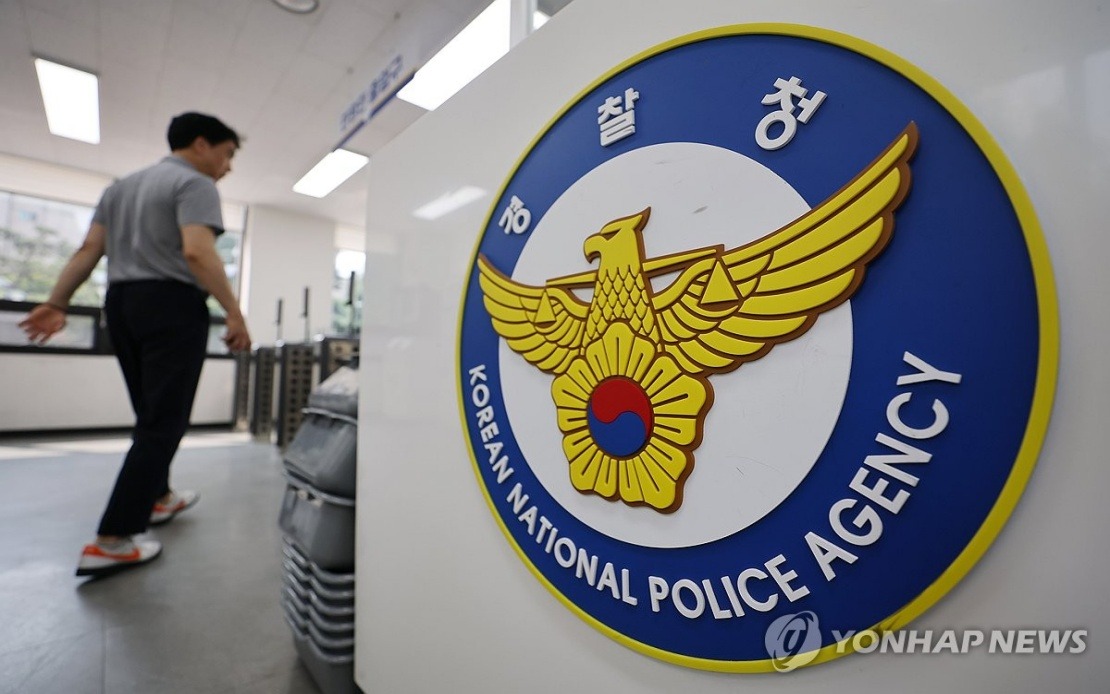
South Korea's Korean National Police Agency announced on Sunday that it is initiating an ambitious countrywide enforcement operation beginning Monday and extending through October 31, with particular emphasis on younger members of criminal syndicates who have increasingly turned to sophisticated financial schemes and illicit money flows. The operation reflects growing alarm in Seoul over shifting patterns in organised crime, where younger perpetrators are adopting more contemporary methods of criminal activity rather than traditional gang violence.
The special operations targeting youth-oriented organised crime will concentrate on several high-impact financial offences that have proven particularly lucrative for criminal networks in recent years. These include large-scale coordinated fraud schemes, unlicensed lending operations that exploit desperate borrowers, clandestine online gambling platforms operating beyond regulatory frameworks, and money laundering mechanisms designed to obscure the origins of criminal proceeds. The breadth of this focus demonstrates how criminal enterprises have evolved to capitalise on digital infrastructure and financial system vulnerabilities.
A notable element of the campaign involves addressing the phenomenon of criminals deliberately publicising their illicit earnings across social media and online platforms. This conspicuous display of wealth serves multiple criminal purposes: it attracts potential recruits to criminal organisations, intimidates victims and communities, and projects an image of power and untouchability. Law enforcement authorities have identified this behavioural pattern as particularly corrosive to public confidence and social stability, as it normalises criminal activity in the eyes of vulnerable populations, particularly youth. Simultaneously, the police strategy includes aggressive asset seizure operations designed to interrupt the financial ecosystems sustaining these criminal networks by freezing and confiscating proceeds derived from illegal activities.
Internationally focused components of the crackdown target drug trafficking operations, with heightened scrutiny directed toward synthetic pharmaceuticals including ketamine, which have become increasingly prevalent in East Asian illicit drug markets. The KNPA is also concentrating enforcement resources on organised crimes perpetrated by or involving foreign nationals operating within South Korean territory. This dimension of the operation reflects the reality that South Korea, as an affluent developed economy with significant foreign worker populations and international connectivity, has become an attractive operational base for transnational criminal organisations seeking to access regional and global markets.
The geographical focus of international enforcement includes areas where foreign communities concentrate their activities and social gatherings, such as commercial districts with high populations of migrant workers, entertainment precincts, and nightlife zones where transnational criminal networks typically conduct recruitment and transaction activities. Enhanced intelligence collection targeting these communities and their workplaces is intended to develop early warning systems and disrupt criminal operations before they expand further. This approach recognises that organised crime involving foreign nationals often operates through networks that span multiple countries, requiring sophisticated intelligence sharing and coordinated enforcement.
The timing of this campaign reflects an alarming acceleration in organised criminal activity detected during the first half of 2024. Between March 9 and June 30, police operations apprehended 1,185 individuals with gang affiliations, with 225 formally arrested—representing a substantial 9.7 per cent increase in apprehensions and a concerning 48.3 per cent spike in formal arrests compared to equivalent enforcement actions during the preceding period. These figures underscore not merely an increase in criminal activity but a corresponding intensification of police response and judicial processing.
The demographic profile of perpetrators in the latest enforcement figures carries particular significance for policymakers and social analysts. Young people aged 30 and under comprised 63.6 per cent of those apprehended during the March-to-June period, indicating that criminal organisations are either recruiting younger members or that youth are independently engaging in criminal enterprises at substantially elevated rates. Among these younger suspects, fraud constituted the predominant category of offences at 42.7 per cent, confirming that youth-driven organised crime has fundamentally shifted away from traditional violence-oriented activities toward technology-enabled financial crimes offering greater anonymity and broader victim pools.
During the same four-month period, police apprehended 641 foreign nationals involved in criminal activity and detained 133 for prosecution. The broader year-to-date statistics reveal troubling trajectories: the total number of foreign nationals booked by South Korean police in the first half of this year reached 18,130, representing a 9.1 per cent increase from the corresponding period the previous year. More alarmingly, drug-related criminal incidents surged by 29 per cent during the same timeframe, suggesting that synthetic drug markets are expanding rapidly and that criminal networks are successfully scaling their distribution operations.
These enforcement figures carry important implications for Malaysia and other Southeast Asian nations, as South Korean organised crime networks increasingly operate across regional borders. Enhanced South Korean police operations targeting these groups may displace criminal activity to neighbouring jurisdictions, including increased trafficking through Malaysia's ports and borders. The sophistication of financial crime methodologies developed by South Korean criminal organisations, particularly fraud and money laundering techniques, represents a transnational security concern as these operational methodologies spread throughout the region through criminal networks with cross-border relationships.
The KNPA has signalled commitment to sustained coordinated action through partnerships with relevant government agencies, indicating that the six-month campaign represents not merely a temporary enforcement spike but rather the initiation of a more sustained strategic realignment in South Korean law enforcement. This comprehensive approach acknowledges that contemporary organised crime operates through integrated networks spanning multiple criminal activities, requiring authorities to simultaneously address financial crimes, drug trafficking, and transnational operations rather than compartmentalising enforcement efforts by crime category.
The success of this operation will substantially influence how other regional governments, including Malaysian authorities, approach the challenge of youth-driven organised crime and transnational criminal networks. South Korea's willingness to invest significant police resources in intelligence gathering within foreign communities and its focus on disrupting financial flows rather than merely prosecuting individual offences provides a potential model for regional law enforcement cooperation and information sharing.

