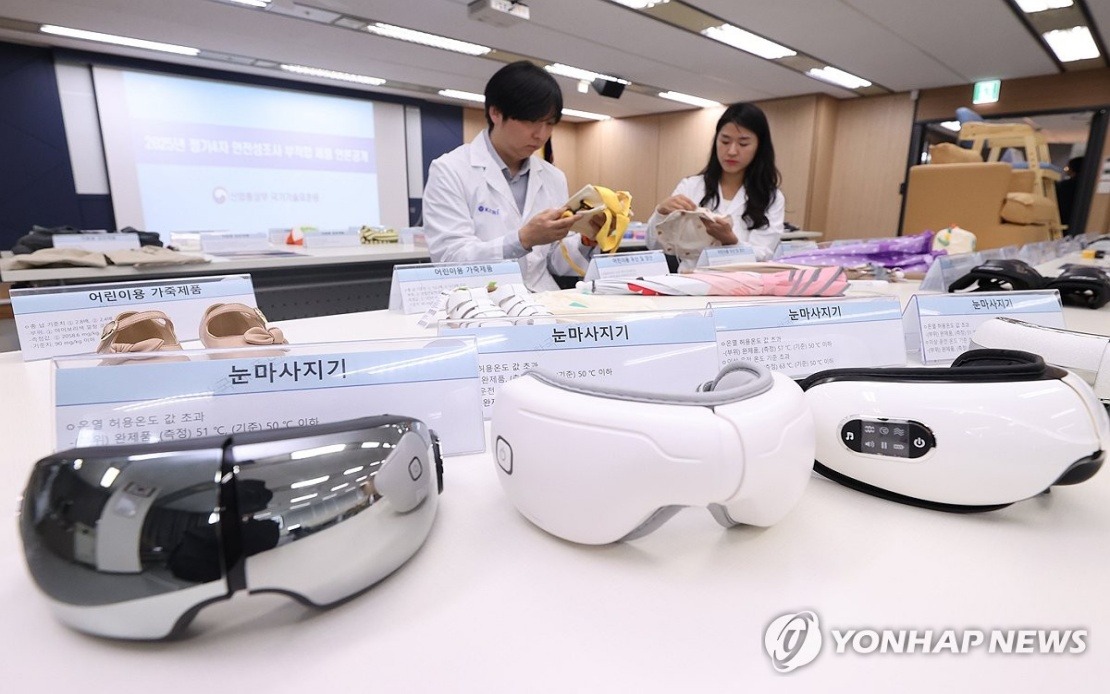
South Korea's consumer protection authorities disclosed on Monday that product recall cases surged to 2,656 in 2025, representing a 5 per cent increase from the previous year's 2,537 cases. The uptick reflects mounting challenges in safeguarding domestic consumers from defective goods, particularly as e-commerce platforms become increasingly saturated with substandard imported merchandise. The Fair Trade Commission attributed the rise primarily to violations of the Framework Act on Consumers, signalling a systematic failure in maintaining product safety standards across supply chains.
The expansion of direct cross-border purchasing through online channels has created a regulatory blind spot that authorities are now scrambling to address. Consumers in South Korea, like their counterparts across Southeast Asia, increasingly bypass traditional retail channels to purchase directly from international vendors, often unaware that products already subject to recalls in their countries of origin are simultaneously available on domestic platforms. This arbitrage of safety standards represents a fundamental challenge to consumer protection frameworks designed for an era of concentrated distribution networks rather than diffuse online marketplaces.
Violations of the consumer protection act alone accounted for 851 recall cases in 2025, a dramatic 42 per cent surge compared with the prior year. This category encompasses products that fail to meet mandatory safety specifications, contain undisclosed hazardous materials, or lack proper labelling and documentation. The sharp acceleration suggests that regulatory oversight has lagged significantly behind the velocity of cross-border commerce, allowing non-compliant goods to penetrate the market faster than authorities can identify and respond to them.
The Fair Trade Commission acknowledged the structural problem directly, noting that an influx of hazardous imported items sold through online channels, coupled with rising consumer appetite for direct purchases from foreign sellers, has outpaced enforcement capacity. In response, the agency announced enhanced surveillance efforts involving coordination with relevant government bodies to intercept problematic products before they reach consumers. The strategy includes working with online marketplace operators to remove listings of goods that have triggered recalls in overseas markets or that fail internal safety testing protocols.
Breakdown by product category reveals uneven trends across different consumer segments. Industrial consumer goods, a broad classification encompassing appliances, electronics, and mechanical products, recorded 1,282 recalls in 2025, marking an 8.6 per cent year-on-year increase. This category dominates the recall landscape, likely reflecting the high volume of electronics and appliances imported from regional manufacturing hubs, many of which may not meet South Korean safety standards despite appearing functional.
Pharmaceutical and health-related recalls painted a contrasting picture. Recalls involving pharmaceutical products, including herbal medicines and traditional remedies popular in East Asian markets, declined 13.5 per cent to 295 cases. This improvement may reflect either better supply chain management in the pharmaceutical sector, stricter pre-market clearance requirements, or enhanced cooperation between pharmaceutical manufacturers and regulators. However, medical device recalls moved in the opposite direction, rising 8.5 per cent to 308 cases, suggesting that the regulatory apparatus faces particular difficulty in monitoring the rapidly evolving medical technology sector.
The implications for regional consumers extend well beyond South Korea's borders. Malaysian and Southeast Asian purchasers frequently acquire goods through the same online platforms where South Korean authorities report surging safety violations. Products that fail to meet Seoul's standards—whether due to electrical hazards, chemical contamination, or mechanical defects—often simultaneously violate or evade the safety requirements of other regional regulatory bodies. The interconnected nature of e-commerce means that a hazardous product circulating in South Korea's online market is statistically likely to be available in Malaysia, Indonesia, Thailand, and Vietnam through identical platforms.
The government's intervention strategy, which includes requesting marketplace operators to block sales of products subject to overseas recalls, demonstrates recognition that private sector intermediaries must bear responsibility for policing their platforms. Major e-commerce companies operating across Southeast Asia have shown reluctance to implement consistent safety standards, often citing the burden of cross-jurisdictional compliance. South Korea's approach—essentially leveraging government authority to compel platform gatekeeping—may pressure regional platforms to adopt similar standards, potentially benefiting consumers across the region.
However, enforcement remains a persistent vulnerability. Online marketplace operators can relatively easily circumvent restrictions by reclassifying products, adjusting listings, or shifting sales channels. Sellers motivated by profit margins have incentive to exploit regulatory gaps, and the sheer volume of transactions across platforms makes comprehensive monitoring technically challenging. South Korea's 42 per cent increase in consumer protection act violations within a single year suggests that the rate of regulatory detection may itself be accelerating, either because violations are genuinely increasing or because scrutiny is intensifying—or both.
For Malaysian consumers and policymakers, South Korea's experience offers both a cautionary tale and a strategic blueprint. The cautionary element is clear: as cross-border e-commerce continues its exponential growth, the volume of potentially hazardous products will expand correspondingly unless aggressive preventive measures are implemented. The strategic lesson involves the necessity of international regulatory cooperation and platform accountability. Malaysia's own consumer protection framework, administered through the Ministry of Domestic Trade and Cost of Living and the Malaysian Competition Commission, may benefit from studying Seoul's approach to coordinating with online marketplace operators and executing targeted surveillance of high-risk product categories.
The broader context involves the maturation of e-commerce infrastructure in Southeast Asia without corresponding advancement in consumer safety mechanisms. Regulatory bodies across the region have been reactive rather than proactive, typically investigating products only after consumer complaints surface or incidents occur. South Korea's shift toward enhanced surveillance and preemptive platform cooperation represents a more forward-looking model, though its effectiveness remains contingent upon resources, technical capacity, and sustained political will to prioritize consumer protection over commercial convenience.

