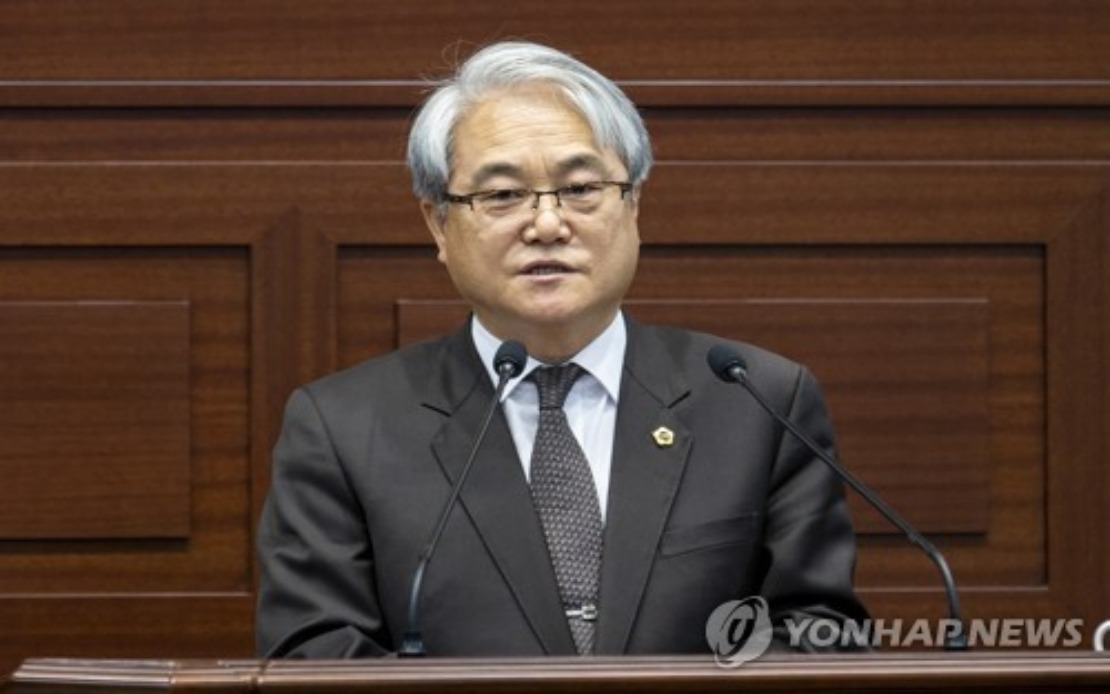
The death of Kim Ha-soo, a former administrator of Cheongdo county in South Korea's southeastern region, has cast a shadow over ongoing corruption investigations that had begun to close in on the political establishment. Found dead on a mountainside on Monday morning, the 67-year-old official's body was recovered by rescue personnel at approximately 7 a.m., accompanied by what appeared to be a handwritten note. The discovery marks another troubling chapter in a series of high-profile corruption cases that have plagued South Korean local government in recent years, raising fresh questions about accountability mechanisms and the pressures facing officials implicated in wrongdoing.
Kim's tenure as county chief, spanning from 2022 until his departure earlier this year, became the focal point of a multi-pronged investigation that revealed allegations of systematic abuse of power. The primary charge involved accepting illicit payments from a government employee in return for facilitating workplace promotions—a form of quid pro quo corruption that undermines merit-based advancement and institutional integrity. The arrangement, according to authorities, demonstrated how financial incentives could distort personnel decisions at the local government level, compromising the fairness of career progression for civil servants throughout the county administration.
The web of corruption surrounding Kim extended beyond mere bribery. Separately, prosecutors had formally referred him for investigation into charges related to a January incident in which he allegedly broke into the residence of a nursing home director. This additional allegation suggests a pattern of behaviour characterised by the misuse of official position and disregard for legal boundaries. The specifics of the break-in and any potential connection to his official duties remain unclear, though the inclusion of this charge in the prosecution's case file indicates prosecutors viewed it as sufficiently serious to warrant formal charges.
Complicated further by the apparent suicide methodology—suggested by the presence of a handwritten note recovered at the scene—the case exemplifies the intense personal pressures that officials under investigation may experience. While police authorities have refrained from disclosing the contents or full context of the note, its presence strongly indicates Kim's death was intentional rather than accidental. This pattern of officials taking their own lives during investigations is not unprecedented in South Korea, where public shame and institutional disgrace can carry profound personal consequences.
The investigation into Kim's activities had gained momentum following the discovery of a co-conspirator's death. A man suspected of serving as an intermediary in the bribery scheme—tasked with physically delivering the illegal payments—was found dead earlier in the investigation timeline. The circumstances surrounding that death remain unclear, though the sequential nature of these fatalities adds layers of complexity to understanding the broader corruption network that may have extended beyond Kim himself.
For Malaysian observers, this development carries particular resonance given Southeast Asia's ongoing struggle with corruption in public administration. While Malaysia has established institutions such as the Malaysian Anti-Corruption Commission to investigate and prosecute graft, South Korea's experience demonstrates that even more advanced economies with robust legal systems continue to grapple with embedded corruption in local government. The case illustrates how corruption investigations, while necessary, can carry tragic personal consequences that sometimes escape public discussion focused solely on institutional accountability.
The structural vulnerability of local government officials to corruption appears endemic across East Asia. County-level administrators often control significant resources for community development, business licensing, and personnel management—domains where informal exchanges of money for favours can flourish with relative impunity if oversight mechanisms prove insufficient. Kim's position overseeing Cheongdo's municipal operations would have positioned him to extract such benefits, particularly in exchange for leveraging promotion decisions that directly affected dozens of subordinate staff members.
South Korea's prosecution authorities will now face the delicate task of determining whether Kim's death concludes the investigation or whether additional charges should be pursued against the intermediary individuals and officials who may have participated in the bribery scheme. The death of a subject under investigation does not automatically terminate legal proceedings—prosecutors in many jurisdictions, including South Korea, retain authority to pursue charges against accomplices and to formally document findings that may inform institutional reforms and prevent similar conduct elsewhere.
The broader implications for local governance in South Korea extend beyond this single case. Systematic corruption at the county level undermines public trust in government institutions and diverts resources intended for genuine public benefit into private hands. The incident may accelerate discussions within South Korean government about enhancing transparency measures, strengthening whistleblower protections, and implementing more rigorous oversight of personnel decision-making at the local level.
For regional governance watchers, the case reinforces a critical lesson: corruption investigations, while essential for institutional integrity, require psychological support systems and counselling resources for subjects under investigation. Countries across Southeast Asia, including Malaysia, might consider whether current investigative protocols adequately balance accountability objectives with the mental health and personal safety of individuals caught in the investigative process. The pressure cooker environment created by active corruption probes—particularly in societies with strong cultural emphasis on honour and social standing—can produce tragic outcomes that complicate the pursuit of justice itself.

