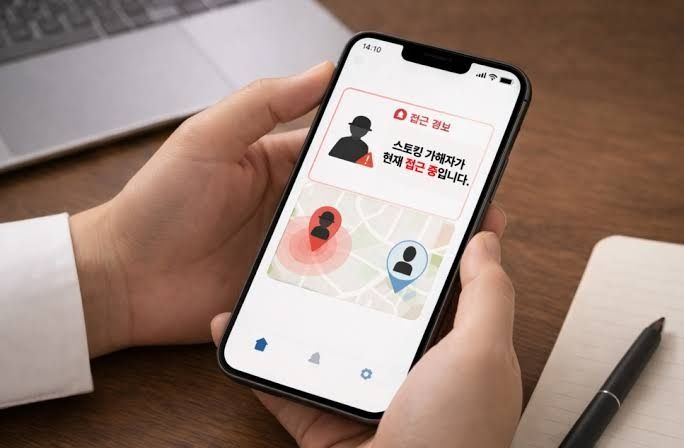
South Korea unveiled a cutting-edge mobile surveillance system on June 24 aimed at revolutionizing how the nation protects victims of stalking—a crime that has become increasingly prevalent across the region. The Ministry of Justice introduced the application through which registered victims can access live location data and track the movement patterns of individuals suspected of stalking who have been fitted with court-ordered electronic ankle monitors. The initiative represents a significant shift in victim-centred law enforcement, empowering those at risk to maintain constant awareness of potential threats rather than depending entirely on police intervention.
The stalking epidemic in South Korea has reached crisis proportions, prompting the government to reassess its protective mechanisms. Between 2021 and August 2025, at least 23 victims were either killed or became targets of attempted murder despite having been equipped with emergency alert devices—smartwatch-style gadgets that had formed the backbone of victim protection efforts for years. These troubling statistics, highlighted by Representative Lee Gwang-hee of the ruling Democratic Party of Korea, underscore the inadequacy of previous technological safeguards and the urgent need for enhanced surveillance measures.
The deployment of electronic monitoring in high-risk stalking cases only commenced in 2024 following court orders, making it a relatively recent addition to South Korea's legal arsenal against perpetrators. Prior to this development, victims relied exclusively on wearable alert devices that could trigger emergency responses but offered no proactive information about a stalker's whereabouts. The new application fundamentally changes this dynamic by transforming victims from passive recipients of emergency assistance into active monitors capable of anticipating danger and taking evasive action.
Privacy considerations have necessarily complicated the rollout of such a powerful surveillance tool. Recognising the tension between victim protection and the constitutional rights of suspects under monitoring, the Justice Ministry took the precaution of revising regulations governing electronic monitoring in December 2025. These regulatory amendments establish guardrails intended to prevent misuse of location data while preserving the system's core protective function. The balance between security and privacy remains delicate, particularly given that many suspects are awaiting trial rather than having been convicted.
For Malaysian and Southeast Asian readers, South Korea's approach offers instructive lessons about the complexities of leveraging technology to combat gender-based violence. Stalking in the region remains grossly underreported and inadequately legislated in many jurisdictions, making South Korea's integrated response—combining electronic monitoring, victim-accessible data, and revised legal frameworks—a potential policy template. The Malaysian government, which has strengthened anti-stalking laws in recent years, might examine whether similar real-time tracking systems could enhance protections for domestic violence and stalking victims.
The application's design prioritises user accessibility and reliability. Victims receiving electronic monitoring notifications can immediately ascertain whether a suspected stalker is approaching their location, allowing them to contact police, leave the area, or seek shelter. This real-time intelligence fundamentally alters the power dynamic in stalking situations, where victims traditionally faced uncertainty about their immediate safety. The directness of the technological intervention—providing location and vector information—enables victims to make informed decisions within seconds rather than relying on emergency responders who may be minutes away.
Beyond the immediate victim protection dimension, the system incentivises compliance among individuals on electronic monitoring. Knowing that their whereabouts are visible to their victims creates a tangible disincentive for breaching the terms of their monitoring order or approaching prohibited locations. This behavioral reinforcement mechanism may prove as valuable as the surveillance itself in preventing repeat incidents.
The South Korean government has signalled its commitment to systemic reform by announcing plans to introduce victim-initiated restraining order mechanisms in April 2027. Currently, victims must rely on law enforcement agencies to petition courts on their behalf—a process that introduces bureaucratic delays and places institutional gatekeeping between victims and judicial protection. The planned reform would permit victims to directly approach courts with restraining order petitions, streamlining access to legal protections and reducing dependency on police resources. This procedural change acknowledges that victims themselves often possess the best understanding of threat levels and protective needs.
The April 2027 implementation timeline suggests that South Korea is pursuing a phased approach to systemic overhaul rather than attempting comprehensive reform simultaneously. This measured strategy allows authorities to monitor the effectiveness and unforeseen consequences of the real-time tracking application while preparing the judicial infrastructure necessary for victim-initiated restraining orders. Such deliberate pacing, while perhaps frustrating to victim advocates, reflects sophisticated policy design intended to avoid unintended consequences.
Regionally, South Korea's multi-layered approach—combining electronic monitoring, real-time victim notification, regulatory safeguards, and procedural reform—establishes a comprehensive framework that other East and Southeast Asian nations might adapt to their particular contexts. The emphasis on victim agency throughout the system represents a philosophical shift toward recognising stalking victims not as vulnerable dependants requiring rescue but as informed participants capable of making strategic decisions about their own safety. As other nations grapple with similar stalking epidemics, the South Korean model demonstrates that technological innovation, legal reform, and victim empowerment can be integrated into coherent protective systems.

