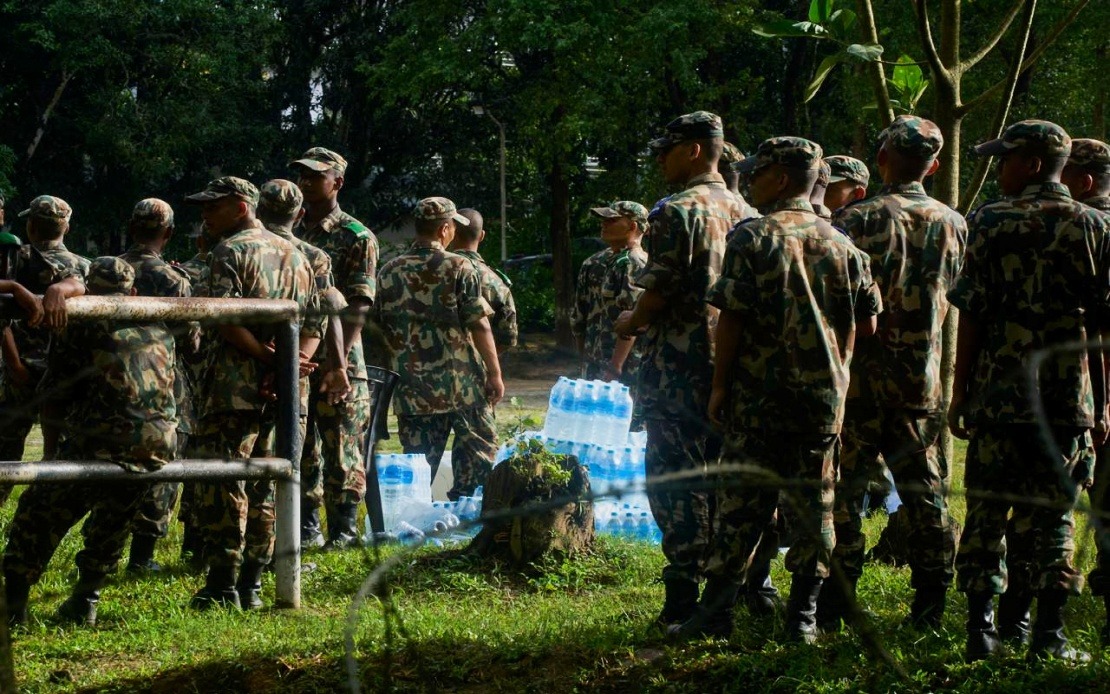
South Korea mobilised its diplomatic and emergency response apparatus on Thursday after a catastrophic natural disaster in Nepal left nine of its citizens unaccounted for. The government immediately dispatched a joint emergency response team comprising officials from the Foreign Ministry alongside specialists from police and fire authorities to coordinate rescue operations in the Alpine nation. The 11-member contingent departed Seoul on Thursday and was expected to arrive in Kathmandu that evening, marking the beginning of what officials have framed as a whole-of-government effort to locate the missing workers.
The nine Korean nationals who disappeared worked for two major South Korean enterprises engaged in a significant infrastructure development project. Six were employed by Doosan Enerbility Co., a renowned plant construction firm, while three worked for Korea South-East Power Co., a state-owned power generation entity. All nine were stationed at a hydropower plant construction site located in Rasuwa district, a mountainous region in Nepal's north-central Himalayan belt positioned near the Nepal-Tibet frontier. The workers vanished after a violent flash flood and accompanying mudslide devastated the area on Wednesday, sweeping through the construction zone with little warning.
The scale of the natural disaster extended well beyond the Korean nationals. Official reports indicate that at least 160 people have been confirmed dead across the affected region, with 403 individuals still reported missing, of whom 341 are foreign nationals working on various projects in the area. The ten additional Doosan employees who had initially been stranded have since been confirmed alive, though they remained awaiting extraction from the danger zone. Approximately 200 foreign workers engaged in the broader construction effort managed to evacuate the site, underscoring the massive international presence in Nepal's development infrastructure sector.
The Upper Trishuli-1 hydropower plant, located approximately 70 kilometres northwest of Kathmandu on the Trishuli River, represents a substantial investment and strategic project for South Korean industry. The 216-megawatt facility represents the type of major engineering undertaking that South Korean companies have leveraged as a cornerstone of their regional commercial expansion across Southeast and South Asia. Construction commenced in January 2022, with operators originally projecting commercial operation to commence by year-end. However, industry observers have warned that the catastrophic flood damage sustained at the site will almost certainly impose severe delays on the project timeline, potentially pushing completion back by several months or longer.
President Lee Jae Myung issued direct orders to government officials to deploy all available state resources toward locating and rescuing the missing nationals, signalling the political importance Seoul attaches to the situation. Foreign Minister Cho Hyun indicated intentions to engage directly with Nepal's diplomatic counterpart to secure cooperation and coordinate relief efforts at the highest governmental level. This diplomatic engagement reflects the complex interplay between bilateral relations and corporate interests that characterises South Korea's investment patterns throughout South Asia and beyond.
The two South Korean companies involved have established their own emergency response structures to complement government efforts. Both Doosan Enerbility and Korea South-East Power Co. announced plans to dispatch dedicated field response teams directly to the accident site, recognising that corporate resources and on-ground expertise could supplement official rescue operations. This multi-layered response architecture—combining government emergency services, diplomatic channels, and corporate mobilisation—reflects the integrated approach that major regional powers adopt when confronting crises affecting their nationals abroad.
The disaster highlights the inherent risks associated with large-scale infrastructure development projects operating in geographically challenging terrain prone to sudden environmental violence. Nepal's Himalayan geography, while rich in hydroelectric potential, exposes construction crews to flash flood hazards that can materialise with limited warning during monsoon seasons. The integration of foreign workers into these projects creates diplomatic and humanitarian complexities that extend beyond purely commercial considerations, obligating home governments to maintain robust crisis response capabilities for operations throughout the region.
For Malaysian readers and regional observers, the South Korean response underscores the broader challenge facing Southeast and South Asian nations hosting substantial international workforces engaged in infrastructure development. Similar catastrophic events have previously affected construction sites across the region, prompting questions about worker safety protocols, environmental risk assessment, and emergency preparedness standards. The incident also reflects the intensive economic interdependence characterising the region, where South Korean firms compete alongside Malaysian, Chinese, Indian, and other regional companies for major hydropower and energy infrastructure contracts.
The Upper Trishuli-1 project represents one component of Nepal's broader hydroelectric development strategy, which aims to leverage the nation's substantial water resources and elevation differentials for power generation. Delays to this project will have ripple effects throughout Nepal's energy sector planning and may influence regional energy supply arrangements. For South Korean companies operating throughout South Asia, the incident reinforces the necessity for comprehensive risk management frameworks and investment in safety infrastructure that can withstand the region's environmental extremes.

