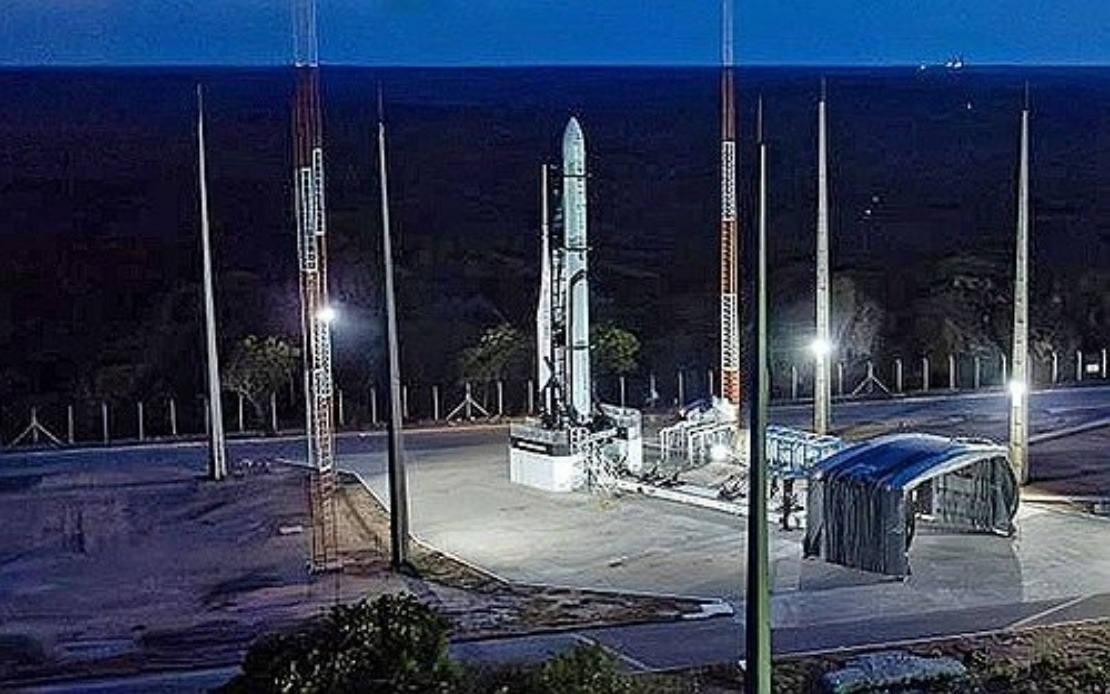
South Korea's defence ministry announced on Tuesday that it was cancelling a scheduled launch of the Mir solid-fuel space rocket from a sea platform off Jeju Island's southern coast, citing unspecified safety issues discovered during final preparations. The postponement represents a setback for Seoul's efforts to establish an autonomous space launch capability, though the ministry said the launch would be rescheduled at a later date without providing a timeframe.
The Mir programme holds significant strategic importance for South Korea as it seeks to reduce dependence on foreign launch providers and establish indigenous surveillance capabilities in the increasingly tense Korean Peninsula. By developing domestically produced solid-fuel rockets, Seoul aims to achieve the technical independence necessary to rapidly deploy observation satellites without relying on international partners or their schedules. This approach reflects broader defence modernisation efforts across the region, where countries including Japan and India have invested heavily in indigenous space programmes to bolster national security.
Had the launch proceeded as planned at 2 pm local time, it would have marked a major milestone in South Korea's aerospace development. The rocket was designed to complete its first test flight in a fully assembled four-stage configuration, representing a substantial leap from previous testing phases conducted in 2022 and 2023. Those earlier trials evaluated only partial three-stage configurations, meaning technicians and engineers had not previously validated the complete vehicle system under actual launch conditions. The discovery of issues during final checks suggests that integrating all four stages introduced complexities that required additional investigation.
Solid-fuel propulsion technology offers distinct advantages over liquid-fuel alternatives that make it particularly attractive for military applications. The simpler structural design, combined with the ability to store fuel for extended periods without degradation, enables rapid response deployment when urgent satellite reconnaissance becomes necessary. For South Korea, these characteristics align perfectly with the need to monitor North Korean military activities with minimal advance warning, a capability that has become increasingly critical as tensions fluctuate on the peninsula.
The Mir programme sits within a broader South Korean strategy to establish comprehensive space-based intelligence gathering. Parallel to the solid-fuel rocket initiative, the military has successfully deployed five reconnaissance satellites using SpaceX's Falcon 9 rockets, with the most recent launch occurring in November of the previous year. These larger satellites form the backbone of current surveillance operations, providing high-resolution imagery across wide geographic areas. However, officials recognise that a cluster of smaller satellites deployed via domestic rockets would create a more resilient and flexible observation network less vulnerable to supply chain disruptions.
Under current planning, South Korea aims to deploy as many as 60 small satellites into low-Earth orbit by 2030 as part of the Mir constellation. These satellites would operate at altitudes below 500 kilometres, positioning them to capture detailed intelligence on regional targets including military installations across the North. The intended constellation would generate unprecedented monitoring capability, enabling Seoul to reduce reliance on American satellite intelligence that has historically formed a cornerstone of South Korean defence planning. This shift toward autonomous surveillance represents a fundamental change in how the country approaches regional security threats.
The postponement raises questions about the timeline for achieving these ambitious deployment targets. Each delay in the Mir programme extends the period during which South Korea remains dependent on foreign launch capacity and shared intelligence arrangements. For Southeast Asian nations watching Seoul's technological progress, the incident underscores both the complexity of developing space launch capabilities and the importance of rigorous safety protocols. Regional observers have closely tracked South Korea's space achievements as a benchmark for what indigenous programmes can accomplish across East and Southeast Asia.
Safety concerns in rocket development are routinely taken seriously across the global space industry, and South Korea's decision to postpone rather than proceed reflects international best practices. Launch failures carry enormous financial costs, environmental consequences, and potential loss of life. The ministry's willingness to delay the test rather than accept identified risks demonstrates that programme managers prioritise long-term credibility over meeting artificial deadlines. However, repeated postponements could undermine confidence in the programme's viability and complicate budget justifications to parliament and the public.
The incident also highlights the technical challenges inherent in integrating complex systems. Moving from testing individual rocket stages to validating an entire vehicle requires addressing numerous integration points where problems can arise. Pressurisation systems, stage separation mechanisms, guidance systems, and fuel management all interact in ways that cannot be fully predicted through simulation alone. Each actual test flight generates invaluable data that informs subsequent launches, meaning even postponements contribute to the programme's eventual success by revealing issues before they cause catastrophic failures.
For Malaysia and other Southeast Asian countries pursuing their own space ambitions, South Korea's experience offers instructive lessons about the time and resources required to develop indigenous launch capacity. Malaysia's Angkasawan astronaut programme and satellite initiatives have proceeded more cautiously, relying on international partnerships rather than attempting to replicate the technical expertise necessary for domestic launchers. The substantial investment South Korea continues to make in space technology, combined with setbacks like this postponement, illustrates why many developing nations opt for alternative approaches involving international collaboration and contracted launch services.
Looking forward, the rescheduled Mir launch will remain one of the most significant technological demonstrations in recent Korean defence development. Success would validate South Korea's engineering capabilities and accelerate the timeline for establishing the planned satellite constellation. The missile and space programmes continue to evolve in tandem, with solid-fuel rocket technology finding applications across military domains. As regional security dynamics shift and North Korean capabilities advance, South Korea's pursuit of independent space assets becomes increasingly urgent, making the Mir programme's eventual success crucial to national defence strategy.

