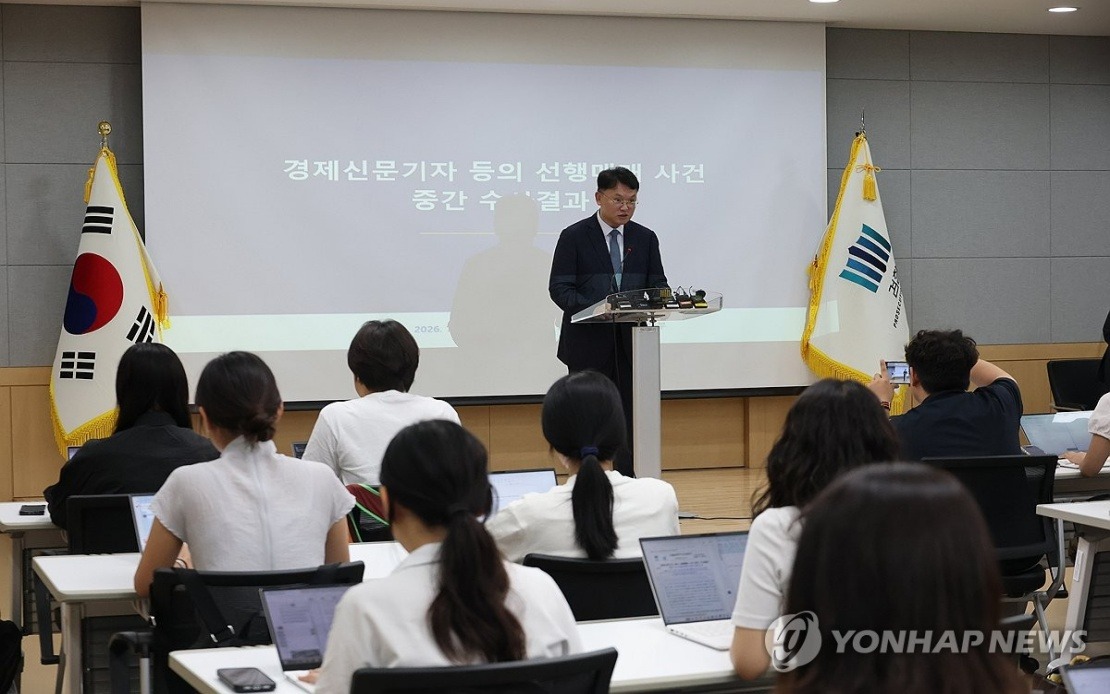
South Korea's prosecution service has moved against a sophisticated financial fraud operation involving members of the media, announcing Wednesday the indictment of eight individuals accused of orchestrating a stock price manipulation scheme that netted participants more than 9 billion won in illegal gains. The case represents a significant breach of journalistic ethics and market integrity, combining the misuse of media influence with calculated financial crime. Among those charged are six reporters from a business daily publication, an accountant, and an investor who allegedly worked in concert to artificially inflate share prices and profit from the coordinated manipulation.
The mechanics of the operation reveal a methodical approach to market abuse. Participants would acquire stakes in thinly traded or highly volatile stocks before orchestrating a promotional campaign through favourable news coverage. After artificially inflating the share prices through positive editorial content, the conspirators would exit their positions at inflated valuations, realising substantial profits at the expense of unsuspecting retail investors. This approach exploited the trust readers place in news organisations and the documented influence of media coverage on retail investment decisions in Korean markets.
The primary group involved in the scheme operated across an extended timeline from October 2020 through June of last year. Five reporters, working alongside an investor and an accountant, authored approximately 1,800 articles designed to support the manipulation strategy. The five journalists collected roughly 8.55 billion won through their participation, receiving compensation of 300,000 won per article published. The distribution of proceeds was unequal, with three of the five reporters earning approximately 150 million won, 160 million won, and 28 million won respectively, suggesting varying levels of involvement or prominence within the conspiracy.
A sixth journalist operated independently from this core group, conducting a separate but parallel scheme between October 2022 and July 2024. This reporter generated around 740 million won through the publication of 340 articles, leveraging his authority and position within the newsroom to publish pieces that benefited his financial interests without coordination with other conspirators. The fact that this individual operated on a smaller scale but over a shorter, more recent timeframe suggests the practices may have been endemic within segments of the Korean financial media rather than isolated incidents.
For Malaysian readers and Southeast Asian observers, this case carries important implications for understanding the vulnerabilities of financial markets across the region. Many emerging economies in Asia face similar pressures where the intersection of journalism, finance, and regulatory oversight can create opportunities for misconduct. The reliance on retail investors who may lack sophisticated analysis tools makes them particularly susceptible to media-driven manipulation tactics. The prosecution's success in tracking and prosecuting these crimes demonstrates the importance of robust regulatory frameworks that can monitor financial media activity and cross-reference publishing patterns with market trading behaviour.
The compensation structure revealed in the investigation—paying journalists per article rather than salaries—suggests either deliberate obfuscation of the scheme or systemic weaknesses in newsroom oversight. The practice of incentivising article publication through per-piece payments creates inherent conflicts of interest that supervisory systems should be designed to prevent. This raises questions about editorial independence and the governance structures within South Korean media organisations that allowed such arrangements to exist without detection for extended periods.
Prosecution authorities have committed to recovering all criminal proceeds and taking stringent action against behaviour that compromises stock market integrity. This public commitment reflects broader concerns across East Asian financial regulators about maintaining confidence in capital markets, particularly as retail participation expands. The scale of the operation—involving hundreds of articles and billions of won—suggests that detection was difficult and time-consuming, raising questions about the adequacy of existing monitoring systems designed to identify unusual patterns of coordinated media activity and subsequent trading.
The investigation methodology likely involved cross-referencing bank records and brokerage trading data with publication dates and authorship information, a labour-intensive process that underscores why such schemes can operate for years without triggering alarm. Modern financial surveillance systems may be more sophisticated in detecting unusual trading patterns, but identifying the nexus to specific media outlets and individuals requires sustained investigative effort across multiple institutional databases. South Korean authorities appear to have invested significant resources in building the case, suggesting institutional commitment to addressing this particular vulnerability.
For journalists across Southeast Asia, the case serves as a cautionary example of how conflicts of interest in financial reporting can evolve from subtle breaches into systematic criminal enterprise. The transition from occasional undisclosed interests to a formalised payment structure suggests a gradual normalisation of misconduct within the newsroom environment. Professional associations and media organisations across the region would benefit from examining their own ethical guidelines and conflict-of-interest disclosure policies to ensure they adequately address the specific vulnerabilities demonstrated in this case.
The incident also reflects broader tensions within South Korean media regarding financial reporting and the pressures on news organisations operating in competitive environments. Business dailies face constant pressure to generate subscriber interest and advertising revenue, potentially creating misaligned incentives that can compromise editorial independence. The participation of multiple journalists suggests institutional knowledge of the scheme, raising questions about whether supervisory structures existed and, if so, why they failed to intervene earlier. These organisational dynamics warrant scrutiny as media outlets across the region face similar competitive pressures and business model challenges.

