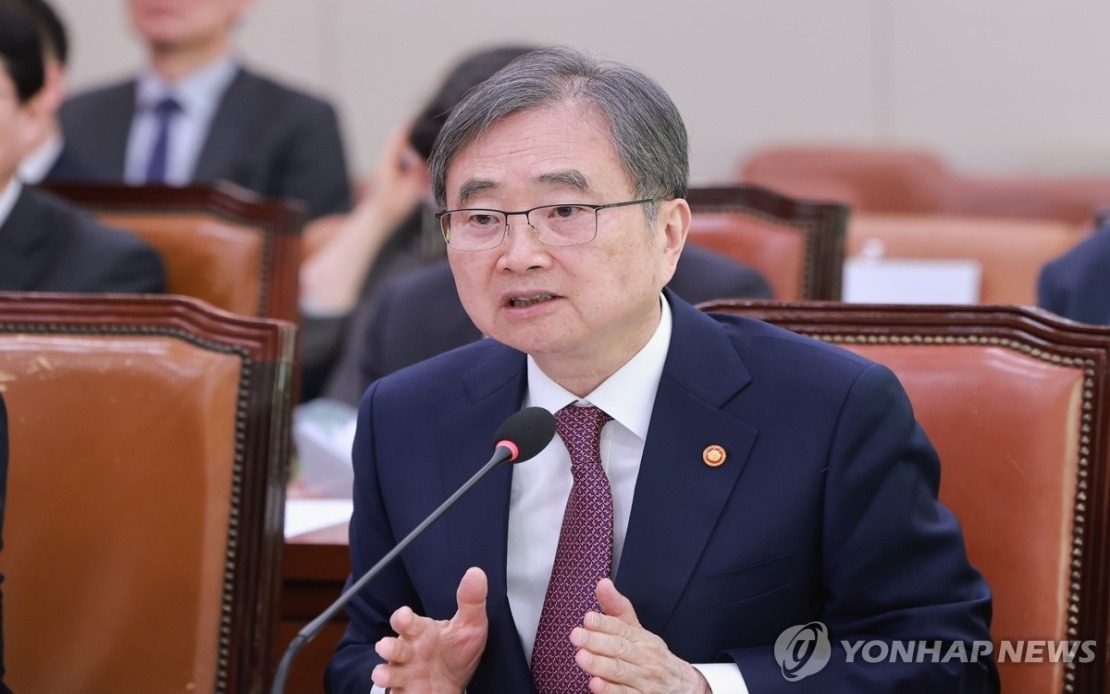
South Korea was caught off-guard when US President Donald Trump announced significant reductions to joint military exercises through social media, with Seoul's government learning of the decision only after it appeared online. Foreign Minister Cho Hyun disclosed to parliament's foreign affairs and unification committee that neither Seoul nor Washington had forewarned him about the announcement, underscoring a notable breach in coordination between the two long-standing security partners.
Trump's August 16 post instructed the Pentagon to substantially scale down the annual Ulchi Freedom Shield (UFS) exercises that South Korea and the United States conduct each summer. The decision caught officials in Seoul unprepared, as the Foreign Ministry had no prior knowledge of the social media announcement. This represents an unusual channel for communicating major military policy adjustments between allied governments, raising questions about the protocols governing such sensitive defence matters in the US-South Korea relationship.
The practical consequence of Trump's directive is clear: the duration of the ongoing UFS drills has been compressed from a planned ten-day schedule running August 17-27 down to a five-day event concluding August 21. South Korea's Joint Chiefs of Staff confirmed the abbreviated timeline, though the compressed schedule still allows the exercise to proceed with its core components intact. These annual drills encompass field manoeuvres, computer-simulated command post exercises, and civil defence operations designed to maintain readiness between the nations.
Defence Minister Ahn Gyu-back moved swiftly to manage the fallout after Trump's announcement became public. He initiated intensive consultations with US military counterparts, including discussions with Xavier Brunson, the Commander of US Forces Korea, who visited South Korea's defence ministry building on Tuesday following the social media post. Through these direct engagements, Ahn's office framed the situation not as a unilateral American decision imposed on Seoul, but rather as a matter requiring bilateral consultation and coordination despite the unconventional announcement method.
The incident reflects a broader tension within the US-South Korea alliance regarding how major defence decisions are communicated and coordinated. Historically, such policy shifts involving joint military activities would be communicated through formal diplomatic and defence channels weeks or months in advance, allowing both governments to prepare public messaging and coordinate implementation details. The use of social media as the primary announcement vehicle for a significant reduction in allied military exercises deviates sharply from standard practice and suggests potential shifts in how the Trump administration manages alliance relationships.
For South Korea, the implications extend beyond mere protocol concerns. The Ulchi Freedom Shield exercises serve a critical deterrence function on the Korean Peninsula, where North Korea maintains a massive standing army and continues developing its nuclear and missile capabilities. Any reduction in joint training tempo, even if temporary, carries symbolic weight in Seoul's strategic calculations. The compressed schedule may limit the depth of command post simulations and civil defence training components that typically extend across the full ten-day period, potentially reducing the exercises' effectiveness in testing interoperability and readiness protocols.
The lack of advance notice also complicates South Korea's domestic political context. The government must explain to the public and to opposition lawmakers why it acquiesced to military exercise reductions without apparently negotiating conditions or timeline. Opposition parties are likely to seize on the Foreign Ministry's admission that it learned about the change through social media rather than through official channels, questioning whether Seoul's voice carries sufficient weight in Washington's decision-making process regarding regional security matters.
From a regional security perspective, the incident sends mixed signals to both adversaries and allies across East Asia. North Korea may interpret the reduced exercise tempo as evidence of weakening US commitment to the alliance, though such conclusions would likely be premature. However, Japan and other regional partners observing the US-South Korea dynamic may wonder whether Trump administration decisions regarding their own defence commitments might similarly be announced through unconventional channels, raising concerns about alliance cohesion and consistency.
The situation also highlights the unpredictable nature of policy implementation under Trump's leadership, where social media announcements sometimes precede formal governmental coordination. This pattern has emerged repeatedly across different policy areas and alliance relationships, creating friction with both partners and internal agencies. For South Korea, navigating this volatility requires careful diplomacy to maintain alliance stability while protecting national security interests, a balancing act that becomes more complex when major decisions are announced publicly before bilateral consultation concludes.
Looking forward, South Korea faces the challenge of formalising new protocols with Washington that might prevent such coordination lapses in future. The incident, while resolved through subsequent military-to-military dialogue, underscores the importance of maintaining clear communication channels independent of social media and ensuring that both governments speak with unified voice regarding joint defence arrangements. Lessons from this episode will likely inform how Seoul approaches broader alliance management with Washington in coming months, particularly as defence issues intersect with diplomatic initiatives on the Korean Peninsula.

