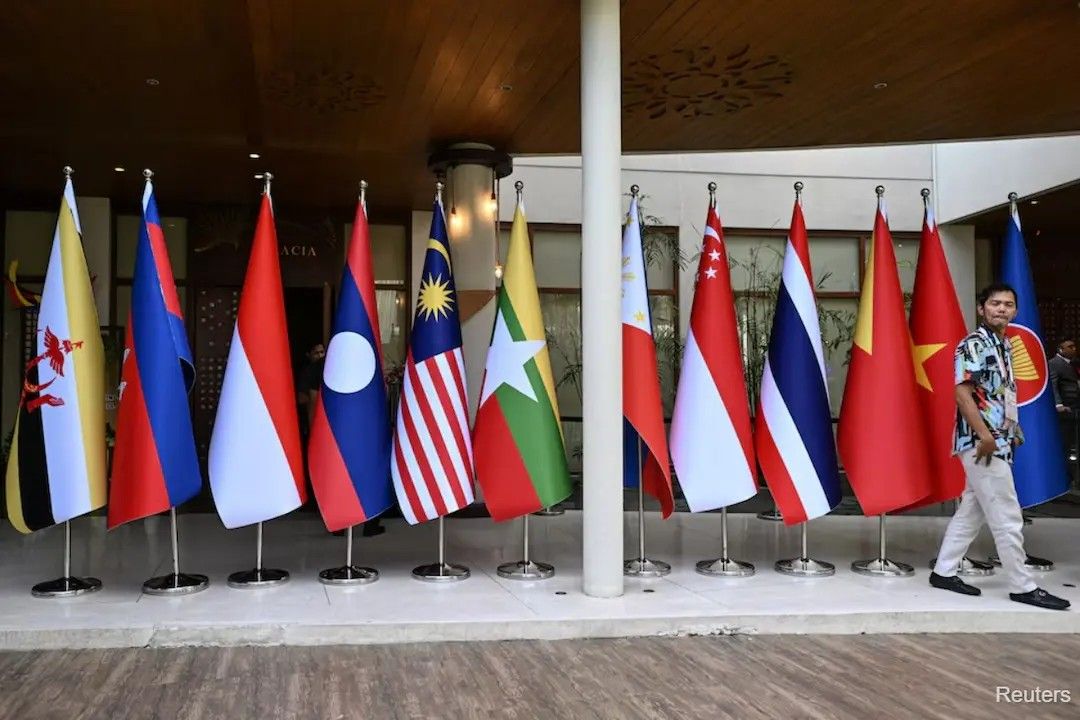
The latest clash between Philippine and Chinese forces at Second Thomas Shoal has injected fresh friction into Southeast Asian diplomacy, threatening to undermine consensus at this week's ASEAN gathering in Manila. The confrontation, which erupted when Manila said Chinese Coast Guard personnel assaulted Filipino sailors near a beached vessel functioning as an outpost on the disputed feature, represents the most serious maritime encounter in months and signals that underlying tensions in the region remain volatile despite rhetorical calls for dialogue.
US Secretary of State Marco Rubio's arrival in the Philippines came with a forceful rebuke of what Washington characterises as reckless Chinese conduct in the contested waters. In an opinion piece timed to coincide with his visit, Rubio framed American strategic involvement in Southeast Asia as essential ballast against hegemonic pressure, warning that regional nations face existential risks should the South China Sea fall under the dominion of a state willing to weaponise trade relationships. The messaging underscores Washington's determination to position itself as a counterweight to Beijing's assertiveness, even as ASEAN attempts to maintain strategic autonomy from major powers.
China's competing narrative—that Filipino personnel initiated the incident through unauthorised approaches in rubber boats—reflects the fundamental disagreement over maritime rights that continues to poison regional relations. Beijing's sweeping claims over nearly the entire South China Sea lack international legal foundation, following a 2016 arbitral tribunal ruling that rejected its historical assertions. Yet this legal reality has done little to moderate Chinese behaviour or resolve the underlying territorial disputes that pit several Southeast Asian nations against Beijing in a complex web of overlapping claims and strategic competition.
The deteriorating maritime environment casts a long shadow over the perennial quest for a Code of Conduct governing South China Sea interactions. Analysts have grown sceptical that ASEAN and China will produce anything with meaningful enforcement provisions, given Beijing's reluctance to constrain its own operations and the bloc's chronic inability to project unified positions. Each fresh confrontation erodes confidence that diplomatic frameworks alone can manage the security dilemma facing smaller regional powers, yet ASEAN remains invested in negotiation as a mechanism to prevent escalation without ceding political autonomy to great power arbitration.
Rubio's openness to a potential sideline encounter with Chinese Foreign Minister Wang Yi—also attending the Manila meeting—signals that despite the rhetorical heat, channels for dialogue remain operational. Such bilateral margins within multilateral gatherings have become standard practice in contemporary diplomacy, allowing major powers to manage tensions while avoiding the appearance of capitulation or loss of face. Whether such engagement yields substantive movement remains uncertain, particularly given the structural nature of the competition and the difficulty of achieving face-saving compromises on sovereignty questions.
Beyond maritime disputes, Myanmar's political crisis has become the bloc's most emotionally charged and operationally complicated challenge. Thailand's vigorous advocacy for reintegrating the junta-led state—driven partly by its hosting of millions of Myanmar refugees and its border security concerns—conflicts with Malaysia's principled stance that engaging senior military figures while "oppression is still taking place" legitimises illegitimate rule. This internal ASEAN fracture reflects broader divergence in how member states weigh humanitarian principles against pragmatic interests in regional stability and access to military-led governments.
Thailand's suggestion that Myanmar's leader Min Aung Hlaing may visit in August represents a significant diplomatic manoeuvre, positioning Bangkok as the primary architect of reengagement and potentially circumventing broader ASEAN deliberation. Philippine President Ferdinand Marcos's May call for "fine-tuning" the bloc's five-point peace plan acknowledged that five years of sanctions and exclusion have yielded negligible progress toward democratic transition. Yet Malaysia's resistance indicates that therapeutic engagement remains contested within ASEAN, with some members viewing dialogue as rewarding military intransigence rather than incentivising political reform.
For Malaysia specifically, the convergence of these crises carries particular weight. As a South China Sea claimant state with significant maritime assets at risk, Kuala Lumpur faces pressure to align with stronger stances on freedom of navigation and restraint in the waterway. Simultaneously, Malaysia's commitment to principles of non-interference and opposition to military rule places it at odds with ASEAN members adopting more accommodative approaches toward Myanmar's junta. These crosscurrents will test Malaysian diplomacy throughout the week's discussions.
Energy security has emerged as an unlikely but crucial secondary battleground at this week's gathering, reflecting how great power competition intersects with resource vulnerability. The Philippines' energy crisis and subsequent willingness to purchase Russian oil—a pragmatic response to supply constraints—demonstrates how regional states navigate between geopolitical allegiances and material survival. The prospect of invigorated discussions around ASEAN's Framework Agreement on Petroleum Security and fuel-sharing mechanisms suggests growing recognition that energy interdependence offers both collective vulnerability and opportunities for deeper regional integration.
Russia's Foreign Minister Sergei Lavrov's presence in Manila underscores the multipolar context within which ASEAN operates. The bloc's non-aligned positioning—theoretically equidistant from major powers—faces mounting pressure as the Ukraine conflict and broader US-China rivalry force ASEAN members into increasingly uncomfortable choices. Southeast Asian nations are learning that strategic autonomy requires careful calibration of relationships across multiple powers rather than simple hedging between two poles.
The week ahead will test whether ASEAN can maintain sufficient unity to produce outcomes that satisfy both its internal diversity and external stakeholders. The simultaneous presence of American and Chinese diplomats, combined with internal divisions over Myanmar and South China Sea approaches, creates a complex negotiating environment where consensus-building will require significant diplomatic skill. Malaysia and other moderate voices within ASEAN will likely attempt to fashion compromise language that acknowledges great power concerns while preserving the bloc's political independence.
Ultimately, the Manila meeting reflects a deeper structural challenge facing ASEAN: the organisation's founding commitment to non-interference and consensus-building increasingly conflicts with the urgent imperatives of great power competition and humanitarian crises that demand decisive collective action. Without resolving this tension, ASEAN risks becoming a forum where differences are managed rather than addressed, where problems are perpetually fine-tuned rather than solved, and where Southeast Asian interests are subordinated to the accommodation of stronger powers.

