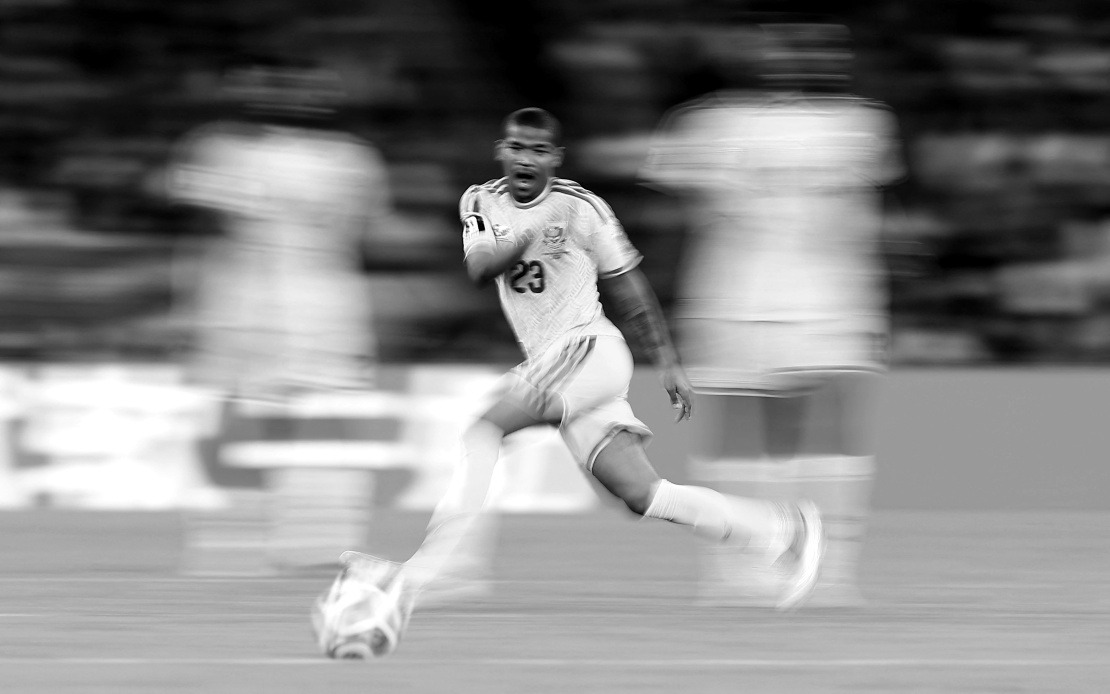
The South African football community is mourning the loss of Jayden Adams, a 25-year-old midfielder who represented his nation at this year's FIFA World Cup in what was meant to be the beginning of a stellar international career. The Confederation of African Football announced the death on Saturday, shocking supporters and officials across the continent who had watched the young talent develop into a key squad member for Bafana Bafana's historic World Cup campaign.
Adams featured prominently in South Africa's group-stage fixtures last month, appearing in all three matches as his country made an unprecedented breakthrough by advancing to the knockout rounds for the first time in its World Cup history. The midfielder's performances contributed to a memorable campaign that captured national pride, though the tournament ended prematurely when Canada eliminated South Africa 2-1 in the round of 32 on June 28.
Police in Cape Town opened an investigation after discovering the body of a 25-year-old male at a residence in Schotschekloof, a central area of the city, on Saturday morning. Authorities have not yet confirmed the cause of death, leaving the football fraternity waiting for official details as speculation swirls through media and social platforms. South Africa's Sports, Arts and Culture Minister Gayton McKenzie issued a statement urging restraint from both the public and media outlets, emphasising that Adams' family and club deserve space to grieve without premature conjecture.
McKenzie's tribute underscored the magnitude of the loss for South African sport, describing Adams as one of the nation's most promising young athletes at a time when Bafana Bafana was building momentum toward future competitions. The minister extended condolences to Adams' immediate family members, his teammates at club and international level, and the broader supporter base who had invested emotionally in the team's World Cup journey.
Adams' trajectory through the professional ranks demonstrated considerable promise. He made his senior international debut in 2022 and subsequently earned selection for South Africa's squad at the 2023 Africa Cup of Nations, where the team reached the semifinal stage—another significant achievement for the national programme. At club level, he began his professional career with Stellenbosch FC before earning a high-profile move to Mamelodi Sundowns in January 2025, one of Africa's most successful clubs.
His time at Sundowns had been brief but productive. The club, which competes in South Africa's premier football league and has won multiple continental titles, provided a platform for Adams to develop further. During his tenure, he contributed to Mamelodi's domestic league success and their participation in the African Champions League, the continent's elite club competition, adding valuable experience to his growing resume and aligning him with one of the region's most prestigious football institutions.
The international football fraternity has begun paying tribute to the fallen midfielder. FIFA President Gianni Infantino expressed condolences on behalf of the global governing body, characterising Adams as a player who would be "sorely missed" by the worldwide football community. Infantino's remarks reflected the universal nature of grief within sport, where young talent often transcends national boundaries and captivates audiences across continents.
Adams' death represents a tragedy that extends beyond football statistics and tournament performances. At just 25 years old, he represented the next generation of African footballers competing on the global stage, embodying the hopes of a nation still celebrating its World Cup breakthrough. His participation in the tournament symbolised the progress South African football was making under new leadership and renewed investment in the national programme.
The timing of his death, mere weeks after South Africa's World Cup campaign concluded, adds to the shock reverberating through the sporting community. Players who had celebrated with him on the pitch, coaches who had developed his talent, and supporters who had cheered his performances are now processing the sudden loss. The investigation into his death will likely dominate football news cycles across South Africa and the continent as the facts gradually emerge.
For Malaysian and Southeast Asian observers, Adams' death serves as a poignant reminder of the fragility of life even among elite athletes seemingly at the peak of their physical condition. It underscores how quickly fortune can shift in sport and in life, regardless of professional status or international recognition. The incident will undoubtedly prompt reflection within footballing circles across Asia about player welfare, mental health support structures, and the pressures facing young professionals navigating the demands of international competition.
The loss also raises questions about what South Africa's football programme will do to honour Adams' memory and support the players and staff affected by his death. As investigations continue and more information becomes available, the football world will be watching how South African authorities handle the case with sensitivity toward the family and the sporting community.

