South Africa's government has escalated its legal campaign at the International Court of Justice by filing a formal submission detailing what it characterises as Israel's systematic breach of provisional measures ordered by the tribunal. The filing, submitted under Article 11 of the court's Rules concerning internal judicial practice, represents a significant move in the closely watched genocide case that Pretoria initiated against Israel in late 2023. The Department of International Relations and Cooperation emphasised that this latest action underscores South Africa's commitment to holding states accountable within the international legal framework, even as the diplomatic and humanitarian dimensions of the conflict continue to evolve.
The core argument advanced by South Africa centres on the legally binding nature of the provisional measures themselves. These orders, issued by the ICJ in three separate phases beginning in January 2024 and continuing through May 2024, were designed to compel Israel to implement safeguards preventing acts that would contravene the 1948 Genocide Convention. According to South Africa's characterisation, Israel has categorically failed to observe these directives, thereby undermining the authority of the court and the international legal system it represents. This assertion carries particular weight in the context of international law, where compliance with ICJ rulings depends substantially on the political will of state actors rather than enforcement mechanisms.
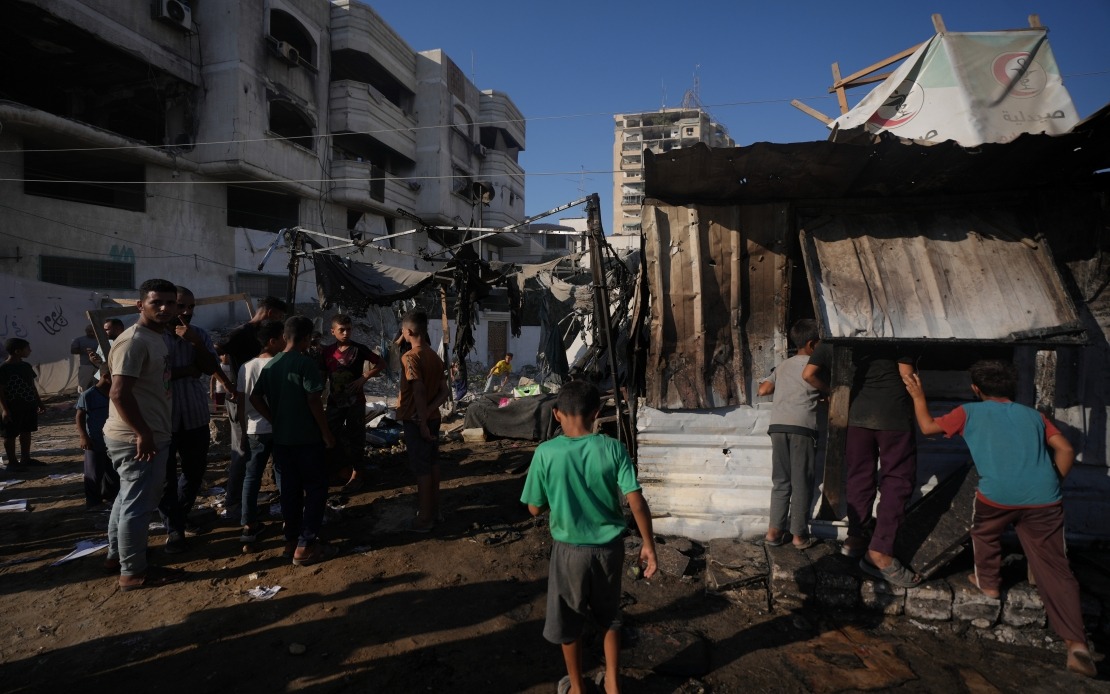
South Africa's submission draws heavily on documented humanitarian conditions in Gaza to substantiate its claims of non-compliance. The government's statement describes Palestinian civilians as experiencing escalating trauma and forced displacement within progressively constricted territorial zones. Beyond these qualitative assertions, the filing references specific casualty figures related to what it terms Israeli violations of a ceasefire arrangement that took effect in October 2025. According to South Africa's accounting, more than 1,300 Palestinians have been killed and over 4,330 wounded since that date, with rescue operations continuing to recover bodies from collapsed structures. These figures, however they are interpreted, represent the human dimensions that undergird the legal arguments being advanced within the courtroom.
The broader context of this filing extends back to South Africa's original submission to the ICJ on December 29, 2023, which accused Israel of perpetrating genocide in violation of the United Nations Convention on the Prevention and Punishment of the Crime of Genocide. That case has proceeded through multiple phases of consideration within the court's procedures. The three provisional measures orders issued subsequently represent the court's preliminary assessment that there exists sufficient arguable merit in South Africa's allegations to warrant interim protections pending a final judgment on the merits. Such provisional measures are extraordinarily significant in international law, as they signal judicial concern about irreparable harm that might occur if the court delays issuing a final decision.
For Malaysian observers and policymakers, this development carries implications extending beyond the immediate South Africa-Israel dispute. The case represents a high-profile test of the international legal system's capacity to enforce its own orders against powerful state actors. Malaysia, as a nation that has consistently advocated for Palestinian rights within multilateral forums and has itself engaged with international courts, maintains a strategic interest in whether the ICJ's pronouncements translate into meaningful behavioural changes or remain unimplemented declarations. The precedent established by how this case unfolds could influence Malaysia's own assessment of the utility of pursuing grievances through international legal channels.
South Africa's decision to file this additional submission under Article 11 demonstrates a considered legal strategy aimed at maintaining pressure on Israel without awaiting the potentially lengthy final judgment phase. The provision allows states to bring matters before the court regarding compliance with existing orders, effectively creating an intermediate layer of proceedings before ultimate resolution. By choosing this avenue, South Africa signals that it views compliance failures as sufficiently grave to warrant ongoing judicial attention rather than accepting them as tactical setbacks to be addressed only in final arguments.
The humanitarian dimensions cited in South Africa's filing reflect data that diverges significantly across international sources and organisations. Palestinian health authorities have documented substantially higher overall casualty figures extending back to October 2023, when the current phase of the conflict commenced. These figures, reportedly approaching 73,000 Palestinian deaths and more than 174,000 wounded, form part of the factual foundation upon which South Africa builds its legal arguments about genocide and violations of international humanitarian law. The question of how such casualties should be legally characterised—whether as genocidal intent, crimes against humanity, or violations of proportionality in armed conflict—represents precisely the kind of technical legal matter that distinguishes ICJ proceedings from purely political discourse.
South Africa's continued pursuit of this case through multiple procedural avenues reflects broader patterns within international relations where states utilise legal mechanisms to register objections to conduct they view as violating international norms. The submission emphasises that provisional measures exist explicitly to prevent irreparable harm to protected populations before final judgments are rendered. This framing positions South Africa's filing not as a political manoeuvre but as an effort to ensure that legal remedies function as intended within the international system. Whether the court will agree with South Africa's characterisation of Israeli conduct, and what enforcement mechanisms might follow if the court concurs, remains uncertain.
The filing also carries symbolic weight for South Africa's own positioning within global affairs. The country's willingness to pursue this case persistently, despite significant diplomatic and economic implications, signals its commitment to international law as a mechanism for addressing perceived injustices. For Southeast Asian nations considering their own approaches to international disputes and human rights concerns, South Africa's litigation strategy offers both a model of persistent legal advocacy and a cautionary tale about the limitations of court proceedings when enforcement depends on political rather than judicial mechanisms. The outcome remains contingent on how the ICJ interprets its authority and how subsequent enforcement procedures might function in practice.

