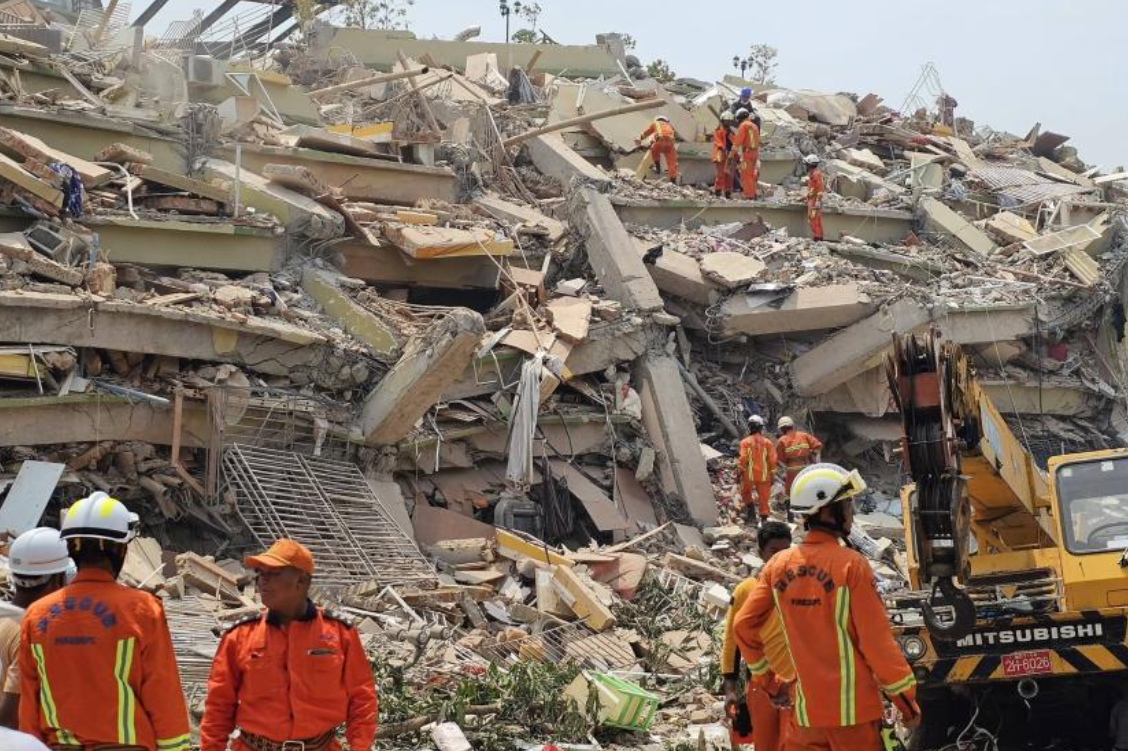
The proprietor of Sky Villa Condominium in Mandalay, Myanmar, has received a five-year prison sentence with hard labour following a devastating structural failure during an earthquake that claimed more than 200 lives. U Naing Htun Lin faced conviction under Section 304-A of the Penal Code by the Aungmyaythazan Township Court on June 23, in what represents one of Myanmar's most significant prosecutions related to building safety and disaster accountability.
The legal process commenced with formal charges filed on February 10 at the Aungmyaythazan Township Court. Initially, U Naing Htun Lin received bail permission and was permitted to continue trial proceedings while remaining at liberty. However, the situation shifted dramatically on March 17 when authorities revoked his bail status, placing him in custody to stand trial for the remainder of the judicial proceedings. This reversal reflected the gravity with which Myanmar's judicial system approached the massive loss of life and potential negligence involved in the structure's construction.
U Zaw Moe Aung, a Special Investigation Department staff officer, prosecuted the case on behalf of the state. The investigation originated from the No. (1) Area Police Station in Aungmyaythazan Township before escalating to court proceedings. The conviction carries significant implications for Myanmar's construction industry and corporate accountability frameworks, establishing precedent that building owners face serious criminal consequences when structural failures result in mass casualties.
The Sky Villa condominium, an eleven-storey residential development positioned between 21st and 22nd Streets on 60th Street in Aungmyaythazan Township, stood among Mandalay's most catastrophically damaged structures during the seismic event. Recovery efforts at the site yielded over 200 bodies, making it the deadliest single building collapse attributed to the earthquake. For regional observers monitoring Myanmar's earthquake resilience and building code enforcement, the disaster underscored alarming vulnerabilities in construction standards across the nation.
U Naing Htun Lin served as owner of the condominium project, while his wife Daw Thet Thet Khine held the position of managing director at NTL Construction Company, the firm responsible for constructing Sky Villa. This family involvement in both ownership and construction created complex questions regarding internal oversight mechanisms and whether adequate structural safety protocols were implemented during the building's development phase. The concentration of project control within a single family structure raised additional scrutiny among construction industry observers.
Following the collapse, the family organized three separate commemorative ceremonies at a monastery pavilion on 19th Street. These events represented an attempt at reconciliation with bereaved families and community members devastated by the disaster. The ceremonies included formal apologies directed toward victims' relatives, accompanied by substantial monetary compensation totalling 10 million kyats per deceased individual. This financial gesture, while substantial in Myanmar's economic context, underscored the acknowledgment of responsibility for the tragedy, though monetary restitution cannot restore the 200 lives lost.
The sentencing does not represent the final chapter in legal proceedings. Both prosecution and defence teams have initiated appeals and revision requests challenging the court's verdict. The Aungmyaythazan District Court formally requested the complete case file for review under Criminal Revision Case No. 39Ka/2026, and relevant documentation has been forwarded accordingly. These continuing legal manoeuvres suggest the conviction remains contested and subject to potential modification through appellate channels.
For Myanmar and the broader Southeast Asian region, this case carries profound implications regarding corporate accountability, building safety standards, and disaster preparedness. The conviction establishes that building owners cannot escape criminal liability when structural failures result in mass casualties, regardless of whether negligence was deliberate or stemmed from inadequate construction oversight. This precedent may influence how other countries in the region approach building code enforcement and architect accountability mechanisms.
The Mandalay earthquake exposed widespread deficiencies in Myanmar's construction practices and regulatory oversight. Many structures throughout the city collapsed with devastating consequences, but the Sky Villa case specifically illuminates the criminal justice system's willingness to prosecute responsible parties. For Malaysian and regional construction professionals, the case serves as cautionary reminder regarding the critical importance of rigorous building inspections, adherence to seismic safety standards, and comprehensive accountability frameworks extending from developers through to project owners.
The recovery process remains ongoing in Mandalay, with reconstruction efforts presenting opportunities to implement enhanced building codes reflecting lessons learned from the catastrophe. Regional architects and engineers continue analyzing the structural failures that contributed to the Sky Villa collapse, seeking to identify deficiencies that might be prevented through improved design standards and more stringent compliance monitoring during construction phases. U Naing Htun Lin's conviction demonstrates that Myanmar's legal system intends to hold responsible parties accountable for public safety failures, though debates persist regarding whether criminal prosecution adequately addresses systemic weaknesses in building regulation and enforcement.

