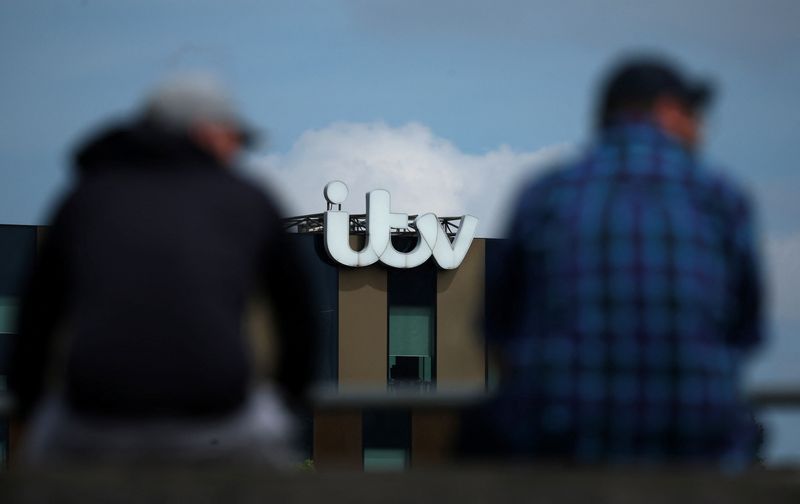
Britain's television landscape is set for a seismic realignment following Comcast's Sky announcement on Monday that it will acquire ITV's broadcast channels and streaming services for £1.6 billion, or $2.13 billion. The transaction marks what Sky Chief Executive Dana Strong characterised as a "defining moment" in British broadcasting history—a consolidation that would have been politically unthinkable merely years ago but now represents an industry response to transformative market pressures. The combined entity will reach more than 20 million households across the United Kingdom, positioning the merged company as a counterweight to the streaming behemoths that have steadily eroded traditional television's dominance.
The strategic logic underpinning the deal reflects a fundamental shift in media consumption patterns and advertising dynamics. ITV, Britain's largest free-to-air commercial broadcaster, has endured a prolonged struggle with deteriorating advertising revenues and audience flight to digital platforms. The company's share price has declined 36 percent over the past five years, and its board evidently concluded that independence in the streaming era carried unacceptable risks. Sky, meanwhile, remains a formidable pay-television operator but faces the same existential challenge confronting legacy broadcasters globally: the cannibalization of traditional viewing by YouTube, Netflix, Amazon Prime Video, and Disney Plus, particularly among younger demographics. The 16-24 age cohort increasingly bypasses conventional broadcast schedules entirely, viewing content on demand across multiple platforms. By combining their content production capabilities, distribution networks, and advertising infrastructure, the two companies argue they can marshal resources competitive with well-capitalized American rivals.
The financial structure underscores ITV's constrained position. The broadcaster will receive £1.2 billion in immediate cash compensation, supplemented by an earn-out arrangement potentially worth up to £200 million contingent on advertising performance during the 2027 financial year. The arrangement effectively transforms ITV from an integrated broadcaster into a specialist production business, retaining control of high-value programme franchises including Love Island and Coronation Street. The acquisition of Love Productions, creator of The Great British Bake Off, strengthens ITV Studios' international production portfolio, enabling the entity to continue supplying content to competitors including Disney, Apple TV+, and other streamers globally. This bifurcation—separating the production function from the distribution function—reflects how comprehensively streaming has disrupted the traditional vertically integrated broadcast model.
Regulatory approval represents the critical uncertainty shadowing the transaction. The merged Sky-ITV combination would command more than 70 percent of the UK television advertising market, a concentration level that would ordinarily trigger intensive competition scrutiny. Ofcom, the British media regulator, and the Competition and Markets Authority will conduct rigorous examination of whether the deal undermines media plurality and fair competition. To assuage such concerns, Sky may be compelled to divest third-party advertising sales contracts it currently manages on behalf of Paramount-owned Channel 5, effectively reducing the consolidated entity's measured advertising share. The culture ministry under Lisa Nandy has signalled greater flexibility toward media consolidation than previous administrations, reflecting government priorities around competitiveness and investment in British media. However, the stated preference for facilitating growth cannot override statutory obligations to protect competition and plurality.
The timing of this announcement coincides with evolving thinking within Whitehall regarding media policy. Culture Minister Nandy recently suggested she would intervene in the proposed Paramount-Warner Bros. merger, indicating the government will scrutinise major media transactions even where overseas entities predominate. Yet the context has shifted materially since the previous administration blocked the Murdoch family's proposed takeover of Sky in 2018. The acceleration of cord-cutting, the rise of ad-funded streaming, and the manifest weakness of traditional broadcasters have altered calculations around what constitutes a competitive market. Regulators and policymakers now grapple with whether preventing domestic consolidation inadvertently weakens British media's capacity to compete globally or maintain substantive investment in original programming.
Sky's ownership history reflects the broader story of British media's loss of independence. Rupert Murdoch established Sky in 1989 as a satellite television venture, and the Murdoch family maintained effective control for three decades. The 2018 sale to American cable giant Comcast represented a symbolic moment when British institutional investors and regulators deemed American ownership preferable to Murdoch family stewardship, following phone-hacking scandals and intense political controversy. Comcast's subsequent June announcement that it would spin out media assets including Sky and NBCUniversal from its core cable business signals the American conglomerate's own strategic reassessment, triggered by relentless pressure from streaming disruption and changing consumer behaviour. The spin-out, when completed, will establish Sky as an independent entity better positioned to pursue acquisitions like ITV without integration constraints imposed by Comcast's legacy cable operations.
The consolidated company's commitment to spending a minimum of £2.1 billion on content during the 2028-2032 period represents a substantial investment pledge, though whether such expenditure will prove sufficient to compete with Netflix, Disney, and Amazon remains debatable. These streaming giants deploy vastly larger budgets—Netflix alone spends roughly $17 billion annually on content—and benefit from global revenue bases that dwarf British advertising and pay-TV revenues. The Sky-ITV merger addresses scale constraints but does not fundamentally resolve the structural disadvantage facing British broadcasters competing against transnational digital platforms with diverse revenue streams and unlimited geographic reach.
ITV's future as a standalone production business carries implications for British creative industries. The company operates one of Europe's most prolific television production operations, generating content both for the merged broadcasting entity and for international clients. Separation from broadcasting distribution removes pressures to prioritise local scheduling efficiency, potentially liberating producers to pursue more ambitious international commissions. Conversely, the loss of guaranteed distribution slots on ITV's terrestrial channel reduces the foundation upon which UK production companies have traditionally built international reputations. The success of this model depends substantially on whether the merged Sky-ITV broadcaster remains a significant commissioner of independent productions or gradually internalises more content creation.
For Malaysian and Southeast Asian media observers, the ITV-Sky transaction exemplifies the existential pressures confronting traditional broadcasters across advanced economies. Regional television operators face analogous challenges from Netflix, YouTube, and local streaming services, coupled with the migration of advertising budgets to digital platforms. The British case study suggests that even venerable institutions with deep audience relationships and strong content libraries struggle to maintain independence absent scale sufficient to fund expensive programming and technology investments. Whether regulators and governments will accommodate consolidation that trades reduced competition for enhanced capacity to invest remains an open question, with implications extending far beyond Britain's media sector.

