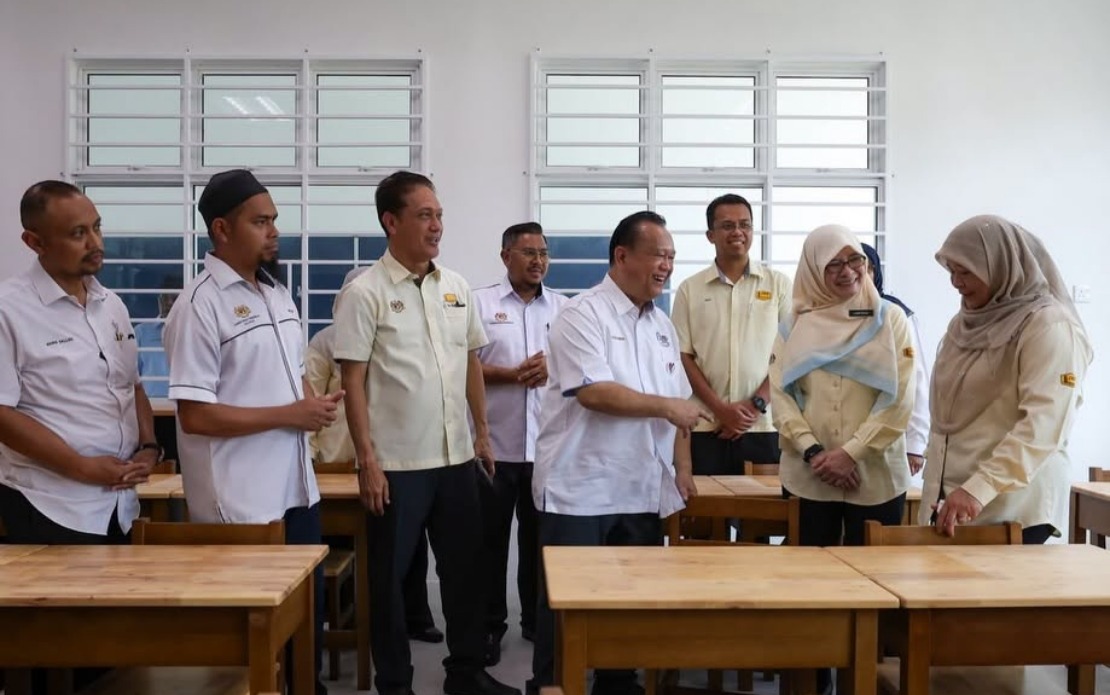
The reconstruction of a deteriorating school building in Jerantut has delivered a significant boost to educational infrastructure in Pahang, with the Works Ministry announcing the project's completion more than ten months ahead of its originally planned deadline. The RM7.998 million undertaking at SK FELDA Kota Gelanggi 1 represents a rare example of a major government construction initiative finishing without time extensions, according to Works Minister Datuk Seri Alexander Nanta Linggi, who presided over the formal handover ceremony at the school this week.
The scale of the acceleration is substantial. Work commenced on January 13, 2023, and the facility was fully operational by June 26, 2024, considerably surpassing the May 2, 2027 target date that had been originally scheduled. This achievement arrives at a time when infrastructure delays and cost overruns plague numerous public sector projects across Malaysia, making the early completion a notable accomplishment in demonstrating effective project management and contractor performance. Nanta emphasized that the timely delivery occurred without seeking any extension of time, a distinction that underscores disciplined execution in government procurement.
The completed facility encompasses a new academic block featuring three classrooms, a dedicated science laboratory, and a health clinic, all designed to modern educational standards. Alongside this core academic infrastructure, the project delivered a specialized education integration block—the Programa Pendidikan Khas Bersepadu (PPKI) facility—specifically configured to support pupils with special educational needs. This component addresses an important gap in educational provision, as 17 students with varying special needs requirements will now benefit from purposefully designed learning spaces and supporting amenities within their home school environment.
The inclusion of specialized facilities represents a shift toward inclusive education in Malaysian primary schools. Rather than requiring students with special needs to travel to separate facilities or specialized institutions, the PPKI block enables these pupils to remain integrated within the mainstream school community while accessing tailored resources and support services. This approach aligns with contemporary international best practices in special education, which emphasize inclusion and normalization wherever feasible. For rural schools like SK FELDA Kota Gelanggi 1, such provision can be transformative, reducing transportation burdens on families and fostering social integration from an early age.
Nanta's remarks at the handover ceremony underscored broader expectations for government construction projects across Pahang. He flagged several other dilapidated building rehabilitation initiatives currently in progress within the state, expressing confidence that these too could achieve accelerated completion timelines. This signals a shift in ministerial emphasis toward efficiency metrics in project delivery, potentially introducing performance incentives or accountability measures that might drive similar results across the public works portfolio. The minister's specific hope that other projects would replicate this achievement suggests that SK FELDA Kota Gelanggi 1 may serve as a benchmark for future evaluations.
A critical component of the minister's message centered on contractor obligations during the defect liability period—the contractually mandated timeframe during which builders remain responsible for remedying construction defects and ensuring compliance with specifications. Nanta explicitly directed contractors to address complaints swiftly and comprehensively during this phase, recognizing that rushed completion timelines can sometimes compromise quality if not properly supervised. His emphasis on rapid defect resolution reflects lessons learned from previous projects where unaddressed construction issues resulted in deteriorating facilities within months of handover.
Post-handover institutional responsibility extends beyond the contractor, according to Nanta's directives to the Public Works Department. The department has been tasked with sustained monitoring to ensure facilities remain safe, properly maintained, and continue meeting required standards throughout their operational lifespan. This acknowledges a persistent challenge in Malaysian public infrastructure: projects that are completed and handed over then subsequently neglected, leading to premature deterioration. Systematic post-handover oversight could address this pattern, though implementation varies considerably across federal and state-level agencies.
For SK FELDA Kota Gelanggi 1 specifically, the timing of the completion offers immediate practical benefits. Students currently enrolled will occupy classrooms constructed to contemporary building standards with proper ventilation, lighting, and safety features. The science laboratory can support hands-on learning that rural schools often struggle to provide due to facility constraints. The health clinic creates an on-campus medical facility reducing absences caused by health issues and improving rapid response capacity for student welfare concerns.
The FELDA context adds a layer of significance to this project. FELDA (Federal Land Development Authority) settlements were established to provide agricultural livelihoods and community infrastructure, yet rural schools serving these communities have historically received inconsistent maintenance funding. Infrastructure improvements to FELDA schools therefore carry symbolic weight as signals of government commitment to rural education equity. Kota Gelanggi's agricultural character means that families' ability to support children's education—through provision of materials, transportation, and household stability—often depends on agricultural income stability, making school facility quality particularly consequential for educational outcomes.
The project's completion also reflects evolving procurement practices within Malaysian government. The absence of time extensions suggests that either contract terms were realistically specified initially, or the contractor possessed sufficient capacity and motivation to accelerate delivery. This contrasts with numerous infrastructure projects that require multiple extensions, often accompanied by cost increases. Understanding whether the early completion resulted from contractor efficiency, adequate initial planning, competitive bidding processes, or enhanced supervision could inform future government project management protocols.
From a regional perspective, Malaysia's experience with accelerated infrastructure delivery carries lessons for other Southeast Asian nations grappling with educational facility deficits. While construction speed cannot compromise quality or safety, demonstrated competence in delivering projects on accelerated timelines without extensions suggests that realistic planning and strong contractual frameworks can produce results. For countries facing backlogs in school infrastructure rehabilitation, the SK FELDA Kota Gelanggi 1 project offers a practical template for achieving goals.

