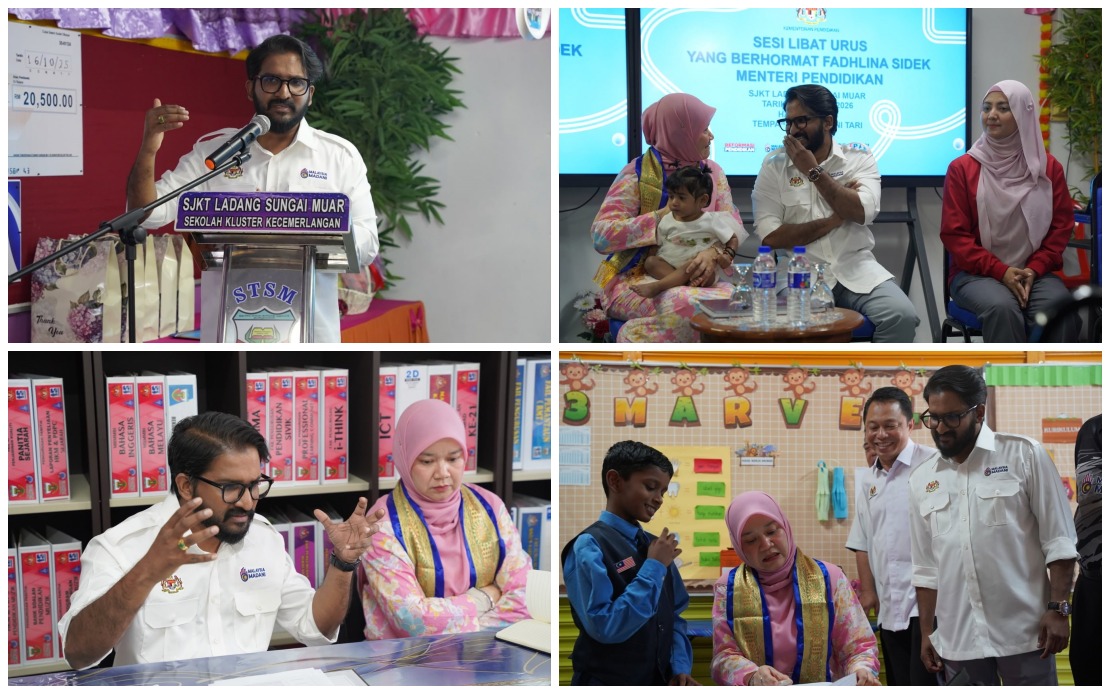
The long-awaited relocation of Sekolah Jenis Kebangsaan Tamil (SJKT) Ladang Sungai Muar in Segamat has reached a critical milestone, moving into the land acquisition and ownership phase with administrative support from the Segamat Land and Mines Office. Segamat Member of Parliament R. Yuneswaran disclosed the development following a recent engagement session at the school premises, which featured the participation of Education Minister Fadhlina Sidek, signalling sustained governmental backing for the initiative.
Yuneswaran's announcement underscores the government's commitment to addressing educational infrastructure challenges affecting the Tamil-language school community in the district. The presence of the Education Minister at the engagement session carries symbolic weight, demonstrating that the relocation project is no longer confined to parliamentary representations but has gained traction within the broader educational policy framework at the national level. Such ministerial involvement typically indicates that budgetary considerations and land acquisition strategies have moved beyond the conceptual stage and into active implementation.
Since his election as Segamat MP in 2022, Yuneswaran has consistently raised the school's operational difficulties as a priority concern for his constituency. His advocacy has focused on three interconnected issues: the existing location presents documented safety hazards to students and staff, the current premises sit at considerable distance from the residential areas where most families are concentrated, and the infrastructure fails to meet contemporary educational standards. These grievances reflect broader challenges facing Tamil-language vernacular schools across Malaysia, many of which operate from ageing or unsuitable facilities inherited from earlier decades.
The relocation represents a concrete response to longstanding community appeals. Tamil vernacular schools have historically faced resource constraints and infrastructural deficiencies compared to their Malay-medium counterparts, despite their cultural and linguistic significance within Malaysian plurality. The SJKT system serves a vital function in preserving Tamil language education and cultural heritage, making facility improvements a matter extending beyond mere administrative efficiency to encompass cultural preservation objectives within the nation's multicultural education ecosystem.
The land ownership phase indicates that relevant authorities have identified suitable alternative premises and are now navigating the formal processes required to transfer or procure the new site. This administrative step typically involves title verification, land registration with the Lands and Mines Department, and clearance of any encumbrances or competing claims. The involvement of the Segamat Land and Mines Office suggests that bureaucratic machinery is actively engaged in resolving technical requirements that frequently delay such transitions in Malaysian administrative contexts.
Yuneswaran's emphasis on the Education Ministry's commitment to the MADANI Government's education prioritisation reflects the ruling coalition's stated development agenda. The MADANI framework positions educational accessibility and facility quality as core developmental metrics, particularly for marginalised educational constituencies. This philosophical alignment between parliamentary representation and ministerial policy creates favourable conditions for project advancement, as budgetary allocation and inter-agency coordination typically proceed more smoothly when aligned with national strategic priorities.
The timeline for completion remains unstated, though the progression from planning to land acquisition suggests that construction and transition could realistically occur within the next fiscal cycle or two. However, Malaysian infrastructure projects frequently encounter delays stemming from land disputes, financing complications, or bureaucratic bottlenecks. The government's track record with vernacular school upgrades shows variable outcomes, with some projects completing timeously whilst others experience protracted delays, making cautious optimism appropriate.
For Segamat's Tamil-speaking community, the relocation holds practical significance extending beyond symbolism. A well-equipped, centrally-located facility would enhance educational outcomes, improve parental engagement through accessibility, and potentially reverse enrolment declines that many vernacular schools have experienced as families migrate or select alternative educational pathways. The relocation could serve as a model for similar initiatives affecting other Tamil or Chinese vernacular schools facing comparable challenges throughout Malaysia.
The engagement session's structure—bringing together parliamentary representation, ministerial attendance, school leadership, and community stakeholders—reflects contemporary governance approaches emphasising inclusive consultation on educational matters. Such sessions generate mutual understanding between policymakers and affected communities, reducing information asymmetries and building social consensus around implementation strategies. The documented ministerial participation also creates accountability benchmarks, as public commitments carry reputational weight within Malaysia's political culture.
Looking forward, Yuneswaran has committed to maintaining oversight of the relocation's progression through subsequent phases, from land acquisition through site preparation and construction commencement. This sustained political attention, combined with ministerial support, substantially improves the likelihood of project completion compared to vernacular school upgrades that lack comparable advocacy and visibility. The coming months will determine whether bureaucratic processes proceed expeditiously or encounter the friction points that frequently obstruct infrastructure projects in Malaysia's complex administrative landscape.

