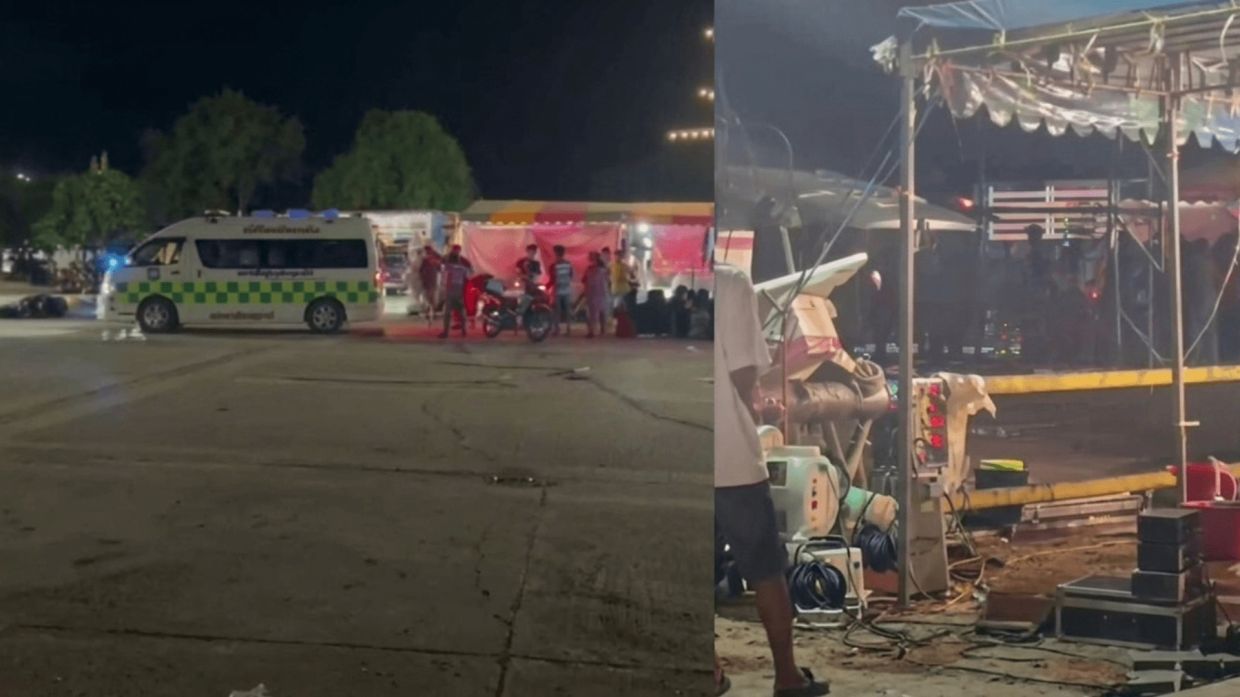
Six people sustained injuries following an armed attack at the Chim Shop Chai fair in Dan Khun Thot district, Nakhon Ratchasima province, in Thailand's northeast, on Wednesday evening. The incident unfolded around 10.30pm when vendors and patrons were concluding their activities at the outdoor shopping event. According to Prakob Patin, organiser of the fair, the assailants employed both cutting implements and a crude firearm to strike at those present, marking another eruption of armed violence in the kingdom.
All six injured individuals were initially rushed to Luang Pho Koon Parisuttho Dan Khun Thot Hospital for emergency care. Two of the victims, deemed to be in critical condition, were subsequently transferred to the larger Maharat Nakhon Ratchasima Hospital. One of these transfer cases has since fallen into a comatose state, highlighting the severity of injuries sustained during the attack. Prakob disclosed these details to media representatives the following morning, as investigators began piecing together the sequence of events that had shocked the provincial community.
Police operations led by Dan Khun Thot Police Station Deputy Investigation Inspector Pol Lt Col Akom Chutkhunthot moved swiftly, culminating in the arrest of a 32-year-old male suspect within hours of the shooting. Officers also recovered the homemade firearm believed to have been used in the assault. However, the preliminary nature of the inquiry suggested that the detained individual did not act entirely alone, with evidence indicating the involvement of multiple perpetrators in coordinating and executing the attack.
Investigative findings paint a picture of escalating confrontation that morphed from an apparent criminal enterprise into a violent rampage. The suspect reportedly attempted to make off with a motorcycle that had been parked at the fair grounds. When the motorcycle's owner intervened to prevent the theft, a direct confrontation ensued between the two parties. Rather than desisting or attempting to flee, the suspect allegedly absconded from the immediate vicinity only to return with reinforcements armed with makeshift and conventional weapons.
The reappearance with armed accomplices transformed what might have remained a localized theft dispute into a mass casualty incident affecting innocent bystanders at the public gathering. Authorities have characterized the assault as a coordinated effort involving multiple individuals, each playing a distinct role in carrying out knives and firearms into the crowded fair setting. This coordination between perpetrators suggests premeditation or at least a rapid mobilization of associates willing to participate in armed violence.
The detained suspect faces serious criminal charges related to the deployment of firearms in an attempt on human life. Prosecutors intend to proceed with charges of jointly attempting to commit murder using a firearm, a classification that underscores the gravity with which Thai law treats organized armed assaults. The investigation remains open, with law enforcement continuing to actively pursue identification and apprehension of the unnamed accomplices who fled the scene and have yet to be located.
This incident represents the third significant shooting episode within seven days across Thailand, signalling a disturbing cluster of armed violence that has captured national attention. On August 7, a separate shooting at Debsirin Nonthaburi School resulted in nine fatalities, leaving communities traumatized and prompting questions about security protocols at public venues. On Monday, authorities were investigating an alleged shooting involving a former Thai lawmaker who allegedly targeted the president of the Nonthaburi Provincial Administrative Organisation, adding political dimensions to the violence.
The concentration of these three separate incidents within such a compressed timeframe has raised concerns among Thai officials and the public alike about escalating gun violence and the accessibility of improvised firearms. Each incident appears to stem from distinct circumstances and motivations—theft, a school shooting, and an alleged political-related incident—yet their clustering within days suggests broader security challenges that extend beyond isolated criminal acts. For Thailand's security apparatus, the pattern demands urgent reassessment of public safety protocols and firearm regulation effectiveness.
For Malaysia and other ASEAN nations, Thailand's recent violence underscores regional concerns about armed crime and cross-border security implications. The proliferation of homemade weapons, as evidenced by the crude firearm recovered in the Dan Khun Thot incident, mirrors challenges that other Southeast Asian countries face in controlling illicit arms manufacturing. The fluidity with which the suspect mobilized armed accomplices points to networks and supply chains that operate across provincial boundaries, potentially extending into neighboring jurisdictions including those affecting Malaysian security interests.

