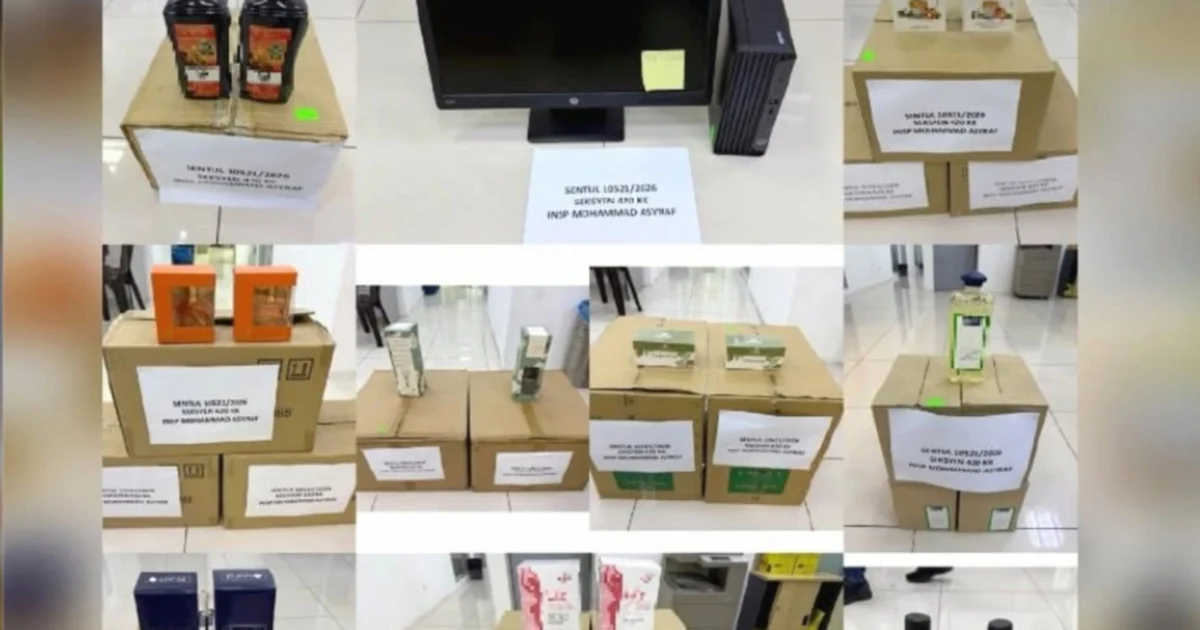
Police have successfully disrupted a widespread perfume investment scam by apprehending six individuals during a coordinated raid at a commercial premises in KL Eco City on Wednesday. The operation marks another significant breakthrough in the Kuala Lumpur Police Contingent's ongoing campaign against investment fraud syndicates that have proliferated across the capital region.
Investment scams centred on luxury goods like perfume have emerged as a sophisticated variant of financial fraud in Malaysia, exploiting consumers' aspirations for premium products alongside promises of substantial returns. The scheme typically recruits investors who are assured high profit margins through purchasing inventory that will ostensibly appreciate or be resold at inflated valuations. Such operations frequently rely on slick marketing materials, false testimonials, and social media channels to establish credibility before harvesting deposits from unsuspecting participants.
The KL Eco City location, a prestigious mixed-use development in the heart of Kuala Lumpur's commercial district, underscores how such illicit operations strategically position themselves in legitimate business environments to enhance their veneer of legitimacy. The choice of prominent addresses serves an important psychological function, reassuring potential victims that they are dealing with established enterprises rather than clandestine operators. Scammers are increasingly aware that physical proximity to recognized commercial anchors significantly increases their persuasiveness and ability to attract capital.
The arrest of six individuals suggests a structured organization with defined roles, likely encompassing recruitment agents who identify and cultivate victims, administrative staff managing accounts and documentation, and senior figures orchestrating the overall scheme. Such networks frequently operate with compartmentalized responsibilities, ensuring that individual members possess only partial knowledge of the broader criminal enterprise. This structural design complicates law enforcement investigations while providing plausible deniability for higher-ranking conspirators.
Perfume investment schemes are particularly insidious because they exploit a legitimate industry, obscuring their fraudulent mechanics beneath genuine commercial activity. Victims are often shown physical inventory and provided with elaborate documentation suggesting authentic supply chain credentials. However, the fundamental business model remains fundamentally unsustainable, generating returns not from actual product sales but from the recruitment of new investors whose payments fund initial victim withdrawals, creating a classic pyramid structure.
The raid's success reflects enhanced coordination between Malaysian police commercial crime units and intelligence divisions. Law enforcement agencies across Southeast Asia have increasingly recognized that cross-border investment scams demand sophisticated investigative techniques combining financial analysis, digital forensics, and undercover operations. The arrest of multiple co-conspirators simultaneously prevents the remaining network from restructuring operations elsewhere.
For Malaysian consumers, the KL Eco City bust serves as a stark reminder of the pervasive investment fraud landscape that continues to extract millions of ringgit from unsuspecting individuals annually. Investment scams targeting luxury goods sectors have become particularly prevalent since the pandemic, as economic uncertainty and disrupted employment have made people more desperate for alternative income sources. The psychological vulnerability created by financial anxiety represents a key vulnerability that sophisticated criminal syndicates ruthlessly exploit.
Authorities have consistently warned the public that legitimate investment opportunities, particularly those promising exceptionally high returns with minimal risk, warrant considerable skepticism. The perfume sector, despite its considerable size and genuine commercial significance, has become a favored vehicle for fraudsters precisely because consumers lack specialized knowledge required to evaluate the validity of supply chain claims or market valuation assertions. This information asymmetry creates opportunities for deception.
The investigation into the syndicate's operations will likely reveal the extent of victim losses and the geographic scope of their recruitment activities. Police have traditionally used successful prosecutions to establish patterns of modus operandi that alert the public to emerging fraud variations. Intelligence gathered from this operation will inform future enforcement strategies targeting investment scams across Malaysia's commercial sectors.
Regional observers note that investment fraud syndicates operating from major commercial hubs frequently maintain international dimensions, with proceeds sometimes laundered through neighbouring countries or illicit remittance channels. The sophistication of modern investment scams demands corresponding advances in enforcement capabilities, including heightened coordination between Malaysian police and regional intelligence partnerships such as those coordinated through ASEAN frameworks.
Beyond the criminal proceedings that will follow these arrests, the case highlights the necessity for enhanced public education campaigns explaining common investment fraud tactics. Regulatory bodies including the Securities Commission Malaysia and Bank Negara Malaysia have intensified warnings regarding unauthorized investment schemes, yet public vulnerability remains substantial. The KL Eco City raid represents enforcement activity, but sustainable reduction of investment fraud requires parallel developments in victim awareness and reporting mechanisms.

