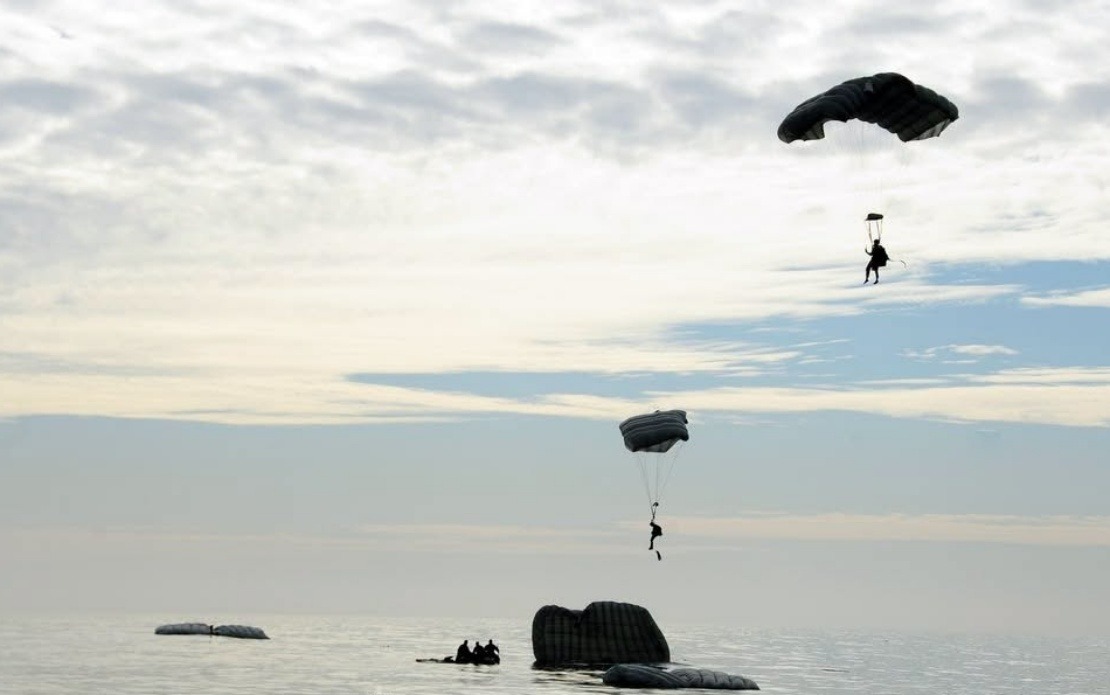
The Royal Malaysian Navy successfully recovered all six personnel from its Naval Special Warfare Forces (PASKAL) unit after they went adrift in the South China Sea during a free-fall parachuting exercise. The incident occurred when deteriorating weather conditions severely compromised visibility, causing the trained commandos to miss their designated landing zone. An RMN vessel promptly located and retrieved all personnel from the water, with no casualties or injuries reported from the operation.
Weather remains one of the most unpredictable variables in maritime military training, particularly in Southeast Asian waters where conditions can change rapidly and dramatically. The South China Sea is notorious for sudden atmospheric shifts, especially during certain seasons, and operations in this strategically important waterway demand rigorous preparation and contingency planning. The visibility reduction that affected the PASKAL personnel during their exercise underscores why coastal and maritime nations maintain continuous training protocols—personnel must be equipped to handle scenarios far more challenging than textbook conditions.
PASKAL, as Malaysia's elite naval special operations unit, undergoes some of the most demanding military training in the region. The unit specializes in underwater demolition, reconnaissance, direct action, and counter-terrorism operations, requiring personnel to develop exceptional physical endurance, technical proficiency, and mental resilience. Free-fall parachuting exercises form a critical component of this training regimen, allowing operators to develop skills for rapid insertion into coastal areas and island territories. The methodology demands that individuals maintain peak performance even when environmental factors conspire against successful execution of planned operations.
The RMN's official response characterized the incident not as a failure but as validation of PASKAL's training philosophy. The service emphasized that the personnel's successful survival and recovery reflected the high standards embedded within the unit's preparation frameworks. This perspective aligns with military doctrine across advanced naval forces, where realistic training scenarios—including those with unexpected complications—serve to harden operatives against genuine combat conditions. The distinction between exercises that go smoothly and those that present genuine challenges is that the latter generate invaluable experience and institutional learning.
The unit's motto, "Sentiasa yang Terbaik" (Always the Best), encapsulates a commitment to excellence that extends beyond technical mastery into psychological fortitude and adaptive decision-making. When trained personnel encounter unexpected circumstances, their response depends upon whether training has genuinely prepared them to think and function under stress, or merely to execute pre-planned procedures. The PASKAL personnel's recovery in this instance suggests their preparation included realistic contingency responses for situations where primary objectives could not be achieved as originally envisioned.
Malaysia's maritime security responsibilities are substantial and complex. The nation's territorial waters, exclusive economic zone, and shipping lanes extending through the South China Sea represent areas of considerable strategic importance and economic value. The sovereignty of these waters depends partly upon the capability and readiness of naval forces to respond to various threats and challenges. PASKAL's role in this security architecture is specialized—the unit provides Malaysia with capabilities for advanced operations that require personnel of exceptional skill and determination.
Training exercises that encounter real-world complications serve multiple institutional purposes beyond the immediate learning of individual participants. Such incidents generate operational data that inform future training methodologies, equipment requirements, and recovery procedures. The RMN's decision to publicly acknowledge this incident, while framing it positively, demonstrates confidence in both the personnel and the broader system's ability to manage unexpected developments. Transparency about training challenges, when handled appropriately, can enhance rather than diminish public confidence in military capabilities.
The incident also highlights the interconnected nature of maritime military operations in the region. Successful execution of naval special operations depends upon coordination between multiple units—parachute operations require support vessels, recovery assets, and communication systems all functioning reliably. The coordination demonstrated in locating and recovering the six personnel reflects institutional competence across multiple naval disciplines. This capability becomes increasingly important in an era when regional maritime traffic continues expanding and maritime security challenges grow more sophisticated.
From a broader Southeast Asian perspective, the professional handling of this incident underscores the maturity of Malaysia's naval capabilities. The region has experienced significant military modernization over the past two decades, with nations investing substantially in naval infrastructure, training, and personnel development. The RMN's demonstrated ability to conduct advanced training, respond to complications, and learn from unexpected events places Malaysia within the spectrum of maritime forces maintaining credible regional capabilities. The incident itself is relatively minor; the response and analysis reflect institutional competence that matters considerably more.
Looking forward, such training incidents often catalyze refinements in operational procedures and equipment. The RMN may adjust aspects of parachute operations planning, enhance weather forecasting integration, or modify recovery protocols based on this experience. These incremental improvements, accumulated across hundreds of training cycles and operational deployments, gradually raise overall force capability and reduce operational risk. Military organizations that treat training complications as learning opportunities rather than failures typically develop more robust operational capabilities over time.

