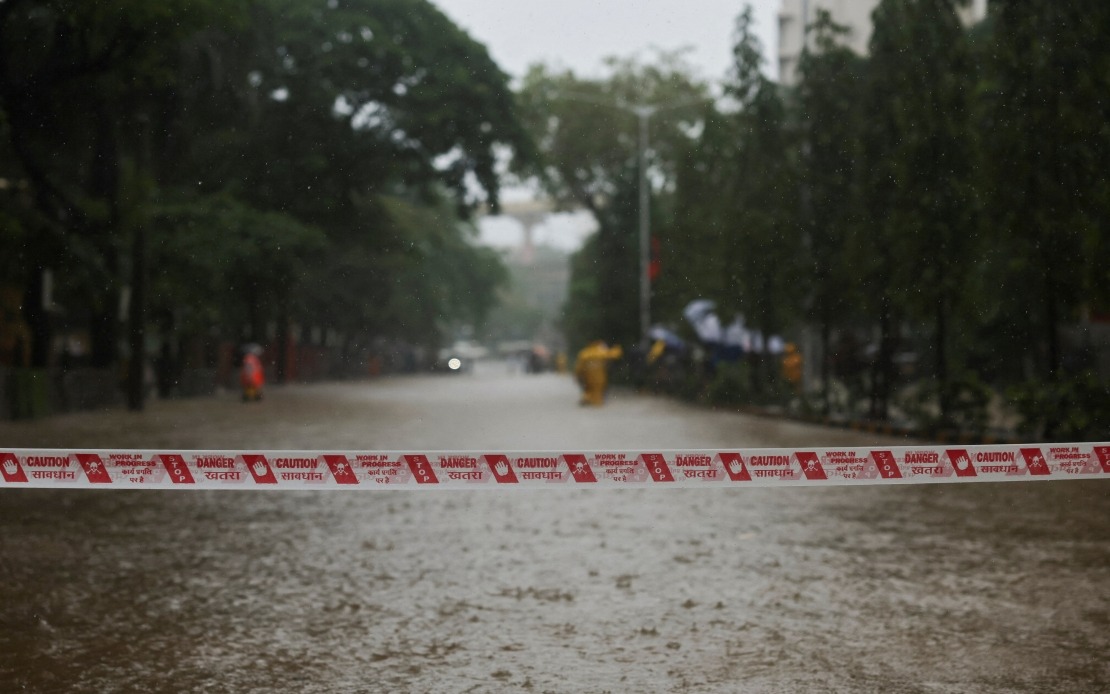
A structural collapse in Mumbai during intense monsoon rainfall has claimed six lives, with authorities in India's financial capital now investigating how the building came to be constructed. The disaster struck in the Mankhurd area on Sunday as seasonal rains pounded the city, leaving one person injured alongside the fatalities. Maharashtra State Minister Girish Mahajan, a senior leader within the Bharatiya Janata Party, confirmed the incident to journalists and indicated that officials would examine the circumstances surrounding the building's construction.
The incident underscores the persistent challenges facing India's major urban centres when confronted with extreme weather events during the monsoon season. Mumbai, as the nation's economic hub and home to its stock exchange and primary financial institutions, regularly experiences disruptions when seasonal rains intensify. The collapse occurred amid broader weather disruptions across the metropolitan area, indicating that the Sunday downpours were sufficiently severe to create dangerous conditions throughout the region. For Malaysian observers, the incident serves as a cautionary reminder of how rapidly monsoon systems can compromise urban infrastructure, a concern that resonates across Southeast Asia where similar seasonal precipitation patterns prevail.
Beyond the immediate tragedy in Mankhurd, the heavy rainfall and accompanying strong winds disrupted normal operations at Mumbai's Chhatrapati Shivaji Maharaj International Airport on the same day. Flight movements were briefly suspended as weather conditions exceeded safe operating thresholds, a temporary measure adopted to protect both aircraft and personnel. The airport disruption highlights how monsoon intensity can cascade across multiple sectors, affecting not only residential areas but also critical transportation infrastructure that the city depends upon for commerce and connectivity.
In response to the dangerous meteorological conditions, local authorities made the precautionary decision to close educational institutions throughout the affected area. School and college administrators heeded official guidance prioritising student safety, recognising that the combination of heavy rainfall and deteriorating visibility created hazardous conditions on roads and potential dangers from collapsing structures. This closure reflects a standard disaster response protocol adopted by Indian municipal authorities when weather extremes threaten public safety, demonstrating how weather events cascade through multiple dimensions of urban life.
The monsoon season itself represents a defining climatic feature of the Indian subcontinent, typically commencing in June and persisting until September. During this roughly four-month period, southwestern wind currents bring substantial moisture-laden air masses from the Arabian Sea across the Western Ghats and into the broader Indian peninsula. The seasonal rains are essential for agricultural productivity and freshwater replenishment, yet they simultaneously create vulnerabilities for poorly constructed or ageing buildings that cannot withstand the structural stresses imposed by prolonged heavy precipitation and wind loading.
Investigations into the Mankhurd collapse will likely focus on multiple variables affecting building integrity. Construction standards, the quality of materials employed, maintenance practices, and adherence to municipal safety codes will come under scrutiny. Maharashtra State Minister Mahajan's explicit mention of examining how the structure was built suggests that authorities suspect deficiencies in construction quality or regulatory compliance may have contributed to the failure. Such investigations often reveal patterns of informal construction, inadequate foundations, or substandard materials that characterise unauthorised or poorly supervised building projects in dense urban areas.
For Southeast Asian policymakers and urban planners, including those in Malaysia, the Mumbai incident offers valuable lessons about infrastructure vulnerability during monsoon periods. Malaysia's own monsoon systems, particularly the Southwest Monsoon affecting Peninsular Malaysia and the Northeast Monsoon affecting the east coast, generate comparable precipitation intensities. Building codes and enforcement mechanisms must account for the cumulative stresses that extended periods of heavy rainfall impose on structures, particularly older buildings that predate contemporary engineering standards.
The tragedy also illuminates the broader relationship between rapid urbanisation and infrastructure resilience in South Asian cities. Mumbai's population density and the prevalence of older residential buildings in many neighbourhoods create a significant stock of potentially vulnerable structures. When construction shortcuts, neglected maintenance, and inadequate building codes combine with extreme weather events, the human cost can be severe. This dynamic plays out across densely populated cities throughout the region, where informal housing and ageing building stock remain prevalent despite economic development.
From a regional development perspective, the incident underscores why investment in urban infrastructure modernisation and building code enforcement represents not merely a technical matter but a fundamental public safety imperative. Countries across South and Southeast Asia experiencing rapid urbanisation must balance development pressures with the rigorous standards necessary to protect residents from weather-related hazards. The Mankhurd collapse serves as a stark reminder that safety shortcuts imposed during construction inevitably exact human costs during extreme weather events, costs that could be mitigated through stronger regulatory oversight and enforcement mechanisms.

