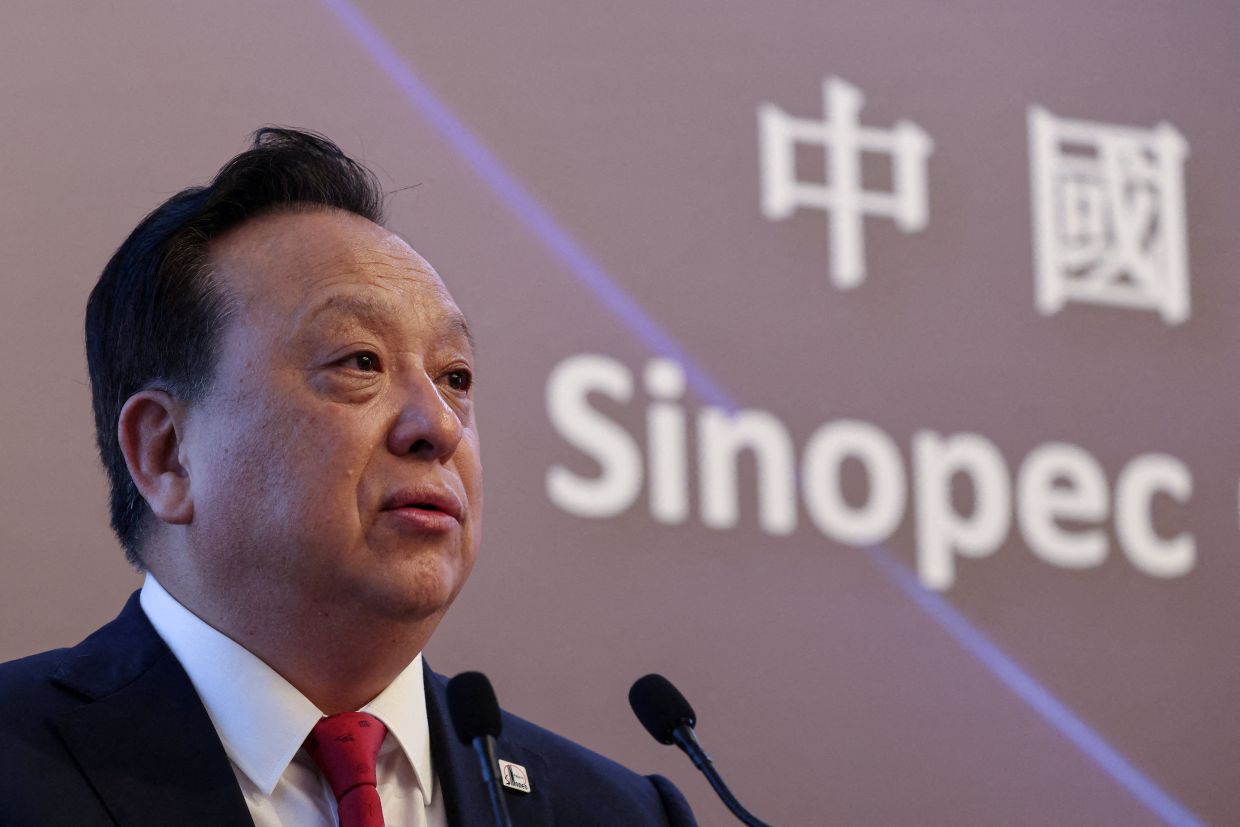
Hou Qijun is steering Sinopec Group, the world's most massive refiner, through one of its most consequential overhauls, defying the typical trajectory of Chinese state enterprise executives who simply await retirement. Appointed as chairman just over a year ago, the 60-year-old geologist has embarked on a thoroughgoing restructuring that dismantles traditional hierarchies and redistributes control across newly created profit centres, signalling a fundamental departure from how the company has operated for decades. This transformation arrives at a critical juncture: Sinopec confronts shrinking demand for transport fuels, bloated petrochemical capacity, and volatile crude markets, yet Hou appears determined to remake the enterprise rather than merely manage decline.
The restructuring divides Sinopec into four semi-autonomous units focused respectively on oil, gas and new energy; refining and chemicals; finance and strategic ventures; and global trading combined with domestic marketing networks for fuel, natural gas and chemical products. This architecture disperses decision-making power downward, enabling individual business segments to respond more nimbly to market conditions. Hou has articulated his vision with remarkable candour for a state enterprise leader, speaking in a July column published by China's State-owned Assets Supervision and Administration Commission (SASAC) about the institutional obstacles impeding Sinopec's flexibility. He identified not technological or financial constraints but rather systemic inertia and what he termed the company's "big company syndrome"—the ossification that accompanies massive scale—as the principal impediments to renewal.
Sinopec's dilemma reflects a broader crisis rippling through Asia's petroleum sector. The company's fuel sales have contracted to 2017 levels, and it grapples with intensifying pressure to retain domestic market share as consumer preference shifts decisively toward electric vehicles. Last year, Sinopec distributed approximately 3.6 million barrels daily of gasoline and diesel, predominantly within China, a volume increasingly unmoored from economic fundamentals. At an earnings briefing in Hong Kong this week, Hou articulated the underlying paradox with striking clarity: petrol and diesel were designed for automobiles, yet half of all new vehicles sold in China now operate without conventional fuel. Maintaining profitability through ever-greater fuel output becomes economically indefensible under such conditions, forcing Sinopec toward alternatives.
The company reported a 19 percent surge in net profit during the first half of 2026, a result partly attributable to geopolitical disruptions—the Iran conflict has constrained oil supplies—and government price controls that shield domestic consumers while compressing Sinopec's margins. This temporary windfall masks deeper structural vulnerabilities. The company's strategy hinges on rebalancing toward higher-margin petrochemicals, which transform crude into plastics, synthetic fibres, and specialty materials rather than transport fuels. Hou has pledged to allocate roughly one-fifth of capital expenditure annually over the next five years, exceeding 30 billion yuan (US$4.46 billion), toward new energy and advanced materials ventures. By 2030, Sinopec intends to complete more than thirty projects encompassing expanded gas reserves, shale oil production, sustainable aviation fuel development, and refining efficiency gains.
Yet this pivot toward chemicals presents formidable competitive hurdles. Sinopec competes against increasingly nimble rivals including Wanhua Chemical, backed by local government funding, and Satellite Chemical, a privately operated competitor, whilst the sector wrestles with chronic overcapacity in ethylene, the foundational chemical for plastics and textiles. The incumbent advantages conferred by scale and state backing do not automatically translate into superiority within more fluid, technology-intensive markets. Hou's background as a geologist who spent much of his career at Daqing, China's flagship oilfield, followed by leadership roles at China National Petroleum Corp (CNPC) and the pipeline consolidation entity PipeChina, positions him with a comprehensive grasp of the energy value chain. Associates describe him as decisive and action-oriented, willing to articulate strategy candidly and execute with urgency—attributes that distinguish him from many peers.
Sinopec's new energy ambitions extend to ambitious hydrocarbon frontiers. The company is initiating commercial-scale shale oil development within the Jiyang depression, located within its vast Shengli oilfield where conventional reserves are depleting rapidly. Hou personally positioned himself as the project's commanding officer when addressing reporters in March, underscoring the venture's strategic weight. Shale extraction requires substantially greater technical sophistication and capital intensity than conventional drilling, demanding precise hydraulic fracturing techniques and extensive operational expertise. Beyond shale, Sinopec is positioning itself within hydrogen production and carbon capture technologies, domains where government support for commercially marginal projects provides competitive advantage over pure private actors.
The fundamental tension animating Sinopec's transformation concerns whether it can compete effectively with non-state enterprises in emerging energy sectors. As Michal Maiden, director of the China program at the Oxford Institute for Energy Studies, observed, the competitive landscape is shifting decisively toward innovation-intensive domains where agility and entrepreneurial flexibility often trump the traditional assets—capital, scale, political access—that historically benefited state firms. Hou's restructuring explicitly attempts to cultivate greater organisational flexibility and responsiveness to market signals. The establishment of distinct profit centres with individual accountability aims to approximate the incentive structures that animate private competitors whilst retaining access to state capital and policy support for strategically designated investments.
For Southeast Asian markets, Sinopec's transformation carries significant implications. The company supplies refined products across the region and maintains substantial downstream operations spanning retail networks, petrochemical plants, and trading desks. Should Sinopec successfully navigate its reorientation toward chemicals and new energy, regional competitors—from Thailand's PTT to Singapore's energy traders—will confront a potentially reinvigorated state-backed competitor with enhanced agility and substantial capital resources. Conversely, a stumbling transformation would leave Sinopec as a contracting force in regional energy markets, gradually ceding share to more nimble players. The outcome will substantially influence energy supply dynamics, chemical prices, and investment patterns across the broader Asian economy.
Hou Qijun's appointment and subsequent restructuring represent a rare instance of a Chinese state enterprise leadership undertaking fundamental organisational transformation rather than incremental adjustment. Most SOE executives approaching retirement age opt for stability and risk avoidance; Hou's determination to reshape Sinopec whilst still relatively young for his position suggests either confidence in his strategic vision or desperation regarding the company's prospects, likely some combination of both. The SASAC magazine quote capturing his acknowledgment that Sinopec must shift "from high-carbon, to low-carbon, to zero-carbon" articulates a civilisational energy transition that extends well beyond corporate strategy. Whether a state-owned refiner can successfully remake itself whilst managing immediate commercial pressures remains perhaps the central question confronting not merely Sinopec but the entire Chinese energy sector.

