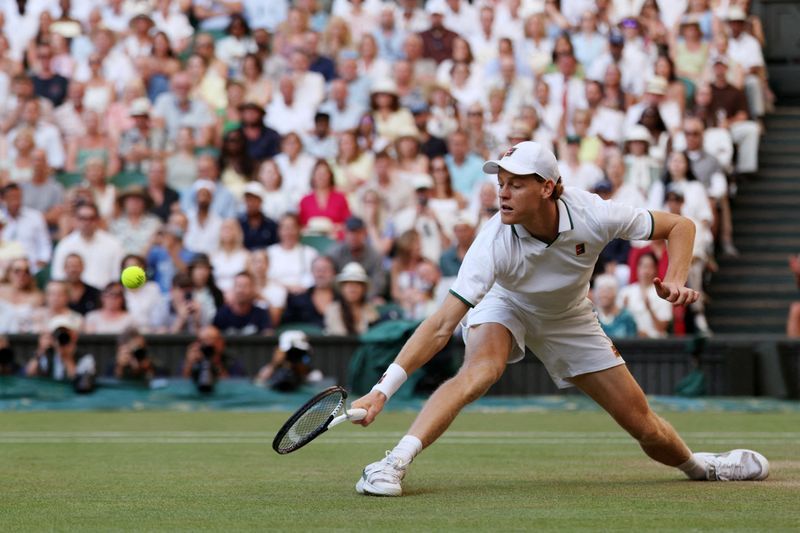
The men's tennis calendar has taken a significant turn with the withdrawal of world number one Jannik Sinner from the US Open, a decision driven by an ongoing right knee problem that has sidelined the Italian star for more than a week. The 24-year-old announced on Friday that despite intensive work with his medical team and coaching staff, he requires additional recovery time before returning to competitive play at the tournament in New York, which commences on August 23. His withdrawal represents a considerable blow to the sporting prestige of the year's final Grand Slam and fundamentally reshapes expectations for the title race.
Sinner's knee troubles emerged earlier in August, forcing him to miss back-to-back preparatory events in Cincinnati and Canada—both crucial hard-court competitions designed to fine-tune a player's fitness before the US Open. These absences should have served as warning signs to the tennis world, yet the extent of the injury only became fully apparent when the Italian attempted to resume training. Following a brief return to practice at his base in Monte Carlo during the preceding days, Sinner's medical advisors deemed him unfit for the rigours of a Grand Slam tournament, leading to the withdrawal announcement.
In a carefully worded statement released through X, Sinner acknowledged the collaborative decision-making process that culminated in his non-participation. The reigning Wimbledon champion, who claimed his fifth major title just last month at the All England Club, explained that the injury demanded more time than initially anticipated to resolve completely. This represents a significant setback for an athlete at the peak of his career, having established himself as the most formidable player on the professional circuit throughout the current season.
The timing of Sinner's withdrawal carries particular significance given that it occurs just hours after world number two Carlos Alcaraz confirmed his readiness to compete at Flushing Meadows. The Spanish competitor has been absent from professional tournaments for four months, recovering from his own physical setbacks that threatened to derail his campaign in the latter stages of the year. Alcaraz's return announcement initially suggested a re-energised field of contenders, yet Sinner's absence immediately shifts competitive dynamics in the Spaniard's favour.
Alcaraz arrives in New York as the tournament's highest-ranked competitor in Sinner's absence, a distinction that carries weight both psychologically and practically. The 21-year-old defeated Sinner in last year's US Open final, a victory that underscored his credentials on hard courts and his capacity to perform at the sport's highest level when circumstances permit. With his principal rival now unable to defend his ranking through aggressive tournament play, Alcaraz inherits the role of primary favourite to claim the trophy despite his extended layoff from competition.
For Malaysian tennis enthusiasts and regional sports observers, Sinner's withdrawal illustrates the delicate balance between competitive ambition and physical sustainability that defines modern professional tennis. Southeast Asian interest in the sport has grown considerably, with rising player standards across the region and increasing television coverage making Grand Slam tournaments significant events in the sporting calendar. The absence of a top-ranked player fundamentally alters the narrative structure of a major championship, removing one of the central figures around whom tournament drama typically revolves.
The competitive landscape now opens opportunities for other contenders who had been overshadowed by Sinner's dominant form. Players ranked outside the top two will sense genuine possibilities for deep runs through the draw, having been removed from the immediate threat posed by the world number one's exceptional baseline dominance and consistent performance under pressure. This disruption to the predictable hierarchy of men's tennis introduces an element of unpredictability that can either invigorate or unsettle the remaining competitors depending on their temperament.
Sinner's injury troubles also prompt reflection on the physical toll exacted by the professional tennis calendar, particularly during the gruelling American hard-court swing. The back-to-back tournaments in Cincinnati, Canada, and the US Open—spanning just three weeks—place enormous demands on players' bodies and their injury management systems. The decision to withdraw rather than risk exacerbating the knee problem demonstrates a mature approach to career longevity, though it inevitably disappoints fans and tournament organisers who anticipated seeing tennis's most compelling matchups.
From a strategic perspective, Alcaraz benefits substantially from navigating his return to competition without needing to confront Sinner during his confidence-building phase. The Spanish sensation can progress through the draw with reduced pressure and an enhanced probability of reaching the latter stages, circumstances that favour his ambitions for an eighth Grand Slam title. However, other accomplished competitors—including established Grand Slam winners and promising younger talents—now possess realistic pathways to the championship that would have been considerably more difficult with Sinner in the field.
The US Open, scheduled to conclude on September 13, will proceed without one of the sport's most compelling figures, a scenario that diminishes the tournament's marquee appeal even as it creates narrative opportunities for unlikely champions. Tournament organisers at Flushing Meadows will adapt their promotional strategies and broadcasting emphasis to accommodate this reality, likely elevating other personality-driven storylines and emerging talents into more prominent positions within their coverage framework.
For regional sports enthusiasts monitoring global tennis developments, Sinner's withdrawal underscores the unpredictable nature of Grand Slam tournaments and the significance of managing injury across a demanding schedule. Southeast Asian players and coaches observe international standards closely, noting how elite competitors balance competitive participation with appropriate recuperation. Sinner's decision reflects responsible professional management, even as it reshapes the championship landscape in ways that will become fully apparent only as the tournament unfolds over the coming weeks.

