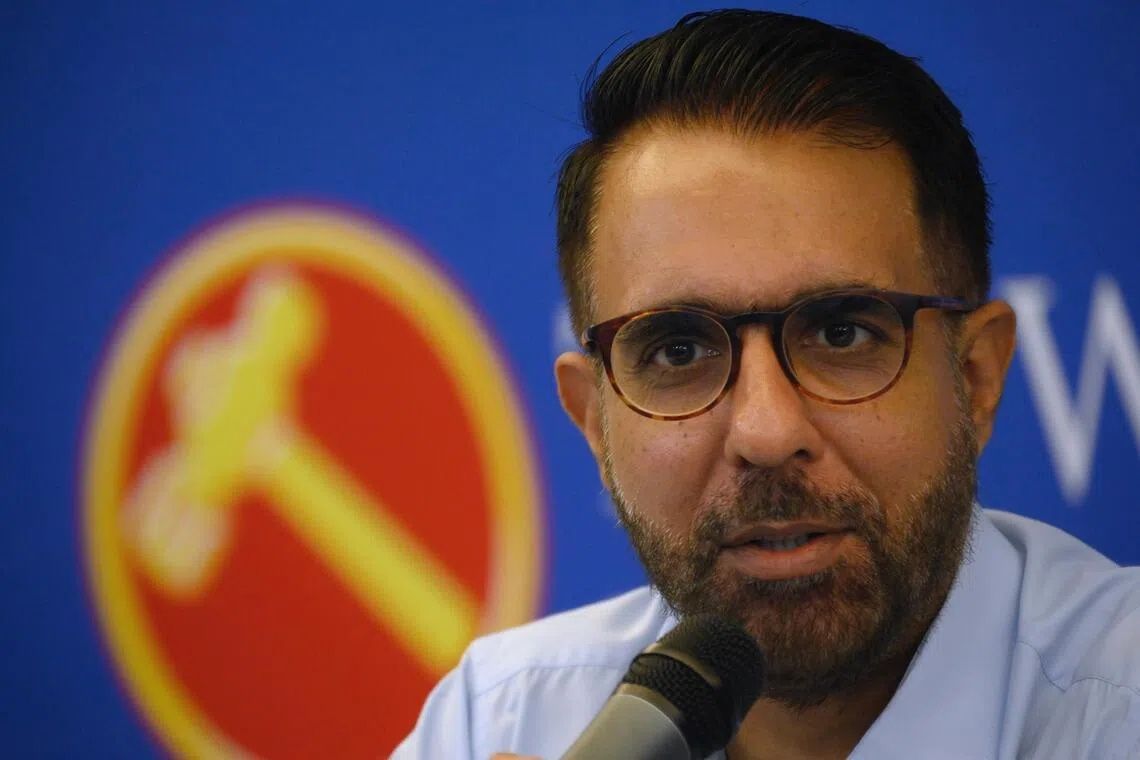
Singapore's Workers' Party stands at a critical juncture as a coalition of disgruntled members prepares to challenge leader Pritam Singh in the party's internal elections scheduled for June 28. The push to unseat him represents the most serious leadership threat the opposition party has faced in nearly a decade, crystallising long-simmering tensions over governance, electoral performance, and the damage wrought by a legal conviction that has complicated the party's moral standing.
The momentum for change crystallised following a December 2025 High Court ruling that upheld Pritam's conviction for providing false information to a parliamentary committee. This judicial verdict, which carries profound implications for an opposition party that has built its brand on transparent governance and institutional integrity, catalysed a search for alternative leadership among the party's cadre of just over 100 members who form its decision-making core. Insiders report that several senior MPs have been approached as potential challengers, though none have publicly committed to running, a hesitation likely rooted in fear of party disciplinary measures against those who speak candidly about internal matters.
The names being discussed within party circles include Aljunied GRC MP Gerald Giam, Hougang MP Dennis Tan, and Sengkang MPs He Ting Ru and Jamus Lim. The latter pair's involvement carries particular significance, as both served on the three-person disciplinary panel that found Pritam had violated the party's constitution through his conviction. Their participation in the proceedings that criticised Pritam potentially positions them as credible alternatives, though their reluctance to confirm candidacy underscores the considerable social and organisational costs of openly challenging an incumbent leader within a tight-knit political movement.
The groundswell of opposition stems from two separate but interconnected crises. First, twenty-five cadres formally requested a special conference in December 2025, demanding that Pritam account for his actions leading to the conviction and calling for his resignation. These signatories include former central executive committee members and election candidates, suggesting the challenge cuts across generational lines within the party. Their second grievance concerns the handling of former Sengkang GRC MP Raeesah Khan's parliamentary falsehood, which occurred in August 2021 but was not rectified until November that year. Party members contend that Pritam should have demanded Khan immediately clarify the anecdote rather than allowing the deception to persist for months, a lapse in judgment that they argue directly contributed to his subsequent legal jeopardy.
The June 28 proceedings will unfold in two distinct phases. The special conference will convene first, providing a forum where Pritam must defend his stewardship. Should he refuse to step down voluntarily, cadres will conduct a secret ballot determining his fate. If he survives this initial challenge or resigns from the position, the party will proceed immediately to its biennial ordinary conference to elect the full leadership slate, including the secretary-general role. This structure introduces tactical complexity: a narrow victory in the first vote might still provoke a challenger in the second, whilst a decisive endorsement might consolidate his position entirely.
Former party chief Low Thia Khiang emerges as a potentially decisive figure in this drama. Low, who led the Workers' Party from 2001 to 2018 and orchestrated the party's historic 2011 breakthrough in capturing Aljunied GRC, retains considerable sway among the cadre. Rumours suggest he voted against Pritam during the central executive committee's consideration of disciplinary findings, raising speculation that he might back an alternative candidate. Party veterans note that Low successfully navigated his own leadership challenge in 2016 when former Aljunied MP Chen Show Mao contested his re-election, and that many of the cadres now calling for Pritam's removal supported Chen's unsuccessful bid. Should Low throw his weight behind a challenger, analysts estimate the combined support of roughly thirty disaffected cadres plus those inclined to follow Low could muster sufficient votes to unseat the incumbent.
Beyond the immediate leadership question looms the broader crisis of institutional credibility. Opposition parties thrive on their ability to present themselves as morally superior alternatives to governing administrations, and the Workers' Party has historically marketed this distinction aggressively. When the party's own secretary-general stands convicted of misleading Parliament, that narrative crumbles. Several cadres quoted anonymously encapsulate this dilemma starkly: citizens vote for the Workers' Party precisely because they trust it to operate differently from the establishment, and a leadership conviction undermines this foundational claim to moral distinction. For a minority party in a one-dominant-party system, such reputational damage carries acute costs, making internal pressure for leadership change comprehensible even to those sympathetic to Pritam.
The K conviction incident also coincides with electoral disappointment from the 2025 general election. Party members privately acknowledge that the Workers' Party's slate was unusually strong yet the party failed to capture any additional constituencies, defying internal expectations. Compounding this frustration is Pritam's decision to withdraw from Marine Parade-Braddell Heights GRC on Nomination Day, a strategic retreat that some cadres view as an excessive concession that further dimmed the party's electoral prospects. When leadership contests arise in opposition parties, such electoral underperformance becomes ammunition for challengers seeking to reframe defeat as a failure of strategic direction rather than structural disadvantage.
A separate but related wound concerns the loss of the Leader of the Opposition title. Prime Minister Lawrence Wong stripped Pritam of this parliamentary designation in January 2026, presumably as a consequence of the conviction and its reputational toll. The Workers' Party was subsequently invited to nominate another elected MP to assume the role, but chose instead to decline and present a united front around Pritam. Some cadres have privately expressed doubts about this defensive posture, arguing that ceding prominence in Parliament ultimately damages the opposition cause itself by reducing scrutiny of government policy and reducing the party's platform for accountability advocacy. This criticism suggests that support for Pritam extends only as far as the conviction's immediate aftermath, and that additional organisational costs may accumulate if the party's parliamentary influence continues to contract.
The situation remains genuinely fluid, party insiders emphasise, with developments possible even on voting day itself. Potential challengers may hold back awaiting signals about low-motion strength, while cadres opposed to Pritam attempt to coalesce behind the most viable alternative. The dynamics of small-group politics mean that late reversals remain entirely plausible. What appears certain is that the Workers' Party will confront a genuine reckoning about leadership, governance standards, and organisational culture—a process whose outcomes will reverberate across Singapore's already compressed opposition political space and carry implications for how regional opposition movements navigate the intersection between legal liability and organisational legitimacy.
The June 28 elections will likely prove decisive not merely for Pritam Singh's personal future, but for the Workers' Party's trajectory during a period of obvious vulnerability and reputational challenge. Whether the party opts for continuity, reform, or outright leadership change will signal to observers—both domestically and across Southeast Asia—how opposition organisations navigate the difficult terrain where personal accountability, institutional survival, and political principle intersect.

